



National newspapers must distinguish investigative journalism from insinuation, and accountability from political agitation
The decline of credibility in Bharat’s once-respected national newspapers is becoming a matter of serious concern. When publications that built their reputations on professional journalism appear to cross the thin line between exposing uncomfortable truths and fuelling political narratives, they must expect scrutiny of their own conduct. A newspaper’s legacy cannot be a permanent licence to command public trust.
The controversy surrounding The Hindu’s coverage of the Rafale fighter aircraft deal and, more recently, The Indian Express’s investigation into the functioning of the Election Commission of India (ECI) raises an uncomfortable question: are some sections of the mainstream media informing the public, or providing political ammunition to an Opposition desperate to regain lost ground?
The Indian Express reported that Election Commissioners Sukhbir Singh Sandhu and Vivek Joshi had raised objections on several occasions over decisions and procedures concerning electoral-roll revision. These were serious issues deserving examination. Questions about the functioning of a constitutional institution responsible for conducting free and fair elections cannot simply be brushed aside. Equally, reported objections and internal correspondence must not automatically be treated as proof of illegality or wrongdoing.
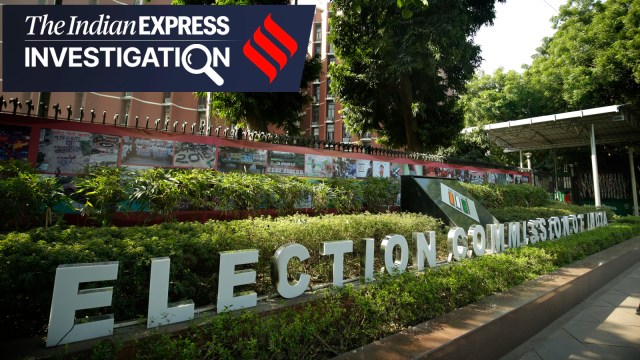
On October 26, the ECI filed a counter-affidavit in the Supreme Court, maintaining that decisions relating to the Special Intensive Revision (SIR) of electoral rolls were taken unanimously. It also disputed the allegations concerning Form 6 and sought permission to submit a detailed, point-by-point response. These are the Commission’s submissions, not a final judicial verdict. The Supreme Court’s examination of the matter must determine what the evidence establishes.
Yet, the political consequences of media reporting can begin long before a court reaches its conclusions. The Congress-led Opposition has seized upon the controversy to target Chief Election Commissioner Gyanesh Kumar and question the Commission’s credibility. Protests and political statements have amplified the allegations, potentially deepening public suspicion about an institution whose impartiality is fundamental to democracy.
This is precisely where responsible journalism becomes indispensable. An investigation may expose genuine shortcomings, but its findings must be presented with context, documentary accuracy and a fair distinction between allegation and fact. If a newspaper possesses evidence of procedural violations, it should publish that evidence and demand answers. If the institution disputes its conclusions, the rebuttal deserves equally serious examination. Journalism must not become a courtroom in which headlines deliver verdicts before judges examine the record.
The Hindu’s Rafale coverage, too, became a major political flashpoint over a government-to-government defence agreement. But the existence of such an arrangement, by itself, does not settle every question about procurement or pricing. The proper test is evidence, not political allegiance. The same standard must apply to every newspaper, government and opposition party. But what transpired in the Supreme Court is now in the public domain—a serious black mark on a newspaper once regarded as one of the most respected in the country.
Should a newspaper be banned or have its registration cancelled simply because its reporting embarrasses the government or triggers political controversy? Certainly not. Such a remedy would threaten press freedom and risk creating a precedent that could be used against any publication critical of those in power. Under the Press and Registration of Periodicals Act, 2023, regulatory action must rest on lawful grounds, not political displeasure. The answer to disputed journalism is evidence-based rebuttal, independent scrutiny, correction where warranted, and accountability under the law.
Nevertheless, press freedom cannot become a shield against professional responsibility. If material facts are misrepresented, corrections are evaded or allegations are knowingly presented as established truth, readers are entitled to demand an explanation and an unconditional apology where justified. Credibility, once squandered, cannot be restored through editorials defending editorial privilege.
The timing of the Opposition’s agitation, during the festive season surrounding Dussehra and Diwali, may invite political criticism. But the calendar cannot determine whether a constitutional grievance is genuine. What matters is whether the allegations withstand scrutiny and whether political mobilisation is based on verified facts rather than insinuation.
Bharat needs a fearless press, not a pliant one; an investigative press, not an infallible one. National newspapers must question those in power, but they must also question their own assumptions. The Election Commission must answer legitimate questions, while political parties must not convert every allegation into a campaign of institutional delegitimisation.
Ultimately, neither the government nor the Opposition gets to decide a newspaper’s credibility. Its readers do. And when headlines begin to outrun evidence, the first casualty is not merely a newspaper’s reputation. It is public trust in journalism itself.

