On Maharshi Valmiki Jayanti, a community’s unfinished struggle for recognition raises a question: how much longer must it wait?
Gajula Ramesh Kumar
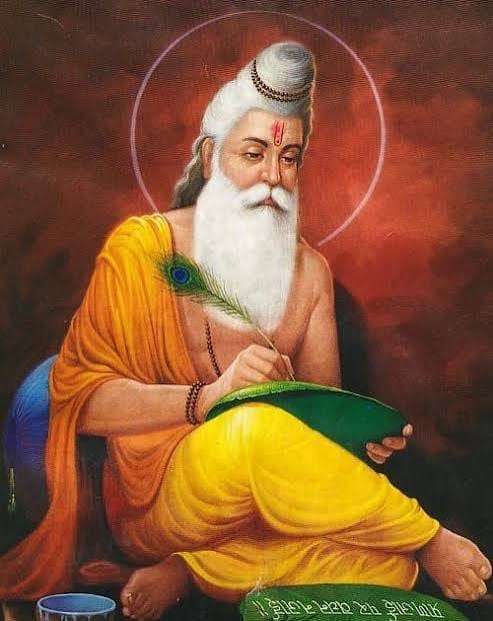
Maharshi Valmiki’s transformation from Ratnakara into the revered sage who composed the Ramayana remains one of India’s most enduring stories of personal transformation. Celebrated as the Adi Kavi, or the first poet, and remembered for the epic’s 24,000 verses, Valmiki represents the power of knowledge, self-realisation and human dignity.
His birth anniversary, observed by the Valmiki community as Pragat Diwas, is an occasion to celebrate his legacy and renew the commitment to social progress. Yet, for the Valmiki Boyas of Telangana, the day also serves as a reminder of a long-standing grievance: their demand for Scheduled Tribe (ST) status remains unresolved after more than six decades.
The question is unavoidable. If governments across political generations have acknowledged the demand, why does the community continue to wait for a decisive outcome?
For the Valmiki Boyas, the struggle is no longer merely about a classification in government records. It concerns recognition, access to opportunities and what they regard as historical justice.
A Community Rooted in History
Community representatives trace the Boyas’ history to periods when they served as warriors, landholders and local chieftains. Historical accounts and inscriptions associated with the Eastern Chalukyas, along with traditions relating to the Vijayanagara Empire, are cited by sections of the community to establish their historical identity and social position.
Their traditional association with forests, hunting and rural livelihoods also forms part of the argument advanced by campaigners seeking tribal recognition. Community representatives further point to the impact of colonial-era policies, including the Criminal Tribes Act, as part of their historical experience.
These accounts, however, need to be assessed through a rigorous historical and ethnographic study. Historical identity and community traditions are relevant to the debate, but constitutional recognition must ultimately follow the prescribed legal and evidentiary process.
One Community, Different Classifications
One of the principal grievances of the Valmiki Boyas concerns their classification in different geographical areas. In the erstwhile undivided Andhra Pradesh, the community was classified under the Scheduled Tribes category in certain Integrated Tribal Development Agency (ITDA) areas, while Boyas in the plains were placed under the Backward Classes (BC-A) category.
The community questions the fairness of a system under which its access to affirmative-action benefits differs according to geographical location.
Its argument is straightforward: if community identity, traditions and social circumstances are substantially similar, why should the benefits available to its members depend on where they live?
Campaigners also point to the recognition accorded to certain communities identified as Valmiki or Boya in neighbouring states. However, classifications differ across states and depend on the specific community entries notified under the relevant constitutional orders. A comparison with Karnataka or Tamil Nadu, therefore, requires careful examination of the exact entries and their applicability.
Nevertheless, the demand for a transparent explanation of the differences in classification deserves serious consideration.
Six Decades of Representations
The demand for ST status has been pursued for more than 60 years through representations, political interventions and public campaigns. According to community representatives, recommendations associated with the Chellappa Commission have formed an important part of their case.
The Telangana Legislative Assembly has reportedly passed unanimous resolutions on the demand on two occasions, forwarding proposals to the Union Government. Political support has also been expressed across party lines, while Telangana and Andhra Pradesh have both figured in the continuing effort to secure recognition.
Yet, the desired result remains elusive.
The absence of a final decision raises questions about the coordination between state governments and the Union Government. If the demand has received legislative support and has been pursued repeatedly, what specific evidentiary, administrative or legal obstacles remain? What steps have been completed, what objections are outstanding, and what is the timeline for a final decision?
These questions deserve clear answers rather than another round of assurances.
BJP MP D.K. Aruna has also raised the community’s presence in Telangana in Parliament, identifying districts including Mahabubnagar, Wanaparthy, Nagarkurnool, Narayanpet and Hyderabad. Community representatives estimate the population at around five lakh. However, that estimate needs to be verified through reliable official data and a comprehensive enumeration.
What ST Recognition Would Mean
For the Valmiki Boyas, inclusion in the ST list is sought as a means of improving access to opportunities that they believe have remained beyond their reach.
Their principal expectations include:
- Education: Access to ST-specific scholarships, educational support and other applicable benefits.
- Employment: Eligibility for reservations in public employment, subject to the applicable rules.
- Political representation: Access to opportunities linked to the relevant reservation framework.
- Welfare and development: Eligibility for schemes and development programmes specifically available to recognised Scheduled Tribes.
- Consistency in classification: Resolution of the disparity between the community’s classification in agency areas and the plains.
These expectations explain why the demand has endured across generations. For families seeking educational mobility and stable employment for their children, classification is not an abstract administrative matter; it can influence access to opportunities.
The Other Side: Concerns Within Tribal Communities
Any discussion of expanding the ST list must also acknowledge the concerns of communities already recognised as Scheduled Tribes.
Organisations representing groups such as the Gonds and Koyas have expressed concern about competition for limited educational seats, government jobs and other benefits. The inclusion of Lambadas in the ST list in undivided Andhra Pradesh in 1976 remains part of the background to these tensions.
Some stakeholders fear that further inclusions could intensify competition unless governments address the adequacy of educational facilities, employment opportunities and development resources.
There have also been procedural obstacles. According to accounts of the earlier proposals, the Registrar General of India rejected Andhra Pradesh’s proposal on two occasions. The precise grounds and status of those objections need to be established from official records.
Recognition as a Scheduled Tribe is governed by the Constitution and the prescribed process for amending the list. Historical associations or political resolutions, by themselves, cannot substitute for the required scrutiny. At the same time, procedural objections should be explained transparently so that affected communities understand what evidence is required and what remains unresolved.
The concerns of existing tribal communities and the aspirations of the Valmiki Boyas need not be treated as mutually exclusive. The responsibility of governments is to examine the evidence fairly, follow constitutional procedures and ensure that welfare policies do not become a source of avoidable social conflict.
Resolutions Must Lead to a Decision
The immediate need is for a clear, time-bound course of action.
The Telangana Government should make public the status of its proposals, the findings and recommendations of relevant commissions, and any outstanding requirements for the ethnographic study. It should pursue the matter with the Union Government and communicate the precise grounds on which further action is necessary.
The Centre, in turn, should provide a transparent account of the procedural and evidentiary requirements, complete the necessary scrutiny without avoidable delay and take the next steps in accordance with the Constitution. Any change to the notified ST list must follow the legally prescribed parliamentary process.
Maharshi Valmiki’s legacy is celebrated as a story of transformation and the triumph of knowledge over adversity. For the Valmiki Boyas of Telangana, however, the struggle for recognition remains unfinished.
Six decades of representations, resolutions and political assurances cannot be the end of the story. Nor can a sensitive constitutional question be settled by slogans alone. What is needed is a fair examination of the evidence, a transparent process and a clear decision.
On Valmiki Jayanti, the community’s question remains: after waiting for more than 60 years, how much longer must it wait for an answer? (The author is Convenor, AISO TG Valmiki Boya Student Representative.)