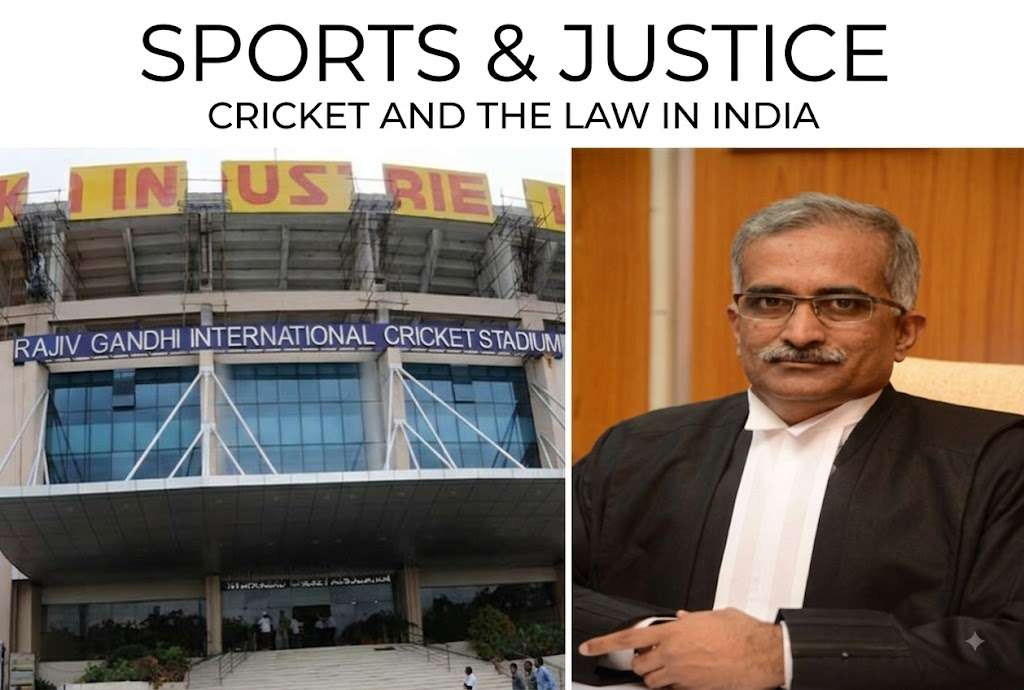
HCA and controversies appear to have become inseparable, a reality that every serious stakeholder in Telangana cricket has witnessed over the years. What makes the situation more disturbing is that repeated judicial interventions, committees, audits and investigations have not brought the expected institutional transformation. Why does the cycle continue? Money, influence, glamour and proximity to power inevitably become part of the discussion when cricket administration involves large financial interests and considerable public visibility. Cricket, increasingly, has become an attractive arena for influential politicians, businesspersons, glamour personalities and even former cricketers. It is against this backdrop that Orangenews9 is introducing this new series. This is not an attempt to prejudge individuals or substitute media opinion for judicial findings. It is an effort to place facts, court observations and institutional concerns in the right perspective so that stakeholders can reflect on what needs to change. Our larger objective is constructive: to contribute, however modestly, to a better-governed HCA where merit, transparency and accountability prevail. — EDITOR
Special Correspondent
Nine years of judicial and administrative intervention have produced Court-appointed Administrators, three additional judicial committees, a forensic audit, eight criminal cases, an Enforcement Directorate probe and, most recently, a High Court direction for a Special Investigation Team (SIT). Yet questions surrounding the Hyderabad Cricket Association remain.
The fundamental question now is not merely who supervises HCA, but whether the system can ensure that those responsible for wrongdoing, if established through due process, are ultimately held accountable.
What the Court has recorded
The 24 April 2026 judgment in Safilguda Cricket Club v. State of Telangana presents serious observations about the functioning of HCA. The Court noted deficiencies in financial management, missing documentation and auditor objections that had allegedly not been adequately addressed. Vendor claims amounting to around ₹9.3 crore were viewed with doubt, while an Ernst & Young forensic review identified irregularities of approximately ₹2.68 crore, even on a sample basis. The Administrators consequently recommended a deeper investigation by a specialised agency.
The Court also noted that successive committees had reported recurring concerns involving opacity, selections, eligibility issues and obstruction. It observed that the recurrence of such issues could not simply be dismissed as coincidence and indicated that the problems appeared to have “structural depth.”
Importantly, these are judicial observations, not conclusions of guilt against particular individuals. The Court also refrained from expressing an opinion on guilt.
Why is the SIT not visibly moving?
The public understandably wants to know what has happened since the direction for an SIT investigation. The order directs the SIT to register a case and investigate, but does not prescribe a specific deadline for filing a charge-sheet or a fixed schedule for public status reporting.
The challenge is compounded by the Court’s observation regarding missing records, including lease-related documents. Reconstructing financial transactions years after the events is inevitably more difficult when documentation is unavailable.
With the CID, ED and SIT involved in different aspects, coordination and accountability become particularly important. An investigation of this magnitude requires preservation of records, forensic examination and sustained follow-through.
The larger message
For cricket to remain a merit-driven sport, its administration must inspire confidence among players, clubs, parents and officials.
A young cricketer should believe that performance, not connections, determines opportunity. Clubs that follow the rules should believe that compliance matters. Administrators should know that public office within a sporting body carries corresponding responsibility.
Those under investigation are, of course, entitled to the presumption of innocence. At the same time, temporarily stepping aside from positions involving administration, finances or selection is not necessarily a punishment; it can be viewed as an institutional safeguard until the process reaches its conclusion.
What must happen now
The April judgment provides a framework for further action.
First, there must be measurable progress. Periodic SIT status reports and appropriate judicial monitoring could help prevent a prolonged investigation from losing momentum.
Second, agencies must coordinate effectively. Investigators dealing with connected aspects of the matter should ensure that surviving records, financial evidence and forensic material are properly preserved and examined.
Third, judicial directions must have consequences. The Court’s direction regarding contempt notices against two office-bearers underlines the importance of compliance with its orders.
Ultimately, however, courts cannot permanently decide who runs HCA. Once judicial supervision ends, clubs and voters will determine its leadership.
That makes the cricketing community the final safeguard.
Hyderabad has never lacked cricketing talent. The challenge is to ensure that its administration reflects the same standards of merit, discipline and integrity expected from its players.
The game needs fewer controversies, fewer committees and more accountability. (to be concluded)