



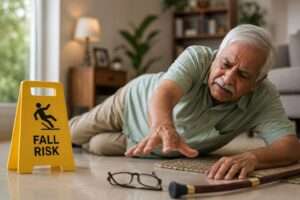
“I just slipped.” Those three words are often enough for a family to dismiss an elderly person’s fall. The person gets up, checks for a bruise, perhaps complains of some pain, and within a few hours everyone assumes the episode is over. But in an older adult, a fall may be much more than an unfortunate moment.
It can be the first visible sign of declining muscle strength, poor vision, a medication problem, low blood pressure, a neurological disorder—or fragile bones that can turn a seemingly minor fall into a life-changing fracture and so on.
Falls are one of the most important causes of injury, disability and loss of independence among older adults. The World Health Organization (WHO) identifies falls as the second leading cause of unintentional injury deaths worldwide, with adults over 60 years experiencing the greatest burden of fatal falls. In India too, falls are common among older adults.
A systematic review and meta-analysis of Indian studies estimated that approximately 31% of elderly people experienced a fall, although the available studies showed considerable variation. But the real problem is not merely the fall itself. The important question is: Why did the person fall?
Ageing does not have to mean falling
Growing older does bring changes in muscle strength, reaction time, vision, hearing and balance. But repeatedly falling should not be accepted as an unavoidable part of ageing. A fall may be the first visible sign of an underlying medical problem. Weakness of the legs, difficulty walking, poor balance, vision problems, dizziness, low blood pressure on standing, neurological disease, joint problems and medication side effects can all increase the risk. The risk becomes greater when several of these factors occur together.
That is why an older person who falls deserves an assessment—not merely reassurance.
One fall can start a vicious cycle
The consequences of a fall can extend far beyond a bruise. An older person may sustain a fracture, head injury or other serious trauma. Hip fractures are particularly concerning because recovery can be prolonged, and some individuals may never completely regain their previous level of independence and may develop complications of prolonged immobility, including pressure sores, making life miserable. But there is another less obvious consequence.
After falling once, many elderly people become frightened of falling again. They may stop walking outside. They may avoid stairs. They may reduce physical activity. They may spend more time sitting or lying down. Muscles then become weaker, balance deteriorates further and confidence decreases. The person becomes even more vulnerable to another fall. A fall can therefore create a cycle of fear → inactivity → weakness → poorer balance → another fall. Breaking this cycle early is extremely important.
Why do older people fall?
There is rarely just one reason. There are many reasons, from physical to psychological and social.
Muscle weakness and poor balance
Age-related loss of muscle mass and strength can make it difficult to get up from a chair, climb stairs or recover balance after a small stumble. Difficulty walking and impaired balance are among the important modifiable risk factors for falls. VISION PROBLEMS: Cataracts, uncorrected refractive errors and other visual problems can make it difficult to identify steps, obstacles or changes in floor level.
Vision impairment itself can increase fall risk, and some medical conditions, commonly diabetic retinopathy, as well as certain medications, can contribute to both vision problems and falls.
Medications
This is an often-overlooked cause. Medicines that cause drowsiness, dizziness, confusion, slower reactions or a fall in blood pressure can increase the risk of falling. Sedatives, certain medicines used for anxiety or sleep, some antidepressants and several other medications, including some commonly used cough syrups and medicines for the common cold, may contribute to this risk.
Polypharmacy—the use of multiple medicines— can further complicate the situation. This does not mean that an elderly person should stop medicines on their own. It means that the medication list should occasionally be reviewed by a doctor.
Postural hypertension
Some older adults feel dizzy or briefly unsteady when they stand up from bed or a chair. A sudden fall in blood pressure on standing—known as postural or orthostatic hypotension—can cause dizziness and falls. Dehydration, illness and certain medications can contribute to it.
Neurological and musculoskeletal conditions
Stroke, Parkinson’s disease, peripheral neuropathy, arthritis and other neurological or musculoskeletal conditions can interfere with walking and balance. Sometimes a fall may be the first indication that one of these problems needs evaluation.
The Home itself
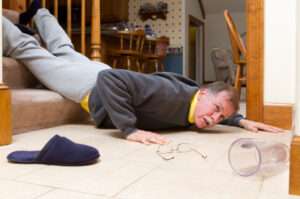
The environment can turn a small imbalance into a major accident. Loose rugs, cluttered floors, poorly lit corridors, wet bathroom floors, uneven steps and the absence of handrails can all increase the risk. Many of these hazards are surprisingly easy to correct.
Night: Time falls are particularly common
One situation deserves special attention: getting up at night. An elderly person who wakes up frequently to use the bathroom may have underlying problems such as uncontrolled diabetes, kidney problems or an enlarged prostate. Urinary urgency or incontinence can also cause a person, particularly an older woman, to get out of bed suddenly. Particularly when this happens in the dark, the combination can be dangerous.
A night light, easily accessible switches, a clear path to the bathroom and appropriate support near the toilet can make a significant difference. Many bathrooms are slippery and may lack handgrips to hold while bathing or soaping the body. The older person should also avoid getting up suddenly after lying down for several hours. Sit on the edge of the bed for a moment. Stand slowly. Make sure you are steady before walking. Such simple precautions can prevent serious injuries.
Osteoporosis makes a fall more dangerous
Not every fall causes a fracture. But when bones have become weak because of osteoporosis, even a relatively minor fall can result in a serious fracture. Hip, wrist, and vertebral fractures can lead to prolonged immobility and loss of independence. Therefore, fall prevention and bone health should not be considered separate issues. An older person at risk should be assessed for osteoporosis and treated appropriately when indicated.
Can falls actually be prevented?
Yes. This is one of the most important messages. The modern approach is not simply to tell an elderly person to “be careful.”
The 2025 NICE guideline on falls prevention recommends identifying people at risk and carrying out appropriate assessment, followed by interventions directed at the individual’s specific risk factors. The World Guidelines for Falls Prevention Page 2 of 4) similarly recommend strength and balance activity for older adults and a comprehensive, multifactorial assessment for those at higher risk.
This may include: Strength and balance exercises Physiotherapy when appropriate Review of medications Assessment of blood pressure, including postural changes Vision assessment Appropriate footwear Evaluation for osteoporosis Correction of nutritional deficiencies when present Management of neurological, cardiovascular and musculoskeletal conditions Modification of hazards within the home Exercise is particularly important.
Strengthening the legs and improving balance can help older adults remain mobile and independent. Activities such as appropriately supervised strength and balance training, yoga or Tai Chi may be useful depending on the individual’s health and physical ability.
What should the family do after a fall?
Do not simply say, “Nothing happened, get up.” First, make sure the person is safe. Look for severe pain, inability to stand, deformity, bleeding, loss of consciousness, confusion, severe headache or other signs of significant injury.
If there is a suspected fracture or serious injury, the person should not be forcibly lifted or made to walk. Even when there is no obvious injury, a fall without a clear explanation deserves attention—particularly if it is recurrent. One has to verify: Did the person become dizzy? Did they lose consciousness?
Were they getting up suddenly? Had they recently started or changed a medicine? Could they see properly? Were they walking on an unsafe surface? Has their walking or balance been deteriorating recently? The answers can sometimes reveal a preventable cause.
Do not wait for the second fall
One of the biggest mistakes families make is waiting until an elderly person falls repeatedly before taking action. A first fall can be an opportunity to respond. It can prompt a medication review. It can lead to an eye examination. It can identify postural hypotension. It can reveal muscle weakness or neurological disease. It can lead to a home-safety assessment. And it can motivate the family to start appropriate strength and balance exercises.
The CDC’s STEADI approach—Stopping Elderly Accidents, Deaths, and Injuries—follows a simple principle: screen for fall risk, assess modifiable factors, and intervene to reduce that risk. (CDC) LET US NOT CALL EVERY FALL “OLD AGE.” Ageing is inevitable.
Falling does not have to be. Page 3 of 4. An elderly person who falls may be telling us that something has changed—strength, balance, vision, blood pressure, medication effects, neurological function, or the environment around them. The goal should not merely be to treat the fracture after the fall. The goal should be to prevent the next fall.
Because preventing one fall may prevent a fracture. Preventing a fracture may prevent months of immobility. And preventing immobility may help an older person remain independent, active, and confident in their own home.

