


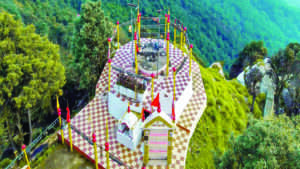
Devguru Brihaspati Temple is located on Devguru Parvat in the Okhalkanda block of Nainital district, at around 8,000 feet above sea level, stands the rare and secluded shrine of Devguru Brihaspati, the Guru of the Devas and the deity associated with Jupiter. Surrounded by dense Himalayan forests and mountain peaks, the temple is reached by a challenging trek and remains closely connected with the faith and traditions of the surrounding villages.
The shrine is traditionally regarded as very ancient and swayambhu, meaning the sacred presence of Brihaspati is believed to have manifested naturally rather than being installed by human hands. However, no reliable inscription or archaeological record has established the exact age of the present shrine. Its antiquity is therefore preserved mainly through local tradition and generations of worship.
The presiding deity is Devguru Brihaspati, regarded as the teacher and guide of the Devas. In Hindu tradition, Brihaspati represents wisdom, knowledge, learning, dharma and righteous guidance and is identified with Guru or Jupiter among the Navagrahas. At this shrine, Brihaspati is especially revered in pindi form, believed by devotees to be self-manifested. Devotees seek his blessings particularly for knowledge, education, wisdom and removal of Guru-related difficulties.
This is not a grand temple with elaborate carvings or a large architectural complex. Its uniqueness lies in its simple shrine and extraordinary natural setting on the mountain summit. The sacred pindi, surrounding forest, caves, mountain slopes, and natural water sources together form the sacred landscape of Devguru Parvat. The remote location and the traditional five-kilometre uphill walk add to the character of this pilgrimage.
Unlike major Himalayan temples with inscriptions and royal records, the history of this shrine has largely been preserved through oral traditions of the Kumaoni communities. Devotees from surrounding villages have traditionally travelled in groups to worship Devguru Brihaspati. The shrine has received wider recognition in recent years, with government initiatives aimed at developing important temples and pilgrimage sites of the Kumaon region.
According to the prominent local tradition, Devguru Brihaspati came to this secluded mountain and performed intense penance to Lord Shiva. He is believed to have remained here for hundreds of years, deeply absorbed in meditation. Because of this prolonged tapasya, the mountain itself came to be regarded as a sacred place associated with Devguru.
The tradition further says that Eddi Raja, accompanied by his Kotwal and attendants, took responsibility for protecting Brihaspati while he was absorbed in meditation. They guarded the Guru from wild animals and other disturbances so that his penance could continue without interruption. After the long tapasya was completed, Brihaspati is believed to have received the blessings of Lord Shiva.
Another local legend connects this sacred region with Devaraja Indra. According to the tradition, Indra was once troubled by the sin of Brahmahatya and came to this remote Himalayan region seeking purification through penance. He is believed to have stayed in a cave here. When the Devas were unable to find their king, they approached their Guru, Brihaspati, who searched for Indra and eventually found him in the cave. Brihaspati guided and reassured Indra during his difficult period.
After finding Indra, Brihaspati is said to have been deeply attracted by the peaceful beauty of the mountains and decided to undertake his own penance here. This association is believed to have given the mountain its sacred identity as Devguru Parvat and established it as a tapasya sthala.
One fascinating local belief says that water began flowing from the mountain after Brihaspati completed his penance. Local tradition speaks of two streams emerging from the mountain, with one continuing to flow near the cave associated with Devguru. Devotees regard these natural water sources as part of the sacred legacy of Brihaspati’s tapasya.
These accounts form part of the local Sthalapurana and oral tradition rather than independently verified historical events, but they remain central to the faith surrounding this unique Himalayan shrine.
Thursdays, known as Brihaspativar or Guruvar, are especially sacred for worshipping Devguru Brihaspati. Devotees visit the shrine seeking blessings for knowledge, wisdom, education and prosperity. Traditional offerings include milk, curd, ghee, halwa and sweet puri, and devotees from surrounding villages often make the journey in groups. Special worship and gatherings are also held on important religious occasions, including Akshaya Tritiya, when the remote shrine receives increased devotional activity.

