MS Sparsha
History often remembers kings who ruled kingdoms, generals who won wars, and emperors who built monuments. Yet, every once in a while, there emerges an extraordinary individual who changes the destiny of an entire civilization without wearing a crown or wielding a sword. One such forgotten hero is Suyya, an ordinary man whose extraordinary ingenuity saved Kashmir from what would have otherwise been certain destruction.
The story dates back to the ninth century during the reign of King Avantivarman. A series of devastating earthquakes triggered massive landslides near Yakshadara, present-day Baramulla. The narrow gorge through which the Vitasta, now known as the Jhelum River, flowed became completely blocked by mud, rocks, and fallen trees. Nature had erected a gigantic dam.
The consequences were catastrophic. The picturesque Kashmir Valley gradually turned into a vast swamp. Fertile agricultural lands disappeared beneath stagnant waters, crops failed, and famine stalked the region. According to the chronicles of Kalhana, the price of a single khari of grain skyrocketed to an unimaginable 1,050 gold coins, making food inaccessible to ordinary people. While the royal court debated endlessly and priests performed rituals hoping for divine intervention, the valley continued to sink into despair.
Amid this crisis appeared an unlikely saviour.
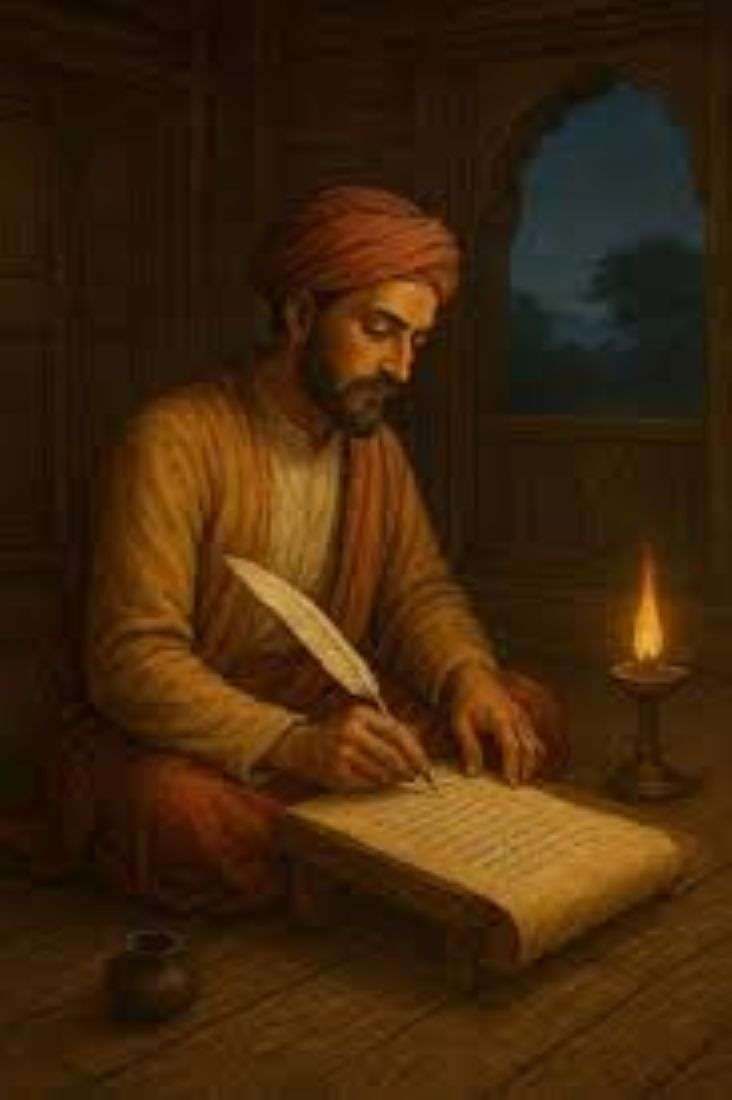
Suyya was neither a nobleman nor a celebrated scholar. Believed to be of humble origins and with little formal education, he repeatedly declared that he knew how to free Kashmir from the floodwaters if only he were given the means. Many laughed at him. Others dismissed him as a dreamer.
Eventually, his claims reached King Avantivarman, who summoned him to the royal court. Asked what resources he required to tame a mighty river, Suyya made an astonishing request—not soldiers, not massive machines, nor expensive engineering equipment, but pots filled with gold coins from the royal treasury.
The court burst into laughter. What could gold possibly achieve against a roaring river?
Yet, the king chose to trust the man everyone else ridiculed.
Suyya took the royal treasure to the landslide site. Then, before a bewildered crowd, he began throwing handfuls of gold coins directly into the mud-choked river.
To onlookers, it appeared the king had entrusted the treasury to a madman.
But Suyya understood something far more powerful than brute force—human behaviour.
News spread rapidly across nearby villages. Thousands of impoverished and starving people rushed to the site, diving into the river in search of the scattered gold. In their desperate attempt to retrieve the coins buried beneath layers of silt, they unknowingly removed massive boulders, logs, and debris that had blocked the river’s natural course.
What armies could not accomplish through force, human incentive achieved within days.
The artificial dam gave way. The waters of the Jhelum surged forward once again, and the flooded valley gradually drained.
Yet Suyya’s work had only begun.
Once the waters receded, he embarked on an ambitious programme of river management. He built stone embankments over nearly forty-two miles, cleared remaining silt deposits, and redirected the confluence of the Vitasta and Sindh rivers towards Wular Lake. Marshlands were transformed into fertile agricultural fields.
Kalhana’s Rajatarangini also credits Suyya with adopting remarkably scientific methods. He is said to have collected soil samples from different villages, studied how quickly each sample dried, and designed irrigation channels suited to local soil conditions—an approach that resembles modern hydrological planning.
The results were dramatic. Grain prices reportedly crashed from 1,050 gold coins to merely 36 coins per khari. Prosperity returned to Kashmir.
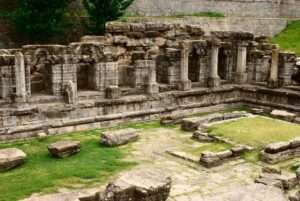
King Avantivarman honoured Suyya for his unparalleled contribution, and the town he established came to be known as Suyyapura, today’s Sopore.
Centuries later, Suyya’s story remains a powerful reminder that true genius often wears ordinary clothes. Leadership is not merely about authority but about recognising talent wherever it exists. Innovation is not always born in grand laboratories; sometimes it emerges from practical wisdom, deep observation, and an understanding of human nature.
At a time when we celebrate technological marvels and management theories, perhaps India should also remember the forgotten engineer who solved one of history’s greatest environmental disasters using nothing more than intelligence, psychology, and courage. Suyya did not merely clear a river. He restored hope, revived an economy, and ensured that an entire valley could live again.
Some heroes build empires. Others save civilizations. Suyya belonged to the latter.