MS Sparsha
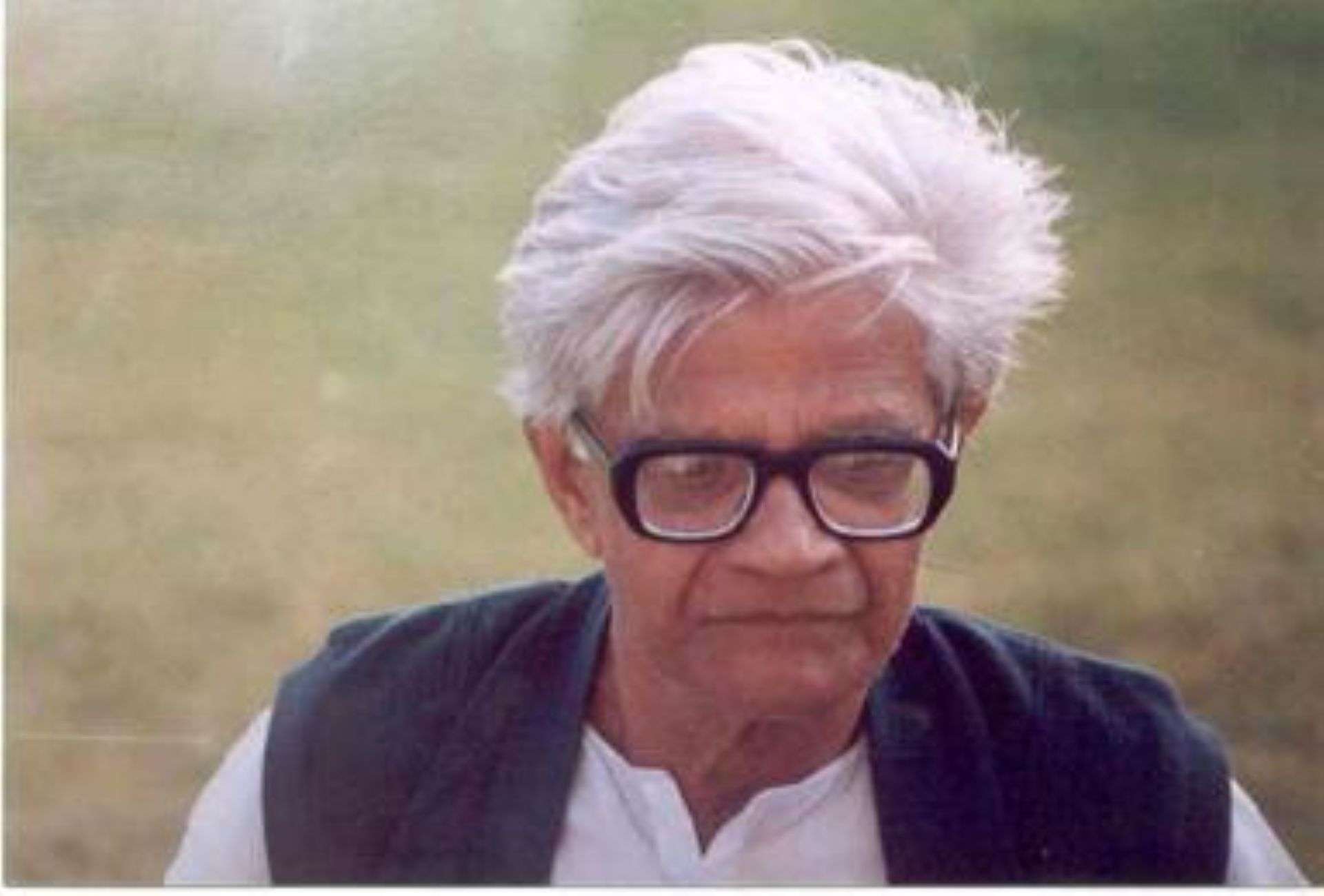
There are heroes whose names adorn monuments and history books. And then there are those whose extraordinary contributions quietly shape our understanding of the world, even as time conspires to erase them from public memory. Dr. Sunder Lal Hora belongs to the latter category—an unsung hero whose scientific brilliance earned global admiration but remains largely unknown in the country he served with remarkable distinction.
“If you ask a fish where it belongs, it will not point to an ocean. It will point to a mountain stream, where the current is violent enough to crush bones, yet gentle enough to give life.”
Few scientists embodied this philosophy better than Dr. Sunder Lal Hora, widely regarded as the father of modern Indian ichthyology. He was not a statesman or an industrialist. He did not command armies or lead political movements. Instead, he spent his life listening to the silent whispers of India’s rivers and unlocking some of nature’s most fascinating mysteries.
Born in 1896 in Hafizabad, now in present-day Pakistan, young Hora was captivated by the mountain streams of northwestern India. Where others saw little more than flowing water, he saw questions waiting to be answered. How do tiny fish survive in violent mountain torrents capable of dislodging massive rocks? How does life adapt itself to seemingly impossible environments?
Those questions would define his life’s work.
Joining the Zoological Survey of India (ZSI) at a young age, Hora quickly distinguished himself through his extraordinary powers of observation and relentless scientific curiosity. Armed with little more than notebooks, simple fishing nets and immense determination, he ventured into the malaria-infested forests of the Western Ghats, the remote hills of Assam and the turbulent Himalayan streams.
Unlike many naturalists of his era who were content collecting preserved specimens, Hora studied life in its natural habitat. He observed how hill-stream fishes evolved remarkable adaptations to survive raging waters—developing adhesive organs that allowed them to cling to smooth underwater rocks, flattened bodies that reduced resistance to powerful currents and uniquely modified fins that enabled them to navigate turbulent streams.
His anatomical studies of hill-stream fishes became pioneering contributions to zoological science and found their place in scientific literature across Europe and beyond.
Yet, perhaps his greatest contribution came through an observation that challenged conventional scientific understanding. While studying freshwater fishes inhabiting the Western Ghats in southern India and the Khasi Hills in the northeast, Hora noticed something seemingly impossible—the same or closely related species existed thousands of kilometres apart despite being separated by vast stretches of unsuitable terrain.
The question was intriguing. How could freshwater fish, incapable of surviving in saltwater or traversing dry landscapes, inhabit such distant and disconnected ecosystems?
In 1937, Dr. Hora proposed what came to be known as the “Satpura Hypothesis.” He suggested that millions of years ago, a continuous humid corridor associated with the Satpura ranges connected parts of peninsular and northeastern India, enabling the dispersal of aquatic and terrestrial fauna. Though aspects of the hypothesis have since been debated and refined by subsequent geological discoveries, it represented a bold and imaginative attempt to explain India’s biogeographical history using evidence derived from the anatomy and distribution of humble freshwater fishes.
At a time when plate tectonics and continental drift were themselves evolving scientific concepts, Hora dared to think across disciplines—combining zoology, geography, ecology and geology long before such interdisciplinary approaches became commonplace.
His achievements were extraordinary. Dr. Hora authored more than a hundred scientific papers, described numerous new species, became Director of the Zoological Survey of India and earned international recognition from prestigious scientific bodies, including the Linnean Society of London. His expertise was sought on inland fisheries, wildlife conservation and ecological studies.
Yet, outside scientific circles, his name slowly faded into obscurity.
Today, many Indians can readily name famous political leaders and sporting icons, but few have heard of the man who transformed our understanding of India’s rivers and their remarkable inhabitants.
Perhaps that is the greatest irony of all. The scientist who dedicated his life to understanding India’s living heritage has himself become a forgotten chapter of that heritage.
The next time you stand beside a mountain stream, pause for a moment. Beneath the foaming waters, tiny creatures continue their ancient struggle against powerful currents, surviving through evolutionary adaptations first meticulously documented by an Indian scientist nearly a century ago.
Empires may rise and fall. Names may fade from public memory. But as long as India’s rivers continue their timeless journey from the mountains to the sea, the silent legacy of Dr. Sunder Lal Hora will continue to flow with them.