


M Jaishree
Political narratives often thrive on selective memory. Economic data, however, has little regard for partisan preferences. As India continues to attract global attention for its economic resilience and growth, it is worth asking why sections of the political opposition remain reluctant to acknowledge the country’s progress while readily amplifying criticism from abroad.
In recent months, even US President Donald Trump has made disparaging remarks about India’s economy and trade policies. Predictably, many of his comments found enthusiastic echoes among sections of India’s opposition, who appeared more interested in validating foreign criticism than objectively assessing India’s economic performance.
Yet the broader global picture tells a different story.
International institutions, including the World Bank and the International Monetary Fund (IMF), have consistently projected India among the world’s fastest-growing major economies in recent years. At a time when several advanced economies have struggled with sluggish growth, high inflation, recessionary pressures, and geopolitical uncertainties, India has maintained a growth trajectory that has earned recognition across the global financial community.
That does not imply that India’s economy is free of challenges. Unemployment, income inequality, rural distress and inflation continue to demand serious policy attention. But acknowledging these challenges should not come at the cost of denying measurable economic achievements.
The tendency of some political critics to dismiss every positive economic indicator simply because it reflects on the present government weakens the credibility of genuine criticism. Democracies flourish when governments are held accountable through facts—not when data is selectively accepted or rejected based on political convenience.
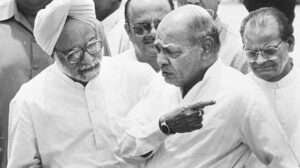
A comparison of India’s per capita GDP growth during the decade between 2004 and 2014 also offers useful context. According to World Bank data, India’s per capita GDP increased by roughly 149 percent during that period. Over the same period, Sri Lanka recorded a much sharper rise of approximately 286 percent.
These figures should not be interpreted as proof of economic failure in India, nor do they diminish the reforms undertaken during the UPA years. Smaller economies often experience faster percentage growth from a lower economic base and are influenced by different structural factors. Nevertheless, the comparison challenges the oft-repeated political claim that India witnessed unparalleled economic performance solely because Dr. Manmohan Singh was at the helm of economic policymaking.
Dr. Singh was undoubtedly an accomplished economist whose contribution to India’s public finances and liberalisation remains significant. But history must also remember that the landmark economic reforms of 1991 were not the work of one individual alone.
It was Prime Minister P.V. Narasimha Rao who displayed extraordinary political courage during one of independent India’s gravest economic crises. Faced with a severe balance-of-payments emergency and dwindling foreign exchange reserves, Rao took bold political decisions that fundamentally altered India’s economic direction. Recognising Dr. Singh’s expertise, Rao brought him into the government as Finance Minister and provided the political backing necessary to implement sweeping reforms.
That partnership transformed India’s economic landscape. While Dr. Singh designed and executed many of the reforms, Rao created the political space that made them possible. History is best served by acknowledging both their contributions rather than elevating one while overlooking the other.
Likewise, today’s economic successes and shortcomings should be evaluated on evidence rather than ideology. Governments deserve scrutiny where they falter and credit where they succeed.
India’s rise as one of the world’s leading economies has not occurred by accident. Structural reforms, digital public infrastructure, improvements in taxation, financial inclusion, manufacturing initiatives, infrastructure expansion and macroeconomic stability have all contributed, alongside the enterprise of millions of Indians.
Economic debates should inspire better policymaking—not become exercises in political point-scoring. When internationally respected institutions consistently recognise India’s economic momentum, reflexively dismissing every positive indicator serves neither democracy nor national interest.
Facts do not belong to any political party. They belong to the nation. And when the numbers speak, political prejudices should make way for honest introspection.


