



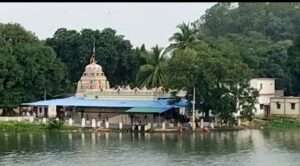
Sri Anjaneya Swamy Temple is located in Madalagatti Village, near Kombli, in Hoovina Hadagali Taluk of Vijayanagara District, Karnataka. The temple is beautifully situated on the sacred banks of the Tungabhadra River and is surrounded by a serene natural environment. It is one of the most revered Hanuman temples in the region and attracts devotees from nearby villages as well as distant places throughout the year.
According to temple tradition, the original idol of Sri Anjaneya Swamy was installed nearly 6,000 years ago by King Janamejaya of the Pandava lineage. During the Mughal period, the idol was broken into five pieces and thrown into the Tungabhadra River. Later, during the Vijayanagara Empire, the idol was rediscovered and reinstalled by Sri Vyasa Raja Swamy, making the temple an important centre of Hanuman worship.
The presiding deity is Sri Anjaneya Swamy, popularly worshipped as Vyasaraja Prathishta Hanuman, signifying that the deity was consecrated by Sri Vyasa Raja. The Lord is seen in a standing posture, holding a gada in his left hand while his right hand is in Abhaya Mudra, blessing devotees with protection and grace. Lord Hanuman is worshipped as the embodiment of devotion, loyalty, wisdom, courage, and strength. Devotees visit the temple seeking protection from difficulties, success in education and career, good health, mental peace, and fulfilment of their wishes. Tuesdays, Saturdays, and the holy month of Shravana are considered especially auspicious for worship.
The temple reflects the ancient Dravidian style of architecture. Though modest in size, it is believed to possess immense spiritual power associated with the Treta Yuga and Dwapara Yuga. The temple consists of a Garbhagriha, Mantapa, Ardha Mantapa, Gopura, and a Pradakshina Patha for circumambulation. Its simple architecture and peaceful surroundings provide a spiritually uplifting atmosphere for devotees.
Sri Anjaneya Swamy Temple has been a sacred centre of Hanuman worship for centuries. The temple became prominent during the Vijayanagara period when Sri Vyasa Raja Swamy rediscovered the broken idol and reinstalled it following divine guidance. Since then, the temple has attracted devotees from different parts of Karnataka who believe that sincere prayers offered here remove obstacles, provide protection, and bring prosperity and spiritual strength.
According to temple tradition, the original idol of Sri Anjaneya Swamy was installed around 6,000 years ago by King Janamejaya, a descendant of the Pandavas. During the Mughal period, the idol was broken into five pieces and thrown into the nearby Tungabhadra River.
Centuries later, during the Vijayanagara Empire, Lord Anjaneya appeared in the dream of Sri Vyasa Raja Swamy and instructed him to recover the broken pieces of the idol and reinstall them. When Vyasa Raja wondered how he could locate the scattered fragments, Lord Hanuman revealed that fireballs would appear at five different places, marking the locations where each fragment lay.
Following the divine guidance, Sri Vyasa Raja found all five pieces, carefully joined them together, and restored the sacred idol. After the reinstallation, he performed special worship for 48 days and instructed the temple priest not to disturb the sealed idol during that period. However, overcome by curiosity, the priest opened the seal two days before the completion of the 48-day ritual. As a result, the fingers of the deity did not reattach completely. Even today, devotees can see the partially unattached fingers of the idol, which remain a unique feature of this sacred temple.
According to local folklore, the village was originally called “Modala Beti,” meaning “First Meeting” in Kannada, as this is believed to be the place where Lord Hanuman first met Lord Rama and Lakshmana while they were searching for Goddess Sita. Over time, the name evolved from Modala Beti to Modala Pete, then Modala Ghatta, and finally became Madalagatti.
The Annual Jatre, held every December, is the temple’s biggest festival and is famous for its Rathayatra, during which devotees offer bananas to the temple chariot as a mark of devotion. Hanuman Jayanti attracts thousands of devotees for special worship, while Kartika Masa is observed with special pujas and the lighting of D


