



The decision of the Faizabad Bar Association and Ayodhya Bar Association of Uttar Pradesh, not to provide legal assistance to those accused of siphoning off donations and jewellery belonging to the Bhavya Shri Ram Mandir deserves appreciation. It sends a powerful message that officers of the court are conscious not only of their professional responsibilities but also of the larger moral obligation to society. The construction of the Ram Mandir was not an overnight project. It was the culmination of centuries of faith, decades of social movements, and one of the longest legal battles in independent India. Thousands of devotees contributed their hard-earned money and precious jewellery with the belief that every rupee would be used for the temple’s construction and maintenance. If those entrusted with safeguarding these offerings are themselves accused of misappropriation, it amounts not merely to financial fraud but to a betrayal of public faith. In such circumstances, the stand taken by the Bar Association elevates the dignity of the legal profession. It demonstrates that while the law guarantees justice to every citizen, society is equally entitled to expect ethical standards from those who practice it. The legal fraternity has repeatedly risen to defend constitutional values. During some of the country’s most sensitive terror cases—including those involving the 26/11 Mumbai attacks, the Parliament attack, serial bomb blasts, and other acts of terror—the courts functioned despite enormous public anger. Even the most dreaded terrorists were provided legal representation because the Constitution mandates a fair trial. That is precisely what distinguishes a democracy governed by the rule of law from a mob-driven society. Yet there is another side of the debate that deserves attention. While every accused is entitled to due process, should lawyers or organisations actively convert courtrooms into platforms for glorifying terrorists or frustrating investigations through endless, frivolous petitions? Security agencies often spend years gathering intelligence, tracking suspects across borders, risking the lives of personnel, and collecting evidence under extraordinarily difficult circumstances. When legal processes are deliberately abused—not to ensure justice but merely to delay trials indefinitely—the public inevitably begins questioning whether justice is being served or obstructed.
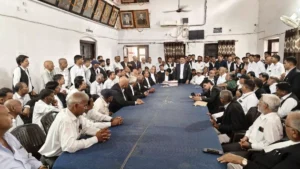
The legal profession must introspect on this distinction. Defending constitutional rights is one thing; becoming an instrument to prolong proceedings without merit is quite another. Equally important is the growing trend of Public Interest Litigations being filed against almost every major policy decision of democratically elected governments. PILs were conceived as an extraordinary constitutional remedy to protect the rights of the poor, the voiceless, and the marginalised. Over the years, however, they have increasingly become political weapons, often filed by ideological opponents seeking judicial intervention where electoral verdicts have gone against them. Courts have themselves cautioned against the misuse of PILs, repeatedly imposing costs on frivolous petitions. That scrutiny must become even more rigorous. Judicial time is among the country’s most precious public resources. Every hour spent hearing politically motivated litigation is an hour unavailable to ordinary citizens waiting years for justice in civil disputes, criminal trials, family matters, labour issues, and property cases. The common citizen still views the judiciary as the last refuge against injustice. That faith must never be diluted. The Bar and the Bench together carry the responsibility of protecting it. The Uttar Pradesh High Court Bar Association has shown that professional responsibility can coexist with moral conviction. If similar ethical standards spread across the legal fraternity—not by denying constitutional rights, but by refusing to aid corruption, discourage abuse of judicial processes, and uphold the larger interests of justice—the black robe will command even greater respect. Ultimately, the majesty of the judiciary does not rest merely in interpreting laws. It rests in reinforcing public confidence that justice will neither be bought, delayed, nor manipulated. When that happens, the greatest beneficiary will not be any government or political party—it will be the ordinary Indian, who still enters a courtroom believing that truth, however delayed, will ultimately prevail.


Professional Ethics of the Bar associations of Ayodhya stand out as exemplary of judiciary as the guardian of Democracy and people’s trust .
in this way it restores the trust and credibility of judiciary in the eyes of common man .. may this judicial tribe increase in the rest of India too 👏🏻