Pakistan never ceases to astonish the world. A nation that once dreamt of strategic parity with Bharat is today grappling with a far more humiliating reality — its citizens are being deported in thousands for organized begging from one of its closest financial benefactors, the United Arab Emirates. Nothing exposes the collapse of a state more brutally than this. While Prime Minister Shehbaz Sharif and Army Chief Asim Munir continue their endless rhetoric about challenging Bharat militarily and economically, Pakistan’s own Interior Ministry has presented an embarrassing picture before Parliament. Nearly 5,500 Pakistanis have been deported from the UAE for their involvement in begging rackets and other illicit activities. The message from Abu Dhabi could not have been clearer: enough is enough. For decades, Pakistan has survived not on economic strength but on bailouts, charity, and borrowed money. Whether it is the IMF, China, Saudi Arabia or the UAE, Islamabad has become synonymous with financial dependency. Yet its political and military establishment continues to sell fantasies of becoming a regional superpower. One wonders: how can a nation that cannot provide dignified livelihoods to its own citizens dream of confronting a country that has become the world’s fourth-largest economy and one of the fastest-growing major powers? The irony is staggering. Dubai police have launched a major crackdown on organized begging syndicates, many of which involve Pakistani nationals arriving on visit visas. The UAE has responded with severe restrictions on visa processing, including the suspension of many single-entry and standard visas for Pakistani citizens. First-time applicants now face immense scrutiny unless they have immediate family members already residing there. The penalties are severe and deservedly so. Begging is a criminal offence across the UAE. Offenders can be fined up to 5,000 dirhams and sentenced to three months in prison. Those operating or recruiting members into begging gangs face a minimum six-month jail term and fines beginning at 100,000 dirhams. This is not an isolated law-and-order issue. It is a symptom of a systemic collapse.
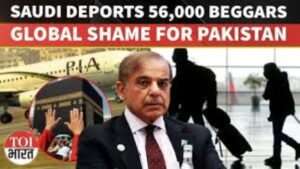
Pakistan’s own Federal Investigation Agency has reportedly prevented tens of thousands of individuals from boarding international flights on suspicion that they intended to travel abroad solely to beg. Imagine the level of institutional embarrassment. The government itself has to stop its own citizens from exporting poverty and humiliation to foreign shores. And yet, the Pakistani establishment continues to indulge in grandiose speeches about defeating Bharat. The disconnect between rhetoric and reality has never been wider. Adding to the absurdity was US President Donald Trump’s recent remark suggesting that Bharat may one day buy oil from Pakistan. Such statements may generate headlines, but they sound detached from ground realities. Pakistan today struggles to maintain foreign exchange reserves, battles chronic energy shortages, and survives on external assistance packages. A country struggling to pay its bills is hardly in a position to emerge as an energy giant. Meanwhile, Bharat has built global credibility through economic reforms, digital infrastructure, manufacturing expansion and strategic diplomacy. From becoming a leading voice of the Global South to emerging as a trusted geopolitical player, Bharat has moved forward while Pakistan remains trapped in an endless cycle of military dominance, political instability, and economic bankruptcy. To be fair, millions of hardworking Pakistani professionals continue to contribute positively to the economies of the UAE and Saudi Arabia. They should not be unfairly stigmatized because of the actions of criminal syndicates. But that distinction does not absolve Islamabad of responsibility. The world is no longer willing to tolerate the export of organized begging networks under the guise of labour migration. International goodwill has limits. Perhaps it is time for Shehbaz Sharif and Asim Munir to descend from their pedestal of delusion and confront the truth. National prestige is not built through anti-Bharat speeches, chest-thumping military slogans or manufactured nationalism. It is built by creating jobs, strengthening institutions and giving citizens a future that does not force them to beg on foreign streets. Until then, Pakistan’s tall claims will remain precisely what they are today — hollow slogans emanating from a state exporting beggars while importing illusions.