



India’s cities are growing rapidly. From metropolises to medium and small towns, the pace of urbanization is unprecedented. Millions of people are migrating to cities every year in search of economic growth, employment opportunities, and better amenities. But amid this rapid urban expansion, a fundamental question often remains neglected—are our cities walkable for their citizens? Are roads only for vehicles or for humans as well?
Recently, the judiciary has made significant observations, establishing the right to walk on safe footpaths as a fundamental right, linking it to the right to life and dignity under Article 21 of the Constitution. This is a welcome constitutional boost, as it attempts to view urban infrastructure for the first time not just from the perspective of construction and transportation, but in the context of civil rights and human dignity. But the question is, will judicial declarations or legal recognition alone truly make Indian cities pedestrian-friendly? The answer is negative. Real change will come when urban planning approaches shift from a vehicle-centric model to a human-centric model, and walking is accepted as a respectable and primary mode of transportation in society.
Walking is not a limited activity in India. According to various government and independent studies, a large number of daily journeys in the country are made entirely or partially on foot. The poor, laborers, students, women, the elderly, and citizens with disabilities travel the most on foot. Despite this, pedestrians receive the lowest priority in urban planning. In most cities, sidewalks either do not exist or are so narrow, broken, and encroached that they are difficult to use. In many places, sidewalks are converted into parking lots, extensions of shops, carts, or storage for construction materials.
The most tragic consequence of this situation is road accidents. India ranks among the world’s leading countries in road accident deaths. Pedestrians account for a significant number of these accidents. Thousands of people lose their lives each year due to road crossing difficulties, the lack of sidewalks, and high-speed vehicles. This is not just a transportation crisis, but also a question of public health, social justice, and human rights.
Article 21 of the Constitution guarantees every person the right to a dignified life. Over time, the judiciary has expanded its interpretation to include rights such as a clean environment, education, health, and housing. The right to safe pedestrian paths is an extension of this progressive constitutional approach. When a citizen cannot safely travel from their home to school, office, hospital, or market, their right to life and liberty remains incomplete. Therefore, footpaths are not just structures of cement and concrete, but symbols of civil liberty and equality.
Yet, merely declaring rights is not enough. Despite the legal recognition of many rights in India, serious challenges remain in their implementation. The right to education, the right to a clean environment, and the right to food are examples of this. Similarly, administrative will, financial investment, and institutional reforms will be necessary to implement the right to a footpath.
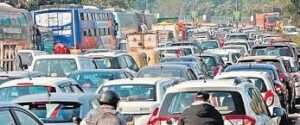
The biggest problem with Indian urban governance is its vehicle-centric approach. The post-independence development model considered wide roads, flyovers, and expressways as symbols of modernity. The success of cities was measured by vehicle speeds and road capacity. As a result, pedestrians, cyclists, and public transport users were marginalized. The objective of urban planning became smooth vehicular movement rather than public convenience.
This approach also contradicts the principles of social justice. Private car users in India are relatively low, while most citizens rely on public transport, bicycles, or walking. Despite this, a significant portion of public funds is spent on projects that primarily benefit vehicle owners. This increases inequality in the distribution of resources and impacts the mobility of poorer sections.
The condition of sidewalks is also gender-critical. Women, especially working women and students, rely heavily on safe and well-lit pedestrian pathways. Poor sidewalks, inadequate lighting, and unsafe public spaces limit their mobility. Similarly, barrier-free sidewalks are essential for the elderly and the disabled. If urban infrastructure is not designed with the needs of these groups in mind, cities cannot be considered inclusive.
The concept of human-centered urban planning becomes important in this context. Its fundamental principle is that cities should be designed for people, not vehicles. Streets are not just transportation corridors, but also social and public spaces. Sidewalks, cycle tracks, green spaces, public transportation, and universal accessibility are key elements of this model.
Many cities around the world have achieved remarkable success in this direction. By prioritizing pedestrians and public transportation, several cities in Europe and Latin America have achieved reductions in road accidents, control of air pollution, and improvements in the quality of life for citizens. These experiences demonstrate that safe and walkable cities are not merely a matter of traffic management, but a holistic urban development strategy.
India has also seen some positive initiatives. Some cities have attempted to adopt the concept of “Complete Streets,” which makes roads safe for all users. The Smart Cities Mission has also led to efforts to develop sidewalks and revitalize public spaces in several locations. However, the impact of these initiatives remains limited and has not led to widespread structural change.
There are several reasons behind this situation. First, the financial and administrative capacity of urban local bodies is limited. Most municipal bodies struggle with resource constraints. Second, there is a lack of coordination between various agencies. Agencies responsible for road construction, traffic management, drainage, electricity, and telecommunications perform tasks separately, leading to frequent digging up of pavements and compromising their quality. Third, there is a lack of citizen participation. Plans are often developed using a top-down approach, failing to adequately address the needs of local communities.
Relying solely on legal measures will not be enough to achieve the success of the right to sidewalks. Courts can declare a right and issue directives to governments, but social and administrative change is necessary to transform the character of cities. This change must first be reflected in policymaking. Pedestrians should be prioritized in urban transportation policies. Sidewalks, safe crossings, and disabled-friendly facilities should be mandated in every road project.
Second, budget allocations need to change. If most municipal resources continue to be spent on flyovers and road widening, pedestrian amenities will never become a priority. A certain portion of public investment should be reserved for non-motorized transport.
Third, urban culture must change. In Indian society, personal vehicles, especially cars, are considered a symbol of social prestige. In contrast, walking is often considered a necessity. Until this mindset changes, pedestrians will not receive the respect they deserve in policy and practice. Cities must promote the idea that walking is not just a means for the poor, but part of a healthy, sustainable, and environmentally friendly lifestyle.
Fourth, technology and data must be better utilized. Identifying accident-prone areas, assessing pedestrian traffic, and regularly monitoring infrastructure can lead to more effective planning. The concept of smart cities will only be meaningful if technology is used to enhance the safety and convenience of citizens.
Fifth, it is essential to ensure accountability. If a road project fails to build standard pavements or fails to maintain them after construction, the relevant agencies should be held accountable. Transparency in urban governance and social audits can help in this direction.
However, this approach has some limitations. In India’s densely populated cities, dominated by the informal economy, sidewalks aren’t just used by pedestrians. Street vendors, small traders, and unorganized workers also earn their livelihoods on these spaces. Therefore, the process of making sidewalks encroachment-free must be implemented with a humane and balanced approach. Eviction alone can lead to social conflict. The solution is to ensure adequate space for both livelihoods and mobility in urban planning.
Ultimately, the right to walk on safe sidewalks is a crucial step in the development of Indian democracy. This right reminds us that the true purpose of cities is to improve the lives of citizens, not merely to speed up vehicles. But the success of this right will depend more than court orders on whether India can make its urban development model human-centric. If urban governments plan with the needs of pedestrians, women, children, the elderly, and the disabled at the center, cities can become safer, inclusive, and sustainable.
Therefore, declaring safe sidewalks a fundamental right is an important beginning, but it is not the destination. The real goal should be to create cities where every citizen can walk with dignity, without fear, obstruction, or insecurity. This is the essence of human-centered urbanism, and it should also be the hallmark of India’s future cities.

