



My granddaughter was reading aloud from her alphabet book the other day. A for Apple, B for Ball… and eventually, G for Goat.
Nothing has changed, I thought. Sixty years ago, when I was in nursery school, my alphabet book also had G for Goat. The animal looked much the same – four legs, two horns, a beard, and a short tail.
A goat was just a goat. There was nothing particularly great about it. It did not play football. It did not score centuries. It did not win Oscars. It certainly was not the Greatest Of All Time.
It was simply a useful domestic animal that gave milk, occasionally sacrificed itself for a good biryani and generally minded its own business.
If anyone had pointed at a footballer and called him a goat, it would have been interpreted as an insult rather than a compliment.
Then somebody decided ordinary words were no longer sufficient. Today, thanks to the modern epidemic of acronyms, GOAT no longer refers to the animal in the alphabet book. It refers to anyone who can kick a ball, swing a bat, sing a song, act in a movie or collect enough followers on social media.
The goat, meanwhile, has become collateral damage in the evolution of language. Naturally, this is not the only victim.
The rise of the OG
There is another creature called OG. For years, I assumed it was either an oil company or a fertilizer brand. Apparently it means Original Gangster.
This discovery raised more questions than it answered. Why is a retired actor an Original Gangster? Why is a former cricketer an Original Gangster? Why is a man whose most daring crime was parking in a no-parking zone suddenly an Original Gangster?
Nobody explains these things. The younger generation simply expects us to accept them. Then there is LOL.
In my day, when something was funny, people laughed. Now they type LOL, or roll on the floor laughing (ROFL).
Curiously, they often do so while maintaining the facial expression of a district collector reviewing drought conditions.
The more enthusiastic among them write LMAO (laughing my ‘backside’ off). This sounds less like laughter and more like a government agency.
The fear of missing out
Another favourite is OMG. Three letters have replaced an entire sentence. Civilisation spent thousands of years developing language. The smartphone generation appears determined to return it to cave paintings.
Then comes FOMO – Fear Of Missing Out. Earlier generations simply missed out. We survived. Often, we did not even know we had missed out, which made life considerably more peaceful.
Today, people experience anxiety because somebody they have never met is eating sushi in Bali.
Its cousin is YOLO – You Only Live Once. This slogan is usually invoked immediately before doing something unwise.
Previous generations called such behaviour recklessness. Modern generations call it YOLO. The hospital admission procedure remains unchanged.
Rizz, no cap
Then there is ‘rizz’. After much investigation, I discovered it means charisma. Why replace a perfectly serviceable English word with something that sounds like a mosquito repellent remains one of the great mysteries of our age.
Another expression is ‘no cap’. When I first encountered it, I assumed it referred to a shortage of headwear. Apparently, it means somebody is speaking the truth. A person can now say, ‘No cap, bro,’ and be understood.
Meanwhile, entire dictionaries sit unused on bookshelves, wondering where they went wrong. The Oxford English Dictionary now requires a teenage interpreter.
The latest expression is ‘slay’. For most of my life, slaying involved swords, spears, dragons, and occasionally politicians in Shakespearean drama.
Now, a person merely wears a fashionable jacket and is said to be slaying. The dragons, I assume, have filed for unemployment.
What worries me is that these expressions multiply faster than rabbits. By the time I understand one acronym, three new ones have appeared.
A teenager can now say: ‘TBH, that GOAT has insane rizz. No cap. Total OG. LOL.’ To be honest, I had to look up what TBH means.
By the time I decode the sentence, the teenager has completed college and moved on to a newer vocabulary.
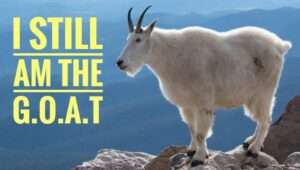
The only consolation is that my granddaughter still reads G for Goat. Not Greatest Of All Time. Just goat. The original goat – the one that gives milk, eats grass, and has absolutely no interest in football statistics, social media followers or personal branding.
And judging by the expression on its face, it is not entirely pleased with what has happened to its name.



😂😂 I face this dilemma everyday.. as my students have to use language catering to my Cambridge, Oxford and Indianised English version while connecting to me online.. though junior lecturers out of familiarity use the modern slang but I reply to them in my old fashioned ie usual conventional language. This problem was resolved and I gained strength with their FAQ ie frequently asked questions ..” How do we develop word power and vocabulary lie you Ma’am?” I simply say “ Follow me .. old is gold “ Read old classics to enhance language fluency.
I am able to enjoy your write up because of its linguistic style, this skill cannot be acquired through slangs . Their lies your strength of being a model 🫡
One more point would like to add .. with AI and Chat GPT information is in abundance in simple way yet the charm of old quotations remain ever quotable… that’s how proverbs evolved..over and above time capsules.