



Vinay Rao
Finally, the Hyderabad Cricket Association (HCA) appears to have cracked the whip, albeit informally. A circular rarely makes news, but this one certainly does.
The informal communication sent by HCA Secretary Jeevan Reddy raises an intriguing question: What if certain clubs deliberately choose to forgo the Development Fund? Not because they do not need the money, but because accepting it would compel them to submit documents they would rather keep hidden.
What if the price of remaining in the shadows is simply sacrificing a cheque?
If that indeed is the calculation being made, HCA seems to have one answer ready: clubs that fail to comply should not be allowed to vote. With the presidential elections approaching, cleaning up the electorate before the polls becomes imperative.
The Hyderabad Cricket Association has directed its affiliated clubs to submit audited financial statements and details of their duly elected Executive Bodies, failing which they will forfeit eligibility for the Development Fund. The funds, HCA has clarified, will be released on a club-by-club basis rather than through a collective disbursement.
The message is simple and unequivocal: No documents, no money.
The larger question, however, is whether some clubs are willing to lose the funds if it means avoiding scrutiny. If so, the issue is no longer about financial assistance but about transparency, accountability, and legitimacy within the HCA ecosystem.
The forthcoming elections will reveal whether this exercise is a genuine clean-up operation or merely another administrative ritual. Either way, clubs that refuse to disclose their records cannot be permitted to influence the future leadership of Hyderabad cricket.
Simple enough. Except that what looks like a routine administrative instruction is, in the current context, anything but.
Several clubs have not submitted accounts since 2022–23. That is three financial years of silence — not a delay, not an oversight, but a sustained pattern of non-compliance from clubs that have nonetheless continued to operate under the HCA umbrella, field teams, and exercise membership rights. The circular finally puts a price on that silence.
The financial accountability piece is important. The Executive Body reporting requirement is more important.
HCA has for years operated without a reliable, current record of who actually runs its affiliated clubs. Officials change, committees reconstitute, proxies step in — and the Association finds out through rumour or not at all. The consequences play out in ways both mundane and serious. Accreditation cards get held up because no one at HCA can confirm with certainty who the current secretary of a club is. Officials who no longer hold any formal position continue to show up and speak on behalf of clubs because there is no verified record to contradict them. Eligibility disputes drag on for months because the paperwork simply does not exist. And through all of this, those who benefit most from the opacity have every incentive to keep it that way.
Requiring clubs to report their elected management every year — not once, not when convenient, but annually and on record — closes that gap permanently. It gives HCA a living register of its affiliate ecosystem. It removes the dependence on informal networks and third-party information for something as basic as knowing who holds office where. It makes administration cleaner, disputes shorter, and manipulation harder.
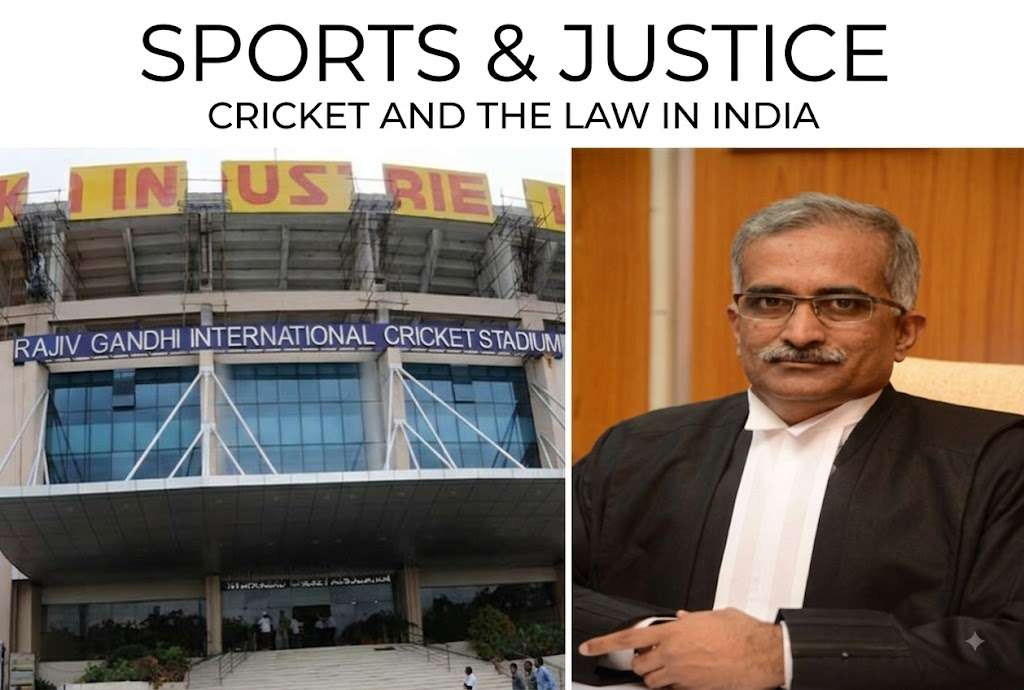
It also strikes at something more serious that has shadowed HCA for years. Justice L. Nageswara Rao, the Supreme Court-appointed one-member committee that administered HCA ahead of the 2023 elections, produced a damning finding: 80 clubs were effectively controlled by just 12 individuals and their family members. The same hands, operating through relatives and proxies, controlled block votes and steered elections to key posts in the Apex Council. Justice Rao ordered that no individual or family member could sit on the executive committee of more than one club — a direct attempt to break the stranglehold.
The response from several quarters was predictable. Club secretaries were swapped out on paper. New names appeared on letterheads — names with no history in cricket, no connection to the game, installed purely to satisfy the letter of the order while violating its spirit entirely. The families stayed. The control stayed. And crucially, several clubs that should have faced scrutiny never did — slipping through the gaps of a one-time review that had no mechanism for ongoing verification. Annual mandatory reporting changes that equation. It converts a one-time snapshot into a continuous record, making cosmetic reshuffling progressively harder to sustain year after year.
But HCA should not stop at collecting documents. The Association should go further: reach out directly to newly enrolled and recently reconstituted clubs, speak to their members, and understand the ground reality behind the paperwork. The current climate — with elections on the horizon and reform under judicial oversight — makes this especially important. Who are these officials? Are they active in cricket? Are they genuinely independent of the network Justice Rao’s findings identified? A document submitted is evidence of compliance on paper. A conversation confirms it in fact. The difference between the two is exactly where proxy arrangements have historically survived.
Which brings us back to where we began.
Some clubs will not submit. They will forgo the Development Fund, avoid the documentation process, and hope to carry on as before. If the only consequence is a withheld cheque, they will take that trade — and then show up to vote in the presidential election as though nothing happened.
That cannot be permitted. The presidential election will determine the direction of HCA at a critical moment — with the TG20 league underway, BCCI scrutiny constant, and the reform process still fragile. The composition of the electorate that decides that election matters enormously. A club that has not submitted accounts, not reported its management, and not met its basic membership obligations has placed itself — by its own choice — outside the Association’s institutional framework. It has no standing to then participate in determining who leads that institution.
Non-compliant clubs should not vote. That is not a punitive position — it is a logical one. Voting rights and membership obligations are two sides of the same coin. HCA must establish who is in good standing before the election process begins — not after ballots are cast and results are contested.
The circular is a beginning. What follows will reveal whether this Administration means what it has put in writing — or whether, once again, the right words were issued and the wrong people ignored them.



this is nothing new.we have always given utilisation certificate from CA.
what funds r v getting to get scrutinized.
we r not scared of submitting details and all clubs have done so before also.
nothing new
bro vinay rao pl disclose your identity first before you write things you must know that every year at the time of subscription we submit body and from last several years we hv not received any development fund ombudsman order is there we hv always abide by compliance be it earlier or by smc and different appointed committees
In the month of April when Members had paid their Annual Subscription, the list of its Committee was also submitted to the Association, as mentioned in the HCA Circular received. The point is, how many times should the same information be furnished. Repeated enquiries of the same only exposes the HCA’s administrative deficiency. That it is unable to maintain its records properly even for a year.
Next, what financial accounts are being asked for??
There has been no disbursal of funds to any of the members since the COVID grant given in 2021. There is ‘zero balance’ in Club’ bank accounts. So what financial/utilisation documents need to be submitted.
It would be great if the writer raises these points with HCA admin than paint a poor picture for the members. It is not right to speculate negatively in every matter.
Every ball that hits the pad shall not yield an LBW decision.
what about benami clubs? leasing money earned na so why should you get development funds? why no balance sheet given?
every year clubs are sold and member’s changing who will control?
remove all clubs and let .
Government take over.
2 L for three days team lease, 1.5 for 2 day team and 80k for one day. why then fund from HCA?