Special Correspondent
One of the greatest satisfactions in journalism comes not from breaking a story, but from seeing uncomfortable truths eventually acknowledged by those who once remained silent.
For years, this e-paper has consistently highlighted the deep-rooted problems plaguing the Hyderabad Cricket Association (HCA) — corruption, nepotism, favouritism, conflict of interest, manipulation of cricketing opportunities, and the gradual erosion of one of India’s proudest cricketing institutions. Many disagreed. Some ridiculed. Others attempted to dismiss the concerns as exaggeration or personal agendas.
Yet facts have a peculiar habit. They refuse to remain buried forever.
Over the years, as our readership expanded among cricket lovers, former cricketers, administrators, club officials and stakeholders, this platform has increasingly become a trusted avenue for those who genuinely care about Hyderabad cricket. Some share information. Some provide documentary evidence. A few, burdened by years of witnessing the system from within, come forward with what can only be described as confessions.
One such confession recently reached this author from a longtime associate of HCA — an individual who has observed the functioning of the Association from close quarters for decades.
What makes his observations significant is not merely what he says, but the fact that his assessment mirrors almost every concern this publication has repeatedly raised while advocating reforms.
His words are worth serious consideration.
According to him, the central problem facing HCA is not merely corruption or administrative inefficiency. The real issue is the entrenched power structure that has evolved over several decades.
A small group of individuals and clubs have acquired enormous influence over the Association, creating a system that is virtually immune to change. Most affiliated clubs obtained their memberships more than four decades ago. Since then, the membership structure has remained largely frozen.
The consequence is obvious.
A closed ecosystem has emerged where the same individuals, families and vested interests continue to dominate the electoral process, administrative decisions, and cricketing opportunities.
In such an environment, genuine reformers often find themselves isolated.
The insider candidly admits that meaningful structural reforms and grassroots cricket development have never truly become priorities because preserving the existing power equations has taken precedence over everything else.
His confession further underlines an uncomfortable reality.
Cricket today is no longer merely a sport. It is a multi-crore ecosystem involving sponsorships, contracts, infrastructure projects, league participation, player selections and commercial opportunities. When significant financial interests become intertwined with governance, reform naturally encounters resistance.
Therefore, according to him, unless the membership structure itself is revisited and participation broadened, changing the system from within will remain an extraordinarily difficult task.
This e-paper agrees with much of that assessment.
However, we differ on one crucial point.
While structural challenges are undeniable, it would be incorrect to suggest that reform is impossible.
If a handful of determined individuals can capture institutions, a handful of determined individuals can also reclaim them.
The problem is not the absence of solutions. The problem is the absence of collective will.
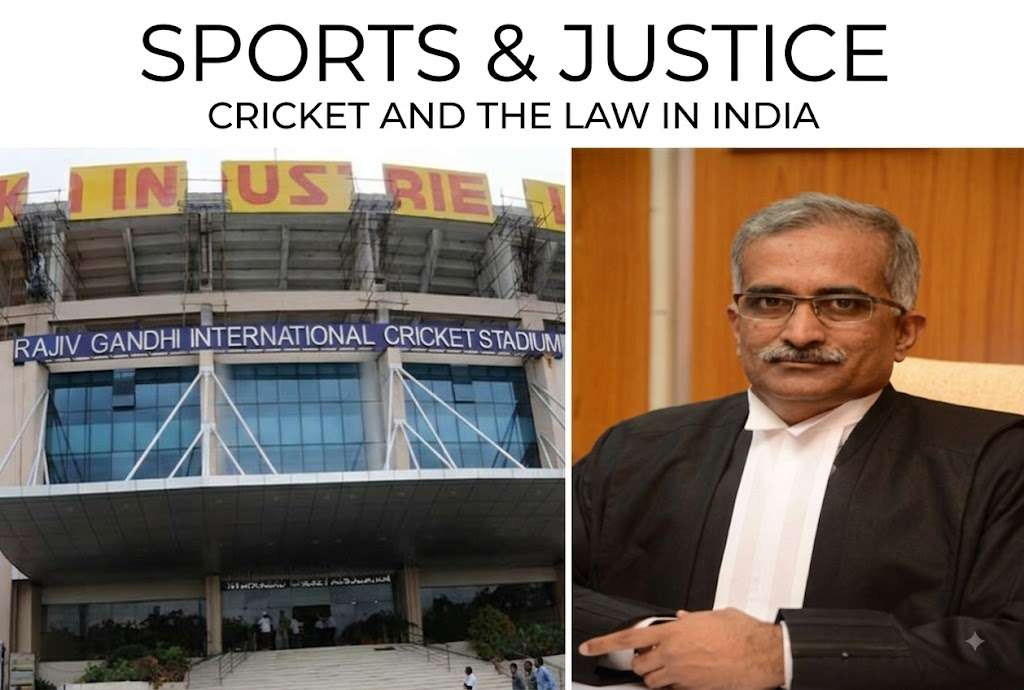
The insider’s confession also indirectly revives questions surrounding the landmark intervention by former Supreme Court-appointed Ombudsman Justice L. Nageswara Rao.
His tenure remains one of the most significant attempts to address the conflict-of-interest issue that had become endemic within HCA.
Acting on findings and recommendations emerging from judicial scrutiny of the Association’s affairs, Justice Nageswara Rao barred as many as 54 clubs from participating in the electoral process due to alleged conflict-of-interest concerns.
That decision was controversial.
Predictably, those affected criticised the move.
Some questioned the rationale. Others questioned the authority.
Yet history may ultimately judge that intervention far more favourably than many were willing to admit at the time.
What often gets overlooked is that before demitting office, Justice Nageswara Rao reportedly indicated that complaints existed against another 25 to 30 clubs that also warranted examination under similar principles.
Had subsequent administrators and regulatory authorities pursued those concerns with the same seriousness, the trajectory of HCA might have been dramatically different today.
Even now, the opportunity has not entirely vanished.
The present judicial oversight mechanism, coupled with a new administrative leadership, still possesses the ability to revisit unfinished reforms.
The challenge lies in demonstrating courage.
Courage to question entrenched interests.
Courage to enforce transparency.
Courage to prioritise cricket over politics.
Beyond the electoral structure, several other unresolved issues continue to demand scrutiny.
If the Telangana government is genuinely committed to cleansing sports administration, there are multiple reports and investigations that deserve public attention.
Questions surrounding the findings of Anti-Corruption Bureau inquiries.
Questions regarding allegations linked to compensation payments running into several crores in connection with stadium-related controversies.
Questions concerning the transformation of certain institutional and corporate clubs over the years.
Questions regarding the concentration of influence among a relatively small group of individuals and their associates.
Questions regarding whether opportunities in Hyderabad cricket are being distributed on merit or through networks of influence.
These questions are not new.
This publication has repeatedly raised them because they strike at the very heart of cricket’s credibility.
No cricketing ecosystem can flourish when aspiring players and their families believe that performance alone may not determine selection.
No association can restore public trust if perceptions of favouritism continue to persist.
Particularly worrying is the growing overlap between private cricket academies and selection pathways. While academies undoubtedly play an important role in talent development, safeguards must exist to ensure that selections into state teams remain transparent, merit-based and free from commercial pressures.
Hyderabad cricket’s decline over the past two decades did not occur overnight.
Nor was it caused by a single individual.
It was the cumulative outcome of institutional complacency, unchecked conflicts of interest, administrative failures and a gradual departure from meritocracy.
The insider’s confession does not reveal anything entirely new.
What it does provide is something equally valuable — validation from within.
Validation that the concerns raised by independent journalism were not imaginary.
Validation that the problems are structural.
Validation that genuine stakeholders recognise the need for reform.
Most importantly, it confirms that facts cannot be hidden indefinitely.
For years, many preferred silence.
Today, even those who have spent decades around HCA are acknowledging what was once whispered privately.
The road to revival will undoubtedly be difficult.
But every meaningful reform begins with one essential step — accepting the truth.
And if Hyderabad cricket is to reclaim its lost glory, truth can no longer remain confined to private conversations and confidential confessions.
It must become the foundation of reform itself.