Ramu Chilimella
Before today’s generation proudly boasts about modern advancement, it is worth revisiting the glorious heritage of Bharath and the extraordinary credentials of our ancient civilizations.
The discoveries at Dholavira, Gujarat — a part of the Harappan Civilization — reveal that nearly 4,500 years ago, our ancestors had already built well-planned urban communities with scientific water management, private sanitation systems, structured drainage networks, and remarkable civic discipline.
Long before the modern world spoke about hygiene, sustainability, and smart cities, Bharath was already practicing them with wisdom and precision.
True progress is not merely about technology, but about sustainable living, societal responsibility, and harmony with nature — values deeply embedded in our civilization since antiquity.
“A civilization becomes great not by what it claims today, but by what it created thousands of years ago.”
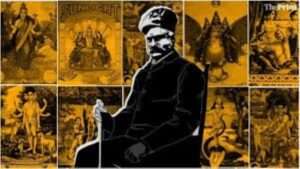
When Raja Ravi Varma painted the gods, he was not merely creating art — he was shaping the spiritual consciousness of future generations.
At a time when divine imagery largely remained within temples, palaces, and sacred institutions, he had the foresight to imagine something revolutionary:
What if every ordinary home could experience the presence of the divine?
That single vision changed India forever.
Through his soulful depictions of God and Goddess Sri Krishna, Rama, Lakshmi, Saraswati, Shiva, and Devi, he brought spirituality out of exclusivity and into everyday life. His lithographic prints travelled across villages, towns, and cities, allowing millions of families to create sacred spaces within their own homes.
He transformed devotion from a distant ritual into a personal daily experience.
A lamp before a picture…
A small prayer corner…
A child growing up seeing divine grace every morning…
These became part of India’s spiritual fabric because one man dared to think beyond his time.
Critics questioned him.
Some opposed the idea of making divine images accessible to all.
But visionaries are often criticised before they are celebrated.
Raja Ravi Varma understood a timeless truth:
when culture enters homes, it enters generations.
His paintings did not merely decorate walls — they shaped values, devotion, identity, and spiritual connection for millions.
True leadership is not only about influencing the present.
It is about creating an impact so deep that generations continue to live within your vision long after you are gone.
Few people leave behind success.
Rare visionaries leave behind civilisation-level influence.
Raja Ravi Varma was one among them.