Online Sportsdek
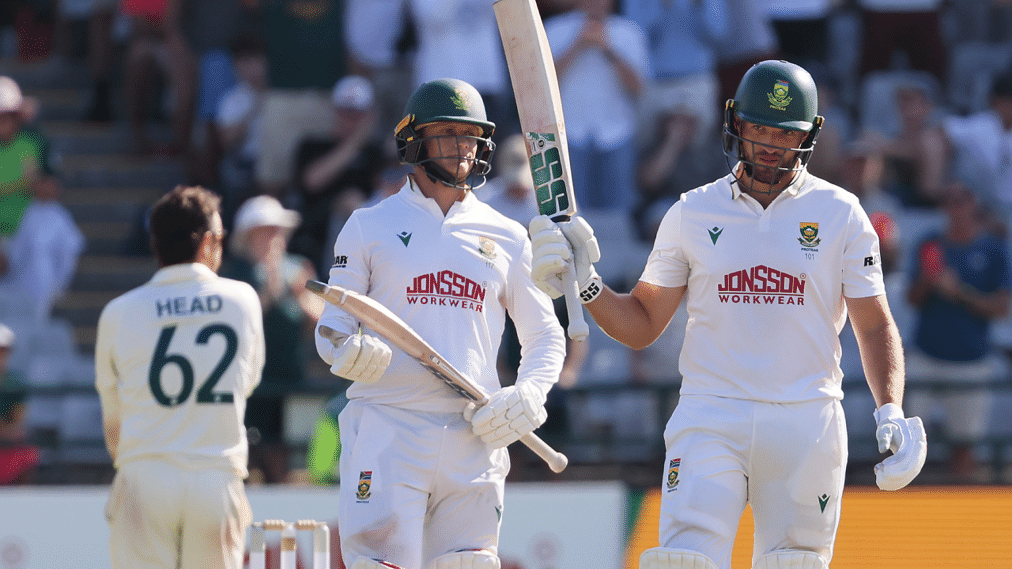
Ryan Rickelton and Wiaan Mulder created history as they rescued South Africa in the third and final Test of the three-match series against Australia with centuries on the fourth day of play on Friday (October 30) at the Newlands Stadium in Cape Town. The number six and seven batters of the Proteas team set a unique world record to set up a thrilling final day of play in the series, where the visitors need 288 to seal victory while the hosts need to take 10 wickets.
Rickelton and Mulder joined each other at the crease with their team in spot of bother at 181-5 and just an 81-run lead. However, they put together a 154-run partnership. The Proteas wicket-keeper, who batted at number six, scored 101 runs before being run out, while the all-rounder came at number seven and smashed 115 runs.
South Africa Achieve Unprecedented Feat
Rickelton and Mulder’s achievement is the first instance of a number six and seven batter (or two batters batting at number six and below) scoring centuries in the second innings (third or fourth innings) of a Test match against Australia in history. Overall, this is only the fourth instance in the longest format of a number six and seven batter both scoring tons in the second innings of a Test and the eighth time that a team has had two centuries from batters of a team that bat at number six or below.
Centuries From Number Six And Number Seven In Second Innings Of A Test Match
| Team | Batters | Opponent | Venue | Year |
| Australia | Jack Fingleton, Don Bradman | England | MCG | 1937 |
| West Indies | Gary Sobers, David Holford | England | Lord’s | 1966 |
| Australia | Dean Jones, Steve Waugh | Sri Lanka | Hobart | 1989 |
| South Africa | Ryan Rickelton, Steve Waugh | South Africa | Cape Town | 2026 |
Overall, this is the 57th instance (5th against Australia) of batters from two or more batters from number six and below scoring centuries in Test cricket. Only 27 of them have come through the number six and seven batters hitting a ton, with only three of them being against the Australian team. The previous two instances came in 1934 (England at Lord’s with Maurice Leyland and Les Ames) and 2016 (Sri Lanka at SSC Colombo with Dhananjay de Silva and Dinesh Chandimal).