


Special Correspondent
Time’s Up. Set HCA Free
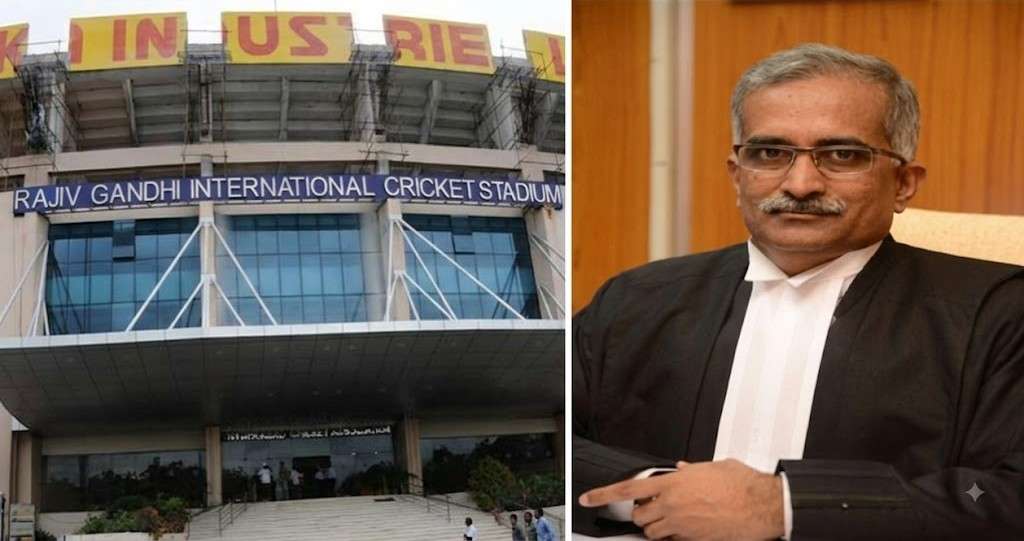
The Apex Council’s term cannot be extended by convenience. Justice P. Naveen Rao’s real legacy must be to professionalise HCA, expose wrongdoing, remove entrenched power brokers and end the association’s permanent dependence on court-appointed supervision.
Can Hyderabad Cricket Association (HCA) ever sing “Yahan Ke Hum Sikandar” and mean it? The anthem from Aamir Khan’s Jo Jeeta Wohi Sikandar (1992) celebrates the underdog who stops making excuses and wins on merit. Hyderabad has the cricketing talent, the stadium and a proud history. What it has conspicuously failed to demonstrate is the ability to govern itself without judicial intervention.
That is the real indictment of HCA. And it is precisely why Justice P. Naveen Rao’s responsibility extends far beyond keeping matches going or ensuring that salaries and bills are paid. His greatest contribution would be to leave behind an institution that no longer needs a court-appointed committee to keep it functional.
Time is up. The outgoing Apex Council cannot be allowed to overstay its mandate.
HCA’s bye-laws prescribe a three-year term and, as understood here, contain no provision permitting the outgoing council to continue until its successor is elected. Once that term expires, the council cannot simply assume that its authority continues. Any action taken thereafter would invite a serious legal challenge. The immediate question, therefore, is not how to prolong the outgoing council’s life, but how to ensure a lawful, transparent and time-bound transition.
A Vacuum HCA Cannot Afford
With the Apex Council’s term ending this month, HCA faces a dangerous institutional vacuum: no continuing elected mandate, no AGM held this year, no accounts adopted by the members and no BCCI representative newly authorised by the General Body.
These are not cosmetic deficiencies. They affect HCA’s credibility, its ability to make policy and its standing with the BCCI. A rival body has already sought recognition in HCA’s place. Every month of administrative uncertainty gives that rival another argument.
The SMC may be able to direct routine administration, payments and the conduct of matches. But administrative continuity is not the same as democratic legitimacy. Nor can directions concerning cheques substitute for an elected association that can legitimately represent its members.
The answer is not another improvised arrangement. It is a clear transition plan, backed by the Court where necessary, with deadlines that nobody can manipulate.
TG20: Another Courtroom Season?
The clock is ticking on TG20. Franchise formation, the auction, venues, broadcasting arrangements and sponsorships cannot be left hanging while HCA debates who is entitled to make decisions.
Under the bye-laws, the league is administered by a seven-member Governing Council. At the end of this month, that body faces the loss of its Chairman, Secretary and Treasurer with the expiry of the relevant elected mandates.
Last time, the Chairman’s appointment was defended on the ground that his name had been discussed at the AGM. This time, there has been no AGM. That justification is no longer available.
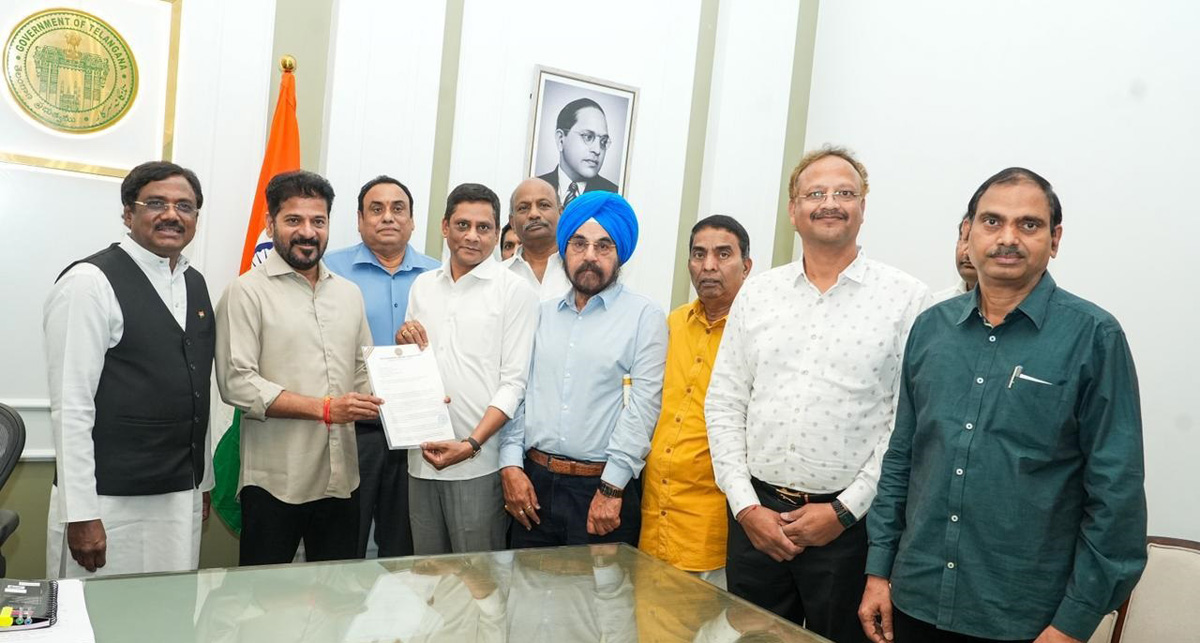
Any appointment made by the SMC without clear authority under the bye-laws or an appropriate court order could invite a fresh challenge. The concern is not that the SMC cannot defend itself in court. It is that Hyderabad cricket should not have to defend every administrative decision in court in the first place.
Why must its flagship league repeatedly approach the starting line with litigation hanging over it? Why can HCA not establish the elementary principle that rules apply equally to office-bearers, club representatives and administrators, irrespective of their intentions or influence?
The SMC was appointed to restore order, not manufacture another dispute.
Follow the Evidence. Spare Nobody.
But professionalisation alone will not cleanse HCA. An institution cannot be reformed by merely changing its management while leaving the alleged beneficiaries of its dysfunction untouched.
Justice Naveen Rao should ensure that allegations of financial and administrative wrongdoing receive proper scrutiny, particularly those concerning stadium construction. The State Anti-Corruption Bureau must be asked to act in accordance with the status of the complaints and any findings already recorded by its investigators. Where individuals have been identified in official records as allegedly responsible for wrongdoing, the evidence must be examined and lawful action pursued wherever warranted.
The distinction matters: allegations are not convictions, but neither should they become excuses for indefinite inaction.
The disappearance of HCA’s institutional teams demands similar scrutiny. What happened to these teams? Who took control of them, under what authority, and where does the investigation by the Criminal Investigation Department stand? The CID must be asked to clarify the status of its findings and the action taken. The fate of institutional teams cannot be allowed to disappear into the same administrative fog that has enveloped so much of Hyderabad cricket.
Investigate the evidence, establish responsibility and act without fear or favour. No club, office-bearer or influential intermediary should enjoy immunity merely because of connections.
HCA must also rid itself of power brokers who masquerade as custodians of cricket while treating the association as a source of influence, patronage or personal advantage. Clubs that have allegedly treated HCA as a milking cow must face scrutiny, and those found to have violated the rules must face consequences under the law and the association’s regulations.
This is not a call for a witch-hunt. It is a demand for accountability. Hyderabad still has honest people willing to serve cricket. They should not be crowded out by those who thrive on disorder.
Choose Integrity, Not Proximity
Justice Naveen Rao must guard against another institutional trap: dependence on serving bureaucrats who may have their own interests, past associations or administrative agendas. Even when their assistance is well-intentioned, official position alone is no guarantee of independence or expertise in cricket administration.
Rather than relying on the same establishment networks, why not constitute a three-member advisory committee drawn from people with demonstrable integrity and relevant experience?
It could include a veteran cricketer with an impeccable record, a seasoned sports journalist who understands the game and its administration, and a woman cricketer who has brought honour to Telangana or Bharat. An honest club secretary who has worked selflessly to promote the game could also be considered, provided the committee’s composition remains genuinely independent and free from conflicts of interest.

The selection must be above caste, creed and regional considerations. There have already been whispers about alleged preferences in appointments. Those concerns should be dispelled through transparent criteria, not dismissed through assurances.
The committee must advise, not become another parallel power centre. Its purpose should be to help establish a professional, accountable HCA—not create another layer of patronage.
Stop Treating HCA Like a Club
The association’s own bye-laws already provide the blueprint for professional management.
Rule 19(2) requires day-to-day management to be conducted by professionals in both cricketing and non-cricketing matters. Rule 20(1) envisages a Chief Executive Officer responsible for operations, finance, human resources and media.
Why, then, has HCA repeatedly reverted to management by office-bearers behaving like members of a private club?
The SMC should make these provisions operational before handing over. HCA needs a CEO with defined authority; a finance head responsible for transparent accounts and timely audits; a professional cricket operations department accountable for leagues and selections; written staff service rules; and reliable digital records that survive changes in office-bearers.
The Ombudsman and Ethics Officer are already in place. Yet the machinery intended to protect the institution cannot work effectively if complaints remain unresolved and the supporting systems are weak.
The Anti-Corruption Unit and the Prevention of Sexual Harassment (POSH) committee, as described in the material before us, exist only on paper in practical terms, while too many complaints remain pending. Their actual functioning must be verified, operational gaps corrected and outstanding complaints addressed within a published timeline, with due process and confidentiality protected.
The principle is simple: elected representatives must make policy, professionals must run the association, and independent officers must enforce accountability.
That is how HCA can become an institution rather than a fiefdom that changes hands without changing its habits.
How Many Doctors Does One Patient Need?
Hyderabad cricket has spent much of the last decade under court-appointed arrangements associated with Justice Anil R. Dave, Justice Nisar Ahmad Kakru, Justice L. Nageswara Rao and now Justice P. Naveen Rao.
Each intervention may have addressed particular problems. Yet the recurring pattern is impossible to ignore: supervision arrives, some order is restored, an elected council takes charge, and the crisis returns.
What does that say about HCA’s governing culture?
Supervision is a crutch. The real test of a doctor is whether the patient can walk without him.
The SMC must not become another chapter in an endless cycle of intervention, temporary relief and institutional relapse. It must address the structural weaknesses that repeatedly make intervention necessary.
The Legacy That Matters
Justice Naveen Rao has an opportunity to accomplish something more enduring than the successful conduct of another season. Matches are remembered for a while; sound institutions can serve generations.
His most valuable legacy would be to take HCA out of the grip of court-appointed supervision and place it in the hands of a properly constituted, professionally managed association. That requires a verified electoral roll, modern bye-laws, transparent and adopted accounts, a lawfully constituted TG20 Governing Council and an elected Apex Council supported by the professional management already envisaged under Rule 19(2).
It also requires a credible election timetable and a defined date for the SMC to hand over.
The transition must not be used to entrench favourites, reward compliant clubs or sideline those who ask uncomfortable questions. Nor should the SMC’s departure leave unresolved complaints, unexamined financial questions or administrative arrangements that collapse as soon as its authority ends.
Set standards that survive the supervisor. Build systems that outlast the office-bearers.
Six Questions. Clear Deadlines.
Before its mandate ends, HCA’s members deserve a concrete plan—not another assurance that matters will be sorted out eventually.
- Representation: Who will lawfully lead HCA and represent it before the BCCI from the day the Apex Council’s term expires?
- TG20: How and when will its seven-member Governing Council be constituted transparently, with the necessary legal authority, so that the league can begin without avoidable litigation?
- Accounts: When will the accounts be audited and placed before the General Body for consideration and adoption?
- Electoral reform: When will the electoral roll be verified and the bye-laws reviewed and amended through the proper process?
- Elections: What is the firm date for electing a properly constituted Apex Council?
- Exit: On what date will the SMC hand over to the elected body, with professional systems in place and HCA able to function independently?
The sixth question is the most important. A committee that cannot specify when its supervision will end risks making supervision a permanent feature of the institution it was appointed to repair.
Chak De, HCA!
For too long, HCA has behaved as though singing “Aal Izz Well” from 3 Idiots can make its problems disappear. Councils, clubs and committees have all had their turns at reassuring themselves. But wishful thinking cannot replace accountability.
The SMC must not permit an outgoing council to overstay its mandate. It must not fill legal gaps through expedient appointments without clear authority. It must not leave half-completed reforms for another committee to inherit.
It must professionalise HCA, pursue accountability wherever evidence warrants action, establish a credible electoral transition and then step aside.
The fractured team in Chak De! India eventually understood that personal factions had to give way to a common purpose. Hyderabad cricket needs the same awakening. Clubs must stop treating the association as their private preserve. Office-bearers must stop confusing authority with ownership. Administrators must stop mistaking temporary control for lasting reform.
Justice Naveen Rao’s finest achievement would be to make himself—and every future court-appointed supervisor—unnecessary.
Only then can Hyderabad cricket leave its courtrooms behind, reclaim its institutional dignity and finally sing “Yahan Ke Hum Sikandar” without irony.
Chak De, HCA. Set Hyderabad cricket free.


This is incredible grassroot deep insights, the information published is far more than it meets the commons man’s eye. Exceptional true Journalism and hope HCA understands and Justice Naveen Rao opens the eyes to truth and makes some decisions to brings facts and belts the system.