MS. Shanker
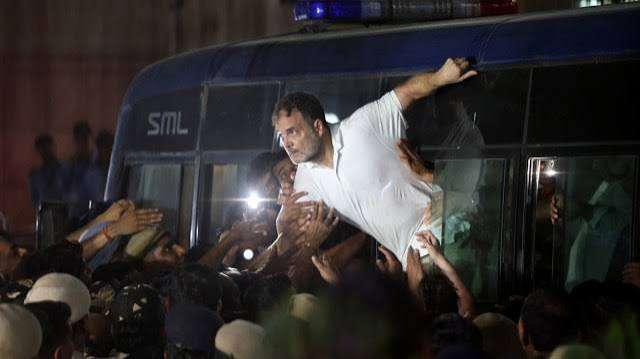
The October 2026 bypoll results across five Assembly constituencies and one Lok Sabha seat have reopened an important political question: can the Congress-led Opposition challenge the BJP-led NDA’s narrative of leadership, development and good governance, or does it continue to struggle to convert its criticism of the Modi Government into electoral gains?
The results offer the NDA considerable political ammunition. The BJP won Nandigram and Rejinagar in West Bengal and Nagaon in Assam, while its ally, the All India N.R. Congress (AINRC), retained Thattanchavady in Puducherry. In Tamil Nadu, however, Chief Minister C. Joseph Vijay’s Tamilaga Vettri Kazhagam (TVK) won both Madurantakam and Dharapuram, underlining the independent strength of regional politics.
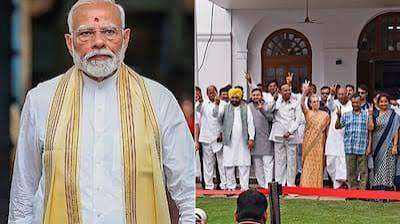
Prime Minister Narendra Modi welcomed the NDA’s performance as evidence of its continuing connect with people and their faith in good governance. Union Home Minister Amit Shah similarly projected the victories as an endorsement of the BJP’s development agenda. Their interpretation is understandable: three BJP victories across Assam and West Bengal, including a Lok Sabha seat, provide the party with a strong talking point against an Opposition that has sought to make the Modi Government’s policies and political style the centre of its challenge.
The scale and spread of the victories in West Bengal deserve particular attention. In Nandigram, BJP candidate Hasirani Rath won by a record margin of 1,22,753 votes. In Rejinagar, a Muslim-majority constituency, BJP candidate Shankharavh Sarkar defeated his nearest rival by 75,816 votes. These are substantial margins, and the Rejinagar result is especially significant for a party often criticised by its opponents over its minority outreach. The results raise questions about the ability of regional parties to retain traditional support bases when political alignments fragment. However, a single constituency cannot establish a uniform shift in voting preferences across an entire community.
Assam’s Nagaon result is another setback for the Congress. BJP candidate Debashish Sharma won the Lok Sabha by-election, while the Congress finished behind the principal contenders. The contest was complicated by former Congress MP Pradyut Bordoloi’s move to the BJP after winning the Dispur Assembly seat. Candidate movement, local calculations and the state’s political alignments must therefore be considered alongside the national leadership factor.
Yet, it would be premature to describe these six contests as a definitive national verdict on Prime Minister Modi or the Opposition. By-elections are shaped by local grievances, candidate selection, factional rivalries, turnout and the circumstances that necessitated the poll. The BJP’s victories in Assam and West Bengal strengthen its political position, but they do not automatically translate into equivalent support in every state.
Tamil Nadu illustrates this distinction. TVK’s victories in Madurantakam and Dharapuram demonstrate that a regional party can command voter support on its own political appeal. They also show that the BJP-versus-Congress narrative does not capture the full complexity of Indian electoral politics. Regional leadership, local governance and the credibility of state-level alternatives remain powerful forces.
For the Congress and the wider INDIA bloc, the challenge is more fundamental than explaining away individual defeats. Repeatedly attributing setbacks to local factors, while claiming national relevance, risks leaving voters without a convincing account of what the Opposition would do differently. Criticism of the Government can attract attention, but it must be accompanied by credible policies, effective organisation and leadership capable of translating public concerns into electoral support.
Equally, the NDA cannot treat every bypoll victory as an unrestricted endorsement of its entire national programme. Electoral mandates are constituency-specific, and the responsibility to deliver on development promises continues after the counting ends.
The October results thus offer the BJP-led NDA a political boost and expose continuing difficulties for its principal national rival. They also demonstrate the resilience of regional forces such as TVK. The larger lesson is that political trust must be earned repeatedly, through performance, organisation and credible alternatives.
For the Opposition, the task is to move beyond rhetoric and rebuild its connect with voters. For the NDA, the challenge is to convert electoral gains into sustained public confidence. India’s voters have delivered six constituency-level verdicts; the national political message will ultimately depend on what the parties do next.