Special Correspondent
Golden Chances, Half Medicines
Part 4A described how a few have kept the Hyderabad Cricket Association captive. This part asks the harder question: if the disease is so well known, why has nobody cured it?
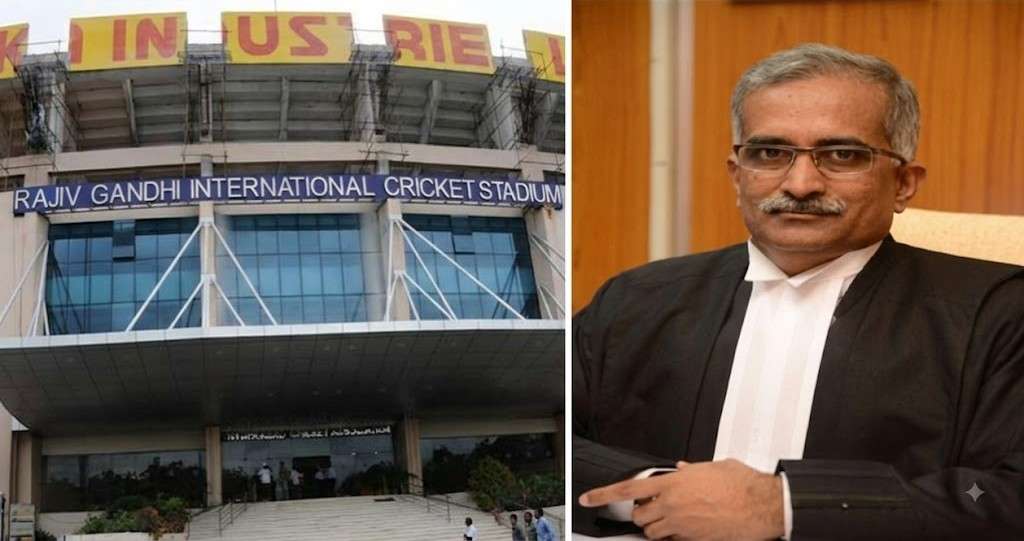
Few sports bodies in India have had so many eminent doctors. Since 2017, the Association has passed through the hands of court-appointed Administrators, a Supreme Court supervisory committee, a Supreme Court Single Member Committee and now a High Court-appointed supervisor, with retired judges serving as its Ethics Officer and Ombudsman.
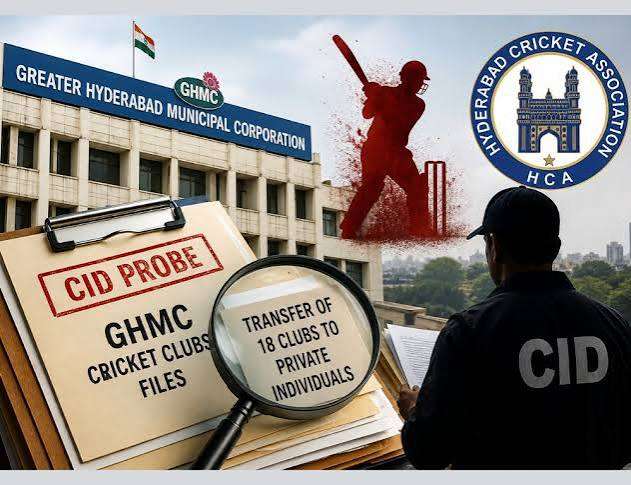
The ACB, CID, Enforcement Directorate and now a Special Investigation Team have all been called in.
Seven retired judges. Four agencies. Nine years.
Each was given a golden opportunity to set the Association right. None completed the job.
In 2023, a former Supreme Court judge described the Association as being “in shambles”. In April 2026, the High Court used virtually the same description.
The date changed. The disease did not.
Golden chances, missed
- The Administrators found the rot: no sound accounting, vendor claims of about Rs 9.3 crore in doubt, and forensic irregularities of about Rs 2.68 crore even on a sample basis. They recommended that a specialised agency such as the SFIO or CBI investigate further.
The Association subsequently returned to an elected body, while the accounts remained unfinished.
Even then, the interventions were largely driven by emergencies. The initial orders were concerned with monitoring a Test match and the approaching IPL season. Each intervention treated the immediate crisis. Then the intervention ended.
The crisis passed. The disease stayed.
- The Supreme Court’s supervisory committee was expected to steady the ship. Its interim report identified several structural problems: multiple ownership of clubs, an electoral roll weighted towards Hyderabad, the exclusion of districts and municipal corporations, and special general meetings allegedly conducted in violation of the bye-laws.
But the committee itself became embroiled in disputes over “control over electoral processes” and was eventually disbanded.
2023: A cure returned to the patient
The 2023 Single Member Committee came closest to addressing the underlying problems.
Its Supreme Court mandate was narrow — “to finalise the voters’ list and conduct elections” — but it was ultimately entrusted with the wider administration of the Association. It heard the clubs, disqualified 57 for multiple ownership, cleared most of five years of pending audits, registered four criminal cases arising from a forensic audit, revived the academy, conducted 847 league matches and made 20 recommendations.
Then came the crucial question.
After making the diagnosis, who was responsible for administering the cure?
Three questions remain unavoidable.
Were all 57 the right ones — and did some slip through?
The report itself records that, after its order, complaints were received against others who were “similarly placed”. Those proceedings were not reopened. Instead, the report said that examining them was the “duty of the HCA Apex Council”.
By its own account, therefore, the possibility remained that some similarly placed cases had escaped scrutiny.
Why was the cure left to the very body it was supposed to cure?
The appointment of the Ombudsman and Ethics Officer, further conflict inquiries, legal follow-up and future forensic audits were left largely to the elected Apex Council or its CEO.
The report also found that “no action could be taken against the errant clubs” because the HCA bye-laws contained no provision to admit or remove members. That structural gap was left for others to address.
Its closing hope was that its efforts “will be continued by the Apex Council”.
Hope, however, is not implementation.
Who checked whether the medicine was actually taken?
The new Apex Council assumed charge on October 28, 2023. Within weeks, the High Court records indicate that the situation had deteriorated sufficiently for judicial intervention once again.
The lesson is uncomfortable but obvious.
A reform cannot succeed merely because a committee writes a good report. A prescription is not a cure. And a cure entrusted entirely to the system being reformed is unlikely to produce a different outcome.
Everyone holds a piece. No one holds the cure
Look at the pattern.
Courts order. Committees diagnose and recommend. Investigating agencies investigate. The Apex Council is expected to implement. Members vote.
Everyone holds a piece of the cure.
No one has ever held the whole of it.
Implementation is ultimately left to the very institution whose practices are under question. Investigations move on their own slow clock, with criminal cases pending for years. Contempt proceedings may be initiated, yet the cycle continues.
Without enforceable consequences, every reform risks becoming nothing more than an inconvenience to be endured until the doctor leaves.
The chance in hand
The present supervisor has something that previous interventions did not: the accumulated diagnosis of every major intervention since 2017, the 2023 committee’s 20 recommendations, its own observations from two seasons and, importantly, wide powers to undertake structural reforms.
The High Court has empowered it to undertake structural reforms and put systems in place, with its decisions binding on office-bearers, clubs and staff.
This is therefore not merely another opportunity.
It may be the opportunity to finally break the cycle.
If this chance also ends like the earlier ones, the handbook described in Part 4A will have won again.
The following reforms cannot be allowed to remain suggestions:
- Bye-laws that lock reform in.
Provide the missing power to admit and remove clubs; prescribe a freeze date for club representatives before elections; establish appropriate age and tenure limits for member clubs; and prohibit anyone without an authorised office from directing staff, selectors or office-bearers. - A clean electoral roll before any vote.
Every club must be examined on its own merits, including the 57 already disqualified, those described as “similarly placed” but not examined, MCH-linked clubs and clubs involved in ownership disputes. District representation must also be addressed. - End patronage disguised as development.
Development grants should go only to clubs with demonstrable grounds, coaches and cricketing activity. Paid committees must have minutes. Medical reimbursements and managerial positions cannot become instruments of patronage. - Clean selection.
Publish objective criteria based on league performance. Select only the squad actually required for a tournament. Selectors must declare conflicts and recuse themselves where necessary. Minutes of selection meetings should be maintained. - End age fraud.
Introduce rigorous document checks and BCCI-standard age verification, with consequences wherever deliberate manipulation is established — extending, where warranted, to the player, coach and club. - A functioning POSH mechanism.
An Internal Committee under the Sexual Harassment of Women at Workplace Act, 2013, with an independent external member, is essential. With girls and women increasingly part of the cricketing ecosystem, safeguards must extend meaningfully to players, officials and staff. - Conflicts on record.
Office-bearers, selectors and coaches should file conflict-of-interest declarations, maintain a transparent register and compulsorily recuse themselves where a conflict exists. - A credible anti-corruption mechanism.
An anti-corruption unit, including former players as match observers, should be established as recommended by the 2023 report. - Power to act on complaints.
Create a complaints cell with a public register, fixed timelines, authority to recommend or impose appropriate action, and protection for players, parents, officials and others who raise genuine concerns. - Consequences must follow responsibility.
Anyone facing a formally established charge concerning Association funds should, subject to due process and applicable rules, step aside from relevant office, voting or selection responsibilities until the matter is resolved. The concerned club should nominate an eligible alternative.
Clean leagues, clean matches
Squad registration and the prohibition on transferring league slots are already in place. But Hyderabad’s problem has never been a shortage of rules on paper.
The real test is what happens on the ground — where scores are recorded, results are decided and places can potentially become commodities.
That is where the system needs greater transparency.
- Randomise umpire and scorer appointments.
Match officials should be assigned through a secure, randomised process sufficiently close to the fixture to minimise the possibility of influence. - Train, grade and rotate officials.
Maintain a pool of trained umpires and scorers, assess them every season and avoid repeatedly posting the same officials to the same clubs. - Review matches and punish proven manipulation.
Video recording, as recommended by the 2023 report, should be used wherever feasible, followed by post-match review of disputed scores and decisions. Proven manipulation must attract meaningful disciplinary action. - Live scoring and permanent records.
Ball-by-ball scoring should be published live and digitally preserved, making retrospective alteration of score sheets considerably harder. - Verify identities on match day.
Every player should be verified at the ground, with random audits against academy and registration records to prevent the use of leased or improperly constituted teams. - Give academies their own league.
Recognise academies and create a formal academy competition so that genuine cricketing institutions do not have to rent another club’s league slot. - Give parents a safe channel.
A confidential mechanism should allow parents to report any demand for money or favour in exchange for selection or a place, with complaints investigated within a fixed timeframe.
No more half measures
The courts have intervened repeatedly, clearly concerned about the interests of budding cricketers. But what has been missing is a finish line.
The Association needs a published road map that answers one basic question:
What exactly does “fixed” mean?
There must be measurable milestones, regular status reports on investigations, a timetable for structural reforms, a verified final electoral roll and, only thereafter, an election conducted under bye-laws designed to make the old system impossible to recreate.
The objective cannot simply be to hold another election.
The objective must be to make the next election different from the previous ones.
The 2023 committee ended its report with hope.
Hope is not a reform mechanism.
Every committee before this one had a golden chance and left with the job incomplete. This time, there can be no half course, no temporary prescription and no return to business as usual once judicial supervision recedes.
The full course must be administered.
Every reform must be measurable. Every responsibility must have an owner. Every deadline must have a consequence.
And the patient must remain under observation until the cure is demonstrably complete.
The members, too, have a role to play. They must demand the whole medicine, not the comfort of another quick election.
Hyderabad cricket does not need another temporary doctor. It needs a cure that survives after the doctor leaves.
(HC refers to the judgment of the High Court for the State of Telangana in W.P. No. 21904 of 2025, dated 24 April 2026; references to its paragraph 2 record the petitioner’s account, and the Court expressed no opinion on the merits of the allegations. “2023 Report” refers to the report of the Single Member Committee appointed by the Supreme Court, dated 29 October 2023, including its recommendations, epilogue and annexures.)