



When a woman’s goods are thrown away in Hisar in the name of encroachment removal, the question is not just about one woman’s cart, but about the entire administrative system. It is the Municipal Corporation’s responsibility to free the city from encroachment, and encroachments on public roads, footpaths, and streets must be removed. But the true test of the law occurs when it is not an influential person standing before it, but a poor woman who earns a living by earning a living. If the rules are the same for everyone, then the method and standard of action should also be the same for everyone.
If encroachment removal action is necessary, it should be applied equally to shopkeepers, hawkers, showroom owners, and anyone else. If a hawker stretching a few feet onto the road is considered encroachment, then goods spread outside a shop onto the sidewalk and road should also be judged on the same criteria. Large signs outside showrooms, temporary structures, enclosed areas for storing goods, and businesses extending beyond the road also impact the city’s public space. The question isn’t who was taken action against; the question is whether equal action is being taken against every encroachment.
It’s easy to spot the poor man’s cart, but encroachment by large establishments is often considered normal even under the eyes of the system. If this is happening anywhere, it raises serious questions about the administration’s impartiality. The Municipal Corporation should conduct market-wise surveys and make public the encroachments outside the prescribed limits and the action taken against them. This will reduce the likelihood of bias in any action.
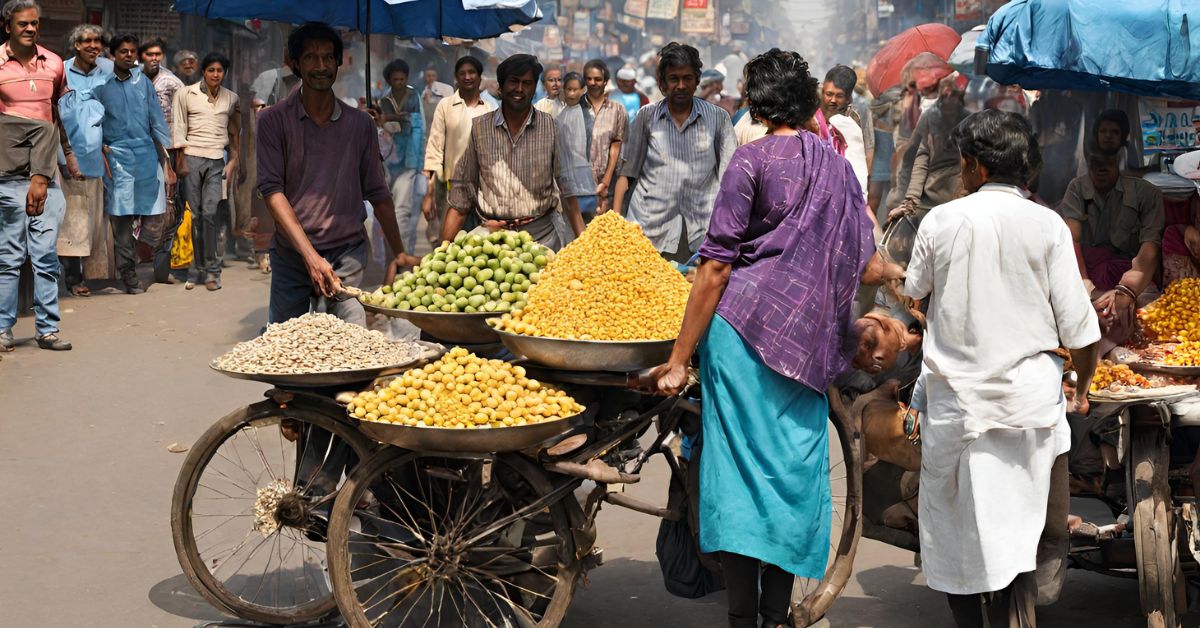
Street vendors are also a vital part of the city’s economy. Many people selling vegetables, fruits, clothing, food items, or small household goods support their families with their meager capital. A significant number of these are women. For them, the street vendor is not only a means of business but also a significant source of household income. Therefore, if a street vendor cannot be placed in the designated area, alternative arrangements should be considered before removing it, in accordance with the regulations.
Haryana has a legal framework for street vendors. The purpose of measures like surveys, registration, vending zones, and town vending committees is to ensure that small roadside businesses are not left completely unregulated and that the livelihoods of poor vendors are not unnecessarily taken away. Therefore, the administration must clearly distinguish between encroachment and legal street vending.
The most important thing is the language of conduct. Violations of the rules can result in the removal of goods, a challan being issued, and the confiscation process being carried out in accordance with the law. However, using abusive language, pushing, or inhumane treatment of a woman cannot be justified under any circumstances. Administrative authority cannot trump the dignity of citizens.
If the behavior depicted in the video is part of a real incident, then the entire matter should be investigated impartially. It would be unfair to draw final conclusions based on a single portion of the video, but it would also be unfair to avoid an investigation after the video surfaced. The Municipal Corporation should clarify what actions were taken that day, which officer or employee was on duty, whether the woman was informed in advance, what procedures were followed for confiscating the items, and whether she was later allowed to return the items.
If an investigation proves a violation of rules or indecent behavior by an officer or employee, responsibility should be fixed. The purpose of action should not be to demoralize officers, but rather to convey the message of responsible use of administrative authority. Just as the trespasser is expected to follow the rules, the officer taking action is also expected to adhere to the law and decorum.
The question also arises: should the encroachment removal campaign begin only with small carts? If the city is to be truly organized, the Municipal Corporation should launch a comprehensive and transparent campaign. Permanent and temporary encroachments on footpaths, goods spilling outside shops, billboards extending onto the road, temporary constructions, and other commercial encroachments—all should be investigated equally. Information about the action should be made public so that citizens also know that rules do not apply only to the weak.
The beauty of a city isn’t just about glittering showrooms. The sidewalk where a big brand’s products are spread out belongs to the public, as does the sidewalk where a poor woman sets up her small cart. Rights to public space should be determined by law, not economic status.
If the Municipal Corporation wishes, it can turn this entire controversy into an opportunity. A digital survey of all the city’s markets should be conducted. The permitted area for each shop and showroom should be clearly demarcated. Designated vending zones should be established for street vendors. Sidewalks should be kept clear for pedestrians. Violators should be given clear notice first, and then action should be taken according to the established procedure. Humane treatment should be ensured in cases involving women and vulnerable groups.
Removing encroachments is essential, but the process itself should not lead to injustice. We need order in the city, but not one where the livelihoods of the poor are left scattered on the streets while large encroachments go unnoticed.
The Hisar administration and municipal corporation should clearly convey the message that street vendors and showrooms are not separate citizens in the eyes of the law. The rules cannot be different.
If a poor woman has committed a mistake, she can be reprimanded and punished according to the law; but she cannot be insulted. And if a large establishment has encroached upon a public space, the same firmness should be shown against it.
If you want to make the city encroachment-free, then first make the scale of action uniform.
Clear the road, but do not trample the dignity of any poor person.
Make Hisar organized and sensitive too.

