Special Correspondent
How to Capture a Cricket Association: The Hyderabad Handbook
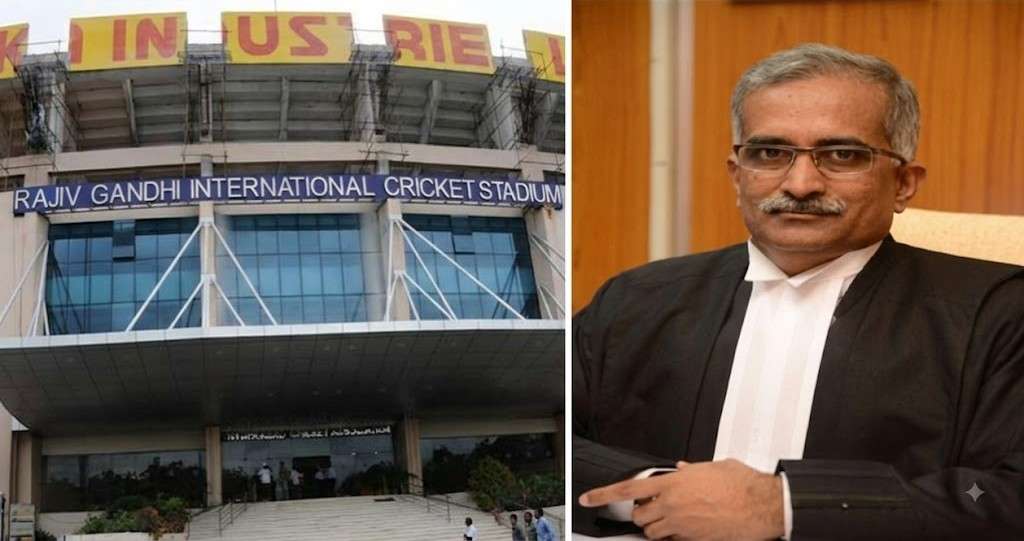
For nine years, the Hyderabad Cricket Association has been run, watched, audited, investigated and supervised by courts, committees and investigative agencies. Criminal cases have been registered. An office-bearer has been arrested. The Enforcement Directorate has opened a money-laundering case. A Special Investigation Team has been ordered.
And yet, what has actually changed?
Not enough.
Court directions have not always translated into action, including directions concerning investigations into alleged financial irregularities, aspects of the selection process and certain appointments. Even the CID, in its response to the Lokayukta, has cited the Court-appointed SMC’s position as a reason for the apparent delay in proceeding with certain investigations, including scrutiny of TG20 amid allegations of financial irregularities.
Nine years of scrutiny should have been enough to reset Hyderabad cricket.
Instead, the recurring complaint is that the same networks of influence remain around the Association, while disputes over selections, appointments and administration continue.
The women’s game presents an especially troubling picture. Parents of young players continue to express concern over the presence and influence of an outsider against whom allegations and charges have been raised, and who, they allege, continues to receive encouragement from sections of the HCA establishment. The concern is not merely about who occupies an official post. It is about who continues to exercise influence without necessarily being accountable for it.
That is how this series began: with a simple question — why do people repeatedly associated with controversy continue to have the ability to influence the future of Hyderabad cricket?
The answer, if the pattern recorded in the High Court judgment and the Supreme Court-appointed Single Member Committee’s 2023 report is any indication, resembles a method so consistent that someone could have written it down.
So, here it is.
What follows is satire. The pattern is not.
Step 1: Never hold the office. Hold the people who do.
Offices come with scrutiny. Influence does not.
So let others occupy the chairs while a few powerful seniors determine who is nominated, who is selected, who gets appointed and who gets shown the door.
Disagree and you are “inexperienced”. Persist and you are isolated.
The 2023 report found that successive committees brought in “their personal trusted aides”, whose “loyalties are with their benefactors and not with HCA”. It also warned that bypassing age and tenure limits in member clubs had contributed to “unchecked power, lobbying, and corruption”.
The lesson is simple: own the influence, even if someone else holds the designation.
Step 2: Keep the electorate small.
In 2023, only 173 voters were eligible to elect the Apex Council, with the President winning by a single vote.
An electorate that small does not require mass politics. It requires arithmetic.
The Supreme Court-appointed committee had also flagged an electoral roll heavily weighted towards Hyderabad, with 33 districts and 14 municipal corporations left unrepresented.
Keep the electorate narrow, and the influence becomes easier to concentrate.
And when 57 clubs are disqualified over multiple ownership by members and their relatives, do not assume the problem disappears. New associations, relatives and familiar networks can still emerge around the vacancies.
Change the names. Preserve the structure.
Step 3: Reshuffle before the whistle.
Before elections, the roll opens for clubs to change their representatives. In 2023, that was reportedly the only change permitted in the draft roll.
Use the window.
Replace a secretary. Introduce a familiar face. Move a representative from one club to another. Give every change an administrative explanation.
If the same faces keep resurfacing at every election under different club affiliations, call it flexibility.
But administration should not become electoral arithmetic.
When the faces change but the influence does not, what has really changed?
Step 4: Pay for the votes with the Association’s money.
This step needs little satire because the 2023 report itself recorded serious concerns.
Clubs were paid Rs 3 lakh each “in the name of developing cricket”, although the report noted that some did not have grounds or employed coaches.
A League Committee comprising club secretaries and presidents was paid about Rs 96 lakh between 2020 and 2023, with the report recording no evidence of activities or meetings.
Club presidents and secretaries were reimbursed about Rs 56 lakh in medical expenses, described by the report as “fleecing HCA”.
Five club secretaries were sent as managers to one five-match tournament — one manager for each day.
The report characterised such payments as distribution of funds in keeping with election promises.
And in 2023, according to the report, contesting panels offered clubs up to Rs 5 lakh, besides committee positions and managerial opportunities for secretaries.
Money meant for cricket must never become currency for control.
The moment development money becomes election currency, cricket stops being the beneficiary.
Step 5: Silence the good secretary — and the honest selector.
A secretary who asks no questions is convenient.
A secretary who quotes the bye-laws, demands accounts or refuses to deliver a club’s vote becomes inconvenient.
Then comes the familiar toolkit: challenge the club’s ownership, produce a rival claimant, dispute the representative and, ultimately, leave the vote in limbo.
Selectors, too, can become inconvenient when they refuse to follow instructions.
The 2023 report recorded that “upright selectors who refused to name the teams as per dictates of office bearers were summarily dismissed and their fees withheld year after year”.
If that pattern is allowed to continue, honest people do not merely lose positions.
They leave.
And when the honest leave, the system does not become neutral. It becomes easier to control.
Step 6: Turn the AGM into a lunch.
The AGM is supposed to be the Association’s ultimate accountability mechanism.
It can question accounts, examine reports, amend bye-laws and hold office-bearers accountable.
So the easiest way to neutralise it is to make accountability ceremonial.
Keep the agenda thin. Keep the proceedings routine. Keep the lunch generous.
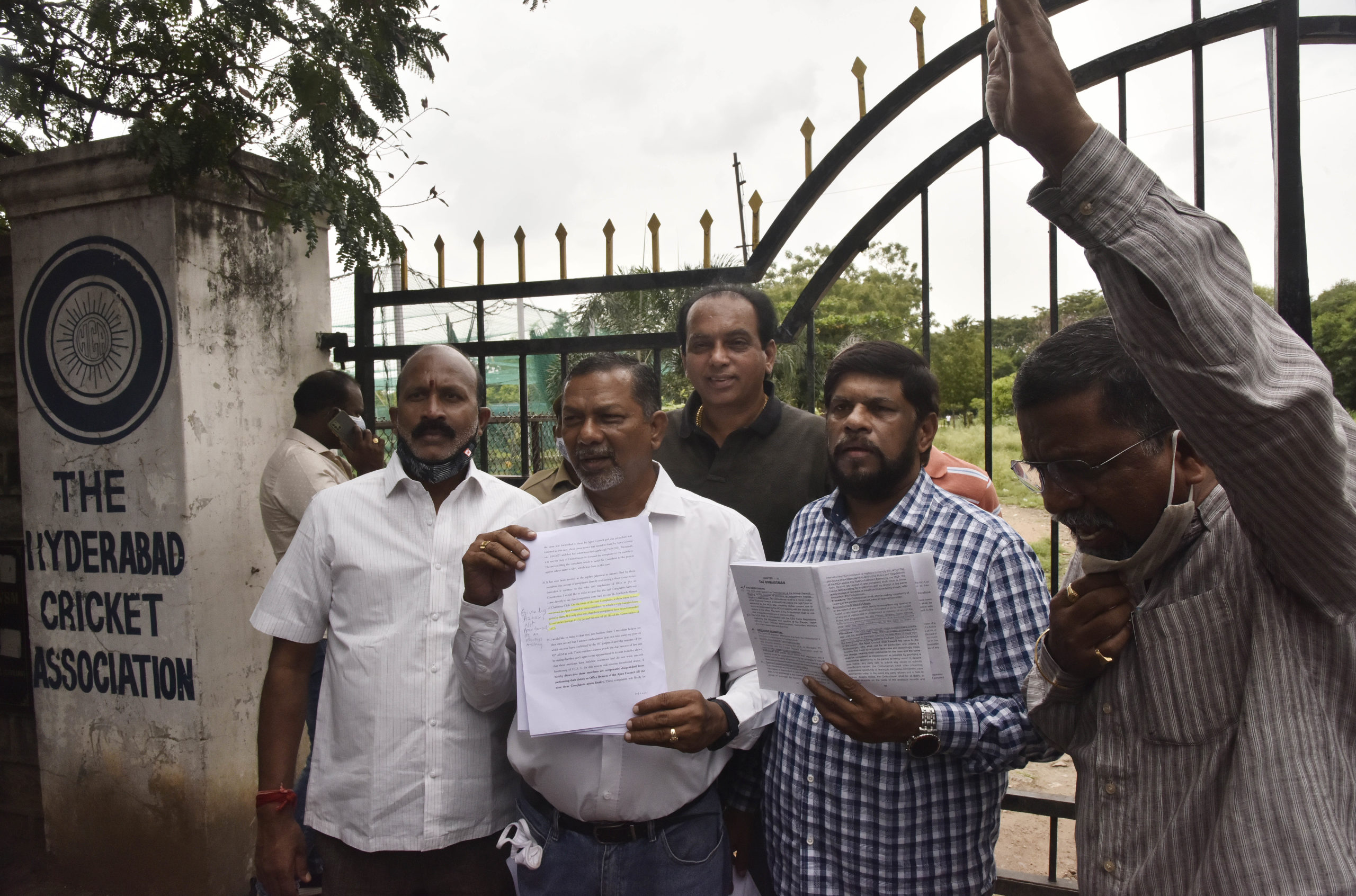
The 2023 report recorded that statutory audits had not been completed for five years and that BCCI grants were withheld because accounts had not been finalised.
The same report found “no minutes of meeting of any committee, or any report submitted by them”.
No minutes means no institutional memory.
No institutional memory means no accountability.
And where nothing is recorded, almost anything can be denied later.
Step 7: Never let an elected body settle.
Once elected representatives take charge, the demands begin — a say in selections, a coach here, an appointment there, a contract, a tender, a ground, a place in a team.
When demands are met, influence expands.
When demands are refused, conflict begins.
If an office-bearer attempts to run the Association according to its rules, boycott meetings, break the quorum, file complaints and litigate.
The High Court recorded that within weeks of the newly elected Apex Council taking charge in 2023, the Association was again facing serious difficulties and the Court had to intervene.
That raises a larger question:
Is the problem the elected body — or the machinery that refuses to let an elected body function?
Step 8: Make the game pay.
This is where administration becomes most dangerous because the victim is no longer an office-bearer.
It is a young cricketer.
The 2023 report recorded “serious complaints of bribes being taken for selecting cricketers” and of “large amounts of money paid by parents to get their children selected”. It further said genuine talent was “suppressed to promote those who are willing to pay”.
For one Under-25 tournament, 45 players were reportedly sent for a squad of 15. Ten did not play a match, while players were left “paying for every match”.
If substantiated, this is not merely bad administration.
It is the corruption of opportunity itself.
The league structure, too, came under criticism. Twenty teams were reportedly promoted to the top league “arbitrarily”; the report said favoured clubs were promoted while none were relegated. It also recorded allegations of tampered scoresheets and rigged matches.
Members have further alleged that some clubs lease league slots to academies or individuals who collect money from boys seeking places in teams.
Those are allegations and must be investigated, not treated as facts.
But the question remains unavoidable:
If a child’s opportunity to play cricket increasingly depends on what his parents can pay, what exactly are we developing — cricket or a market for access?
Part 3 of this series examined the implications for the women’s game.
Step 9: When the courts arrive, cry “independence”. Then wait.
First, seek judicial protection for the Association’s autonomy.
Then, when the Court examines the Association’s functioning, insist that there are “no legal infirmities or financial irregularities”.
Collect signatures for an AGM and elections.
Then wait.
The 2023 report recorded that criminal cases against erstwhile office-bearers had remained pending for nearly a decade and that the accused had been delaying hearings.
The High Court, meanwhile, observed that proceedings appeared to have no end, referring to the involvement of “powerful persons associated with” the Association.
Committees change.
Administrators change.
Office-bearers change.
Cases continue.
The most durable office in Hyderabad cricket may therefore be the one nobody officially holds: the office of influence.
Why the Handbook Works
It works because it is remarkably inexpensive.
A handful of influential people do not need to control every club. They need only enough influence over the people who matter at the right time.
The High Court itself referred to “the few vested interested persons”.
Yet the central concern remains: people repeatedly associated with controversy can continue to remain around the grounds, the office, meetings and networks of influence even when they do not formally occupy positions.
No rule necessarily keeps them out.
No effective consequence necessarily prevents their return.
And that is the real institutional failure.
The damage goes beyond balance sheets, elections and court proceedings.
To a young cricketer, the message becomes: connections can matter more than runs.
To an honest administrator: rules may not protect you.
To a club that plays by the book: compliance may earn you nothing.
And to the next generation of office-bearers: outlast the controversy and the system will eventually move on.
That is how a culture survives.
Tear Up the Handbook
Every step in this handbook ultimately requires cooperation.
The club that accepts money.
The representative who changes sides.
The office-bearer who looks away.
The member who attends the AGM, eats the lunch and asks no questions.
The selector who remains silent.
The administrator who knows but does nothing.
A few may write the handbook.
But a system survives only when enough people agree to follow it.
The Hyderabad Cricket Association does not belong to 173 voters.
Nor does it belong to the handful who influence those voters.
It belongs to the boys and girls at the nets, the clubs that genuinely develop and play cricket, the parents who spend their savings on their children’s dreams, and every Hyderabad cricket lover who expects the game to be decided by performance rather than proximity.
Nine years of judicial, administrative and investigative intervention should have produced institutional renewal.
If it has not, the answer cannot simply be another committee, another election or another round of litigation.
The structure itself has to change.
And those entrusted with changing it must have the courage to confront influence — not merely replace the names on the office doors.
Part 4B asks why so many eminent outsiders have tried to end this cycle and failed — and what must happen now.
(HC refers to the judgment of the High Court for the State of Telangana in W.P. No. 21904 of 2025, dated 24 April 2026. References to paragraphs 2 and 3 record the parties’ submissions; the Court expressed no opinion on the merits of the allegations. “2023 Report” refers to the report of the Single Member Committee appointed by the Supreme Court, dated 29 October 2023, including its recommendations and annexures. References to league-slot leasing reflect accounts given by members.)