Lakshmanrao Upadhyayula
The sage Vishwamitra, chanting in the sacred Gayatri Chandas of the Rigvedic hymns, invokes Indra, the wielder of the mighty Vajra, with profound devotion and reverence. The Hota priests call upon the divine Lord to manifest at the sacrificial ground and partake of the Soma prepared with purity and care. They beseech him to arrive swiftly upon his radiant Hari horses, for the sacred rite has been meticulously arranged according to eternal Vedic injunctions. Every element of the yajna reflects harmony between the human and the divine, demonstrating the Vedic understanding that spiritual attainment arises through disciplined preparation, sacred intention, and unwavering devotion.
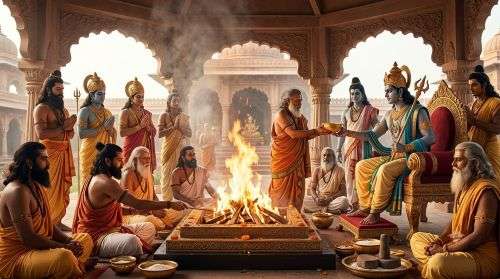
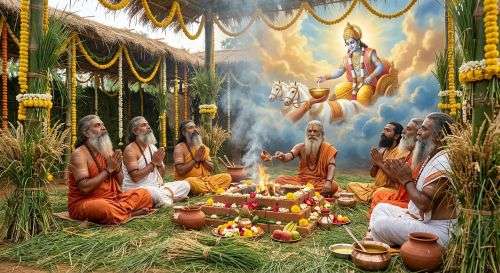
The Ritvijas and Hotas await the arrival of Indra with hearts filled with anticipation. The holy Darbha grass has been carefully spread in perfect order, and the ritual seats have been consecrated for the divine guest. The arrangement of the sacrificial arena reveals the remarkable scientific temperament of Vedic culture, where precision, cleanliness, order, and timing were considered essential components of sacred worship. The sages understood that external order nurtures internal order, and that a disciplined environment elevates the consciousness of both the worshipper and the ritual itself. Thus, the yajna becomes not merely a ceremony but a living embodiment of cosmic harmony.
The worshippers extol Indra as the benefactor of prayers and the gracious receiver of hymns. They invite him to be seated upon the sanctified Darbha grass and partake of the purified barley cakes accompanied by Soma. These offerings symbolize the fruits of human labor transformed into acts of gratitude. The Vedic seers perceived that all nourishment originates from divine sources and that returning a portion through sacrifice establishes a sacred cycle of reciprocity between humanity and the cosmos. Indra, the celebrated slayer of Vritra, is praised not merely for martial power but as the divine force that removes obstructions and releases the life-giving streams of abundance.
The sages further invite Indra to listen to the hymns chanted during the three daily observances of morning, midday, and evening. These three sacred periods correspond to the natural rhythms of the universe and reflect the Vedic insight that spiritual practice should be aligned with cosmic cycles. By harmonizing worship with the movements of time, the sacrificers seek to attune themselves to the universal order known as Ṛta. The hymns are offered with such affection that they are compared to a loving cow gently caressing her calf. Through this tender imagery, the Vedic tradition reveals that divine worship is founded not upon fear but upon intimacy, reverence, and loving devotion.
Indra, the great relisher of Soma and Lord of Strength, is invited to gladden his being with the sacred elixir. In Vedic symbolism, Soma represents both a ritual offering and the blissful essence of spiritual realization. Its deeper significance points toward the inner nectar experienced by those whose minds have been purified through wisdom, discipline, and contemplation. Thus, the drinking of Soma signifies the awakening of divine consciousness and the joyous union between the worshipper and the celestial powers.
With humility, the sage prays that Indra may never find fault with the priest who chants these sacred hymns. The worshippers declare themselves faithful devotees who continually honor the divine through offerings and praise. They recognize Indra as the bestower of prosperity, shelter, and protection, and they seek his benevolent guardianship. This prayer reflects the Vedic virtue of humility, wherein even the learned sage approaches the divine not with pride but with sincere surrender and gratitude.
The invocation continues with affectionate urgency. Indra, beloved of the Hari horses, is requested not to halt at distant places but to come directly to the sacrificial ground. The devotees long for divine nearness, understanding that spiritual fulfillment is attained when the presence of the divine becomes an immediate reality within the heart. The call for Indra’s swift arrival symbolizes the soul’s yearning for illumination and the removal of every barrier separating human consciousness from divine awareness.
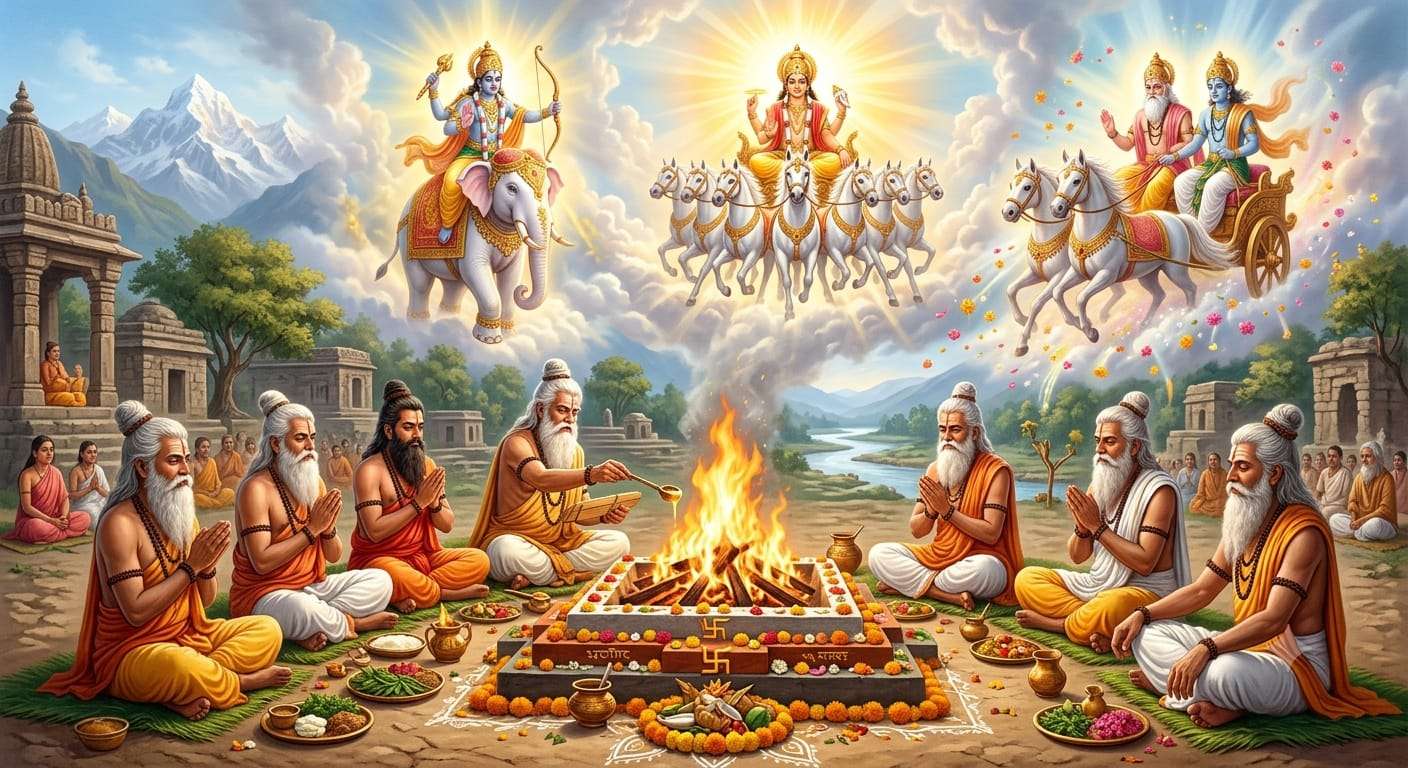
Finally, the sage envisions Indra’s powerful chariot approaching the sacred enclosure. His vigorous, long-maned horses, glistening with exertion, draw him toward the carefully arranged Kusa grass and consecrated altar. This majestic image unites earthly ritual with celestial presence. The ordered sacrificial ground, the disciplined chanting of hymns, the prepared offerings, and the arrival of the divine all reveal a central Vedic truth: when human effort is aligned with cosmic order, divine grace naturally descends. Through this sacred meeting of devotion, knowledge, discipline, and divine power, the yajna becomes a luminous bridge connecting the mortal world with the eternal realms of truth, abundance, and spiritual bliss.