Vinay Rao
It is an Under-19 match on a Hyderabad ground. A lean eighteen-year-old runs in and bowls his best ball. The batsman facing him is a grown man: broad-shouldered, heavy-forearmed, with a full beard. He is twenty-three. He swats the ball over midwicket without effort. Then he does it again.
By the end of the over, the boy has stopped attacking. By the end of the season, he may have stopped believing.
Nobody will record that he was beaten not by a better cricketer, but by a man five years older.
This is the ugly possibility that age fraud creates. It does not always look like fraud. A birth certificate may say one thing, a school record another, and an identity document may appear perfectly valid. But when records are manipulated or discrepancies are concealed, an overage player can find his way into an age-group competition meant for younger cricketers.
And the genuine player pays the price.
A Moment to Set It Right
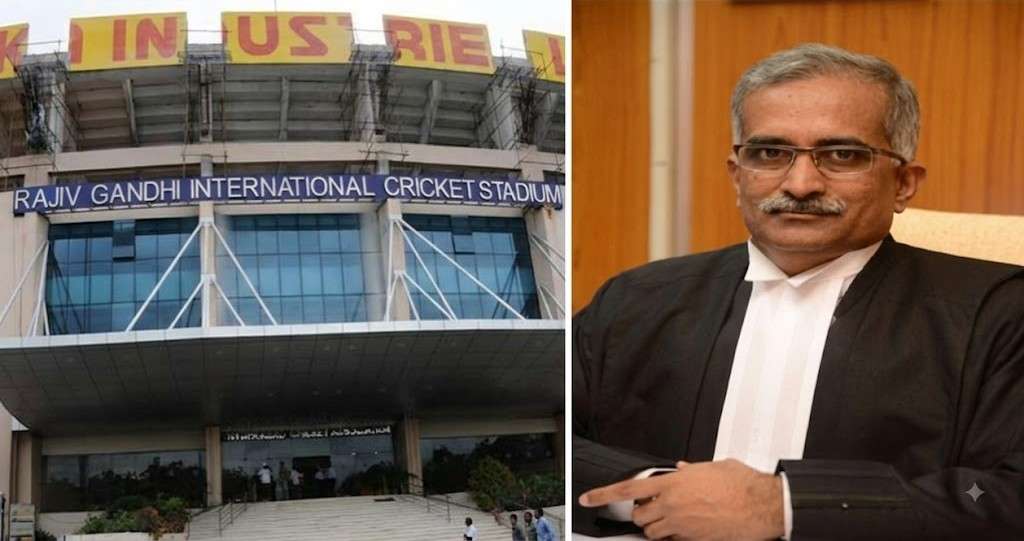
Hyderabad cricket has rarely had a better opportunity to confront the problem. A court-appointed Single Member Committee headed by retired Justice P. Naveen Rao is supervising the functioning of the Hyderabad Cricket Association, while former India cricketer Ambati Rayudu is heading cricket operations. Former India opener Wasim Jaffer has also joined the HCA as mentor for a two-year term.
Both Rayudu and Jaffer have come through the unforgiving system of Indian age-group and domestic cricket. They know what a level playing field means.
An Under-19 season is not just another tournament. It is a critical window in a young player’s development. It is where selectors watch, where performances begin to attract wider attention and where some careers acquire momentum.
That is precisely why age fraud cannot be treated as a minor administrative irregularity.
The Real Cost
The damage goes well beyond one lost match.
The genuine player loses his place in the team, then potentially his place in the selectors’ minds. Age-group opportunities do not keep returning. A missed Under-19 season cannot simply be replayed the following year.
Some youngsters may drift away from the game altogether. Hyderabad may never know what they could have become.
The honest families pay too. They watch their sons train for years, only to see opportunities disappear amid allegations of players being older than the age category permits. Eventually, some begin to wonder whether they are the foolish ones for playing it straight.
That doubt is perhaps the most corrosive legacy of age fraud.

What the BCCI Has Prescribed
The BCCI has had an age-fraud policy for years and has repeatedly described the issue as one requiring strict action. Its measures include document scrutiny and cross-verification, a two-year ban for players found to have submitted fake or tampered birth certificates, restrictions on participation after such a ban, and a mechanism for reporting suspected age fraud.
The BCCI has also prescribed age-verification procedures for specific age groups, including bone-age assessment under its Age Verification Programme. That makes one principle clear: documents cannot simply be accepted at face value where serious discrepancies arise.
The objective is simple — establish eligibility before an unfair advantage becomes a sporting advantage.
Where the System Must Be Stronger
HCA has demonstrated that it can identify age discrepancies and refer cases for investigation. In November 2024, for instance, HCA said it had sought a police investigation into age discrepancies involving Under-19 players. Following the police investigation, the report was forwarded to the BCCI, which subsequently imposed two-year bans on six Hyderabad players, effective from November 4, 2024.
That action is important. But enforcement cannot end with identifying discrepancies or imposing bans in individual cases.
The real test is whether the verification system is comprehensive, timely and transparent enough to prevent questionable cases from moving from one season to another.
A system that identifies a problem but takes too long to reach a final determination risks losing its deterrent effect.
The Danger of Delay
Age fraud has a built-in escape route: time.
Every season a disputed case remains unresolved, the player can potentially continue playing, being selected and advancing through the system — depending on the status of the proceedings and any interim judicial orders.
By the time the issue is finally settled, the player may have moved beyond age-group cricket altogether. The very age category in which the alleged manipulation mattered may no longer be relevant.
That is why age verification must happen before selection and registration wherever practicable, not become an exercise conducted after a player has already gained an advantage.
Recent court proceedings involving banned Hyderabad players also underline the importance of due process. Courts have examined questions relating to the manner of imposing bans, age-verification tests and opportunities for affected players to make representations.
The answer, therefore, is not arbitrary exclusion. It is a process that is both firm and fair — verify the age, hear the player, decide within a defined timeframe and then enforce the decision.
A Way Forward
Put verification first. Players whose age records contain serious discrepancies should undergo verification before being selected for age-group teams, subject to the applicable BCCI rules and due process.
Set deadlines. No age-discrepancy case should be allowed to drift indefinitely from one season to another.
Maintain a public status mechanism. Where legally permissible, HCA should indicate whether a case has been cleared, remains under examination or has resulted in disciplinary action.
Follow BCCI rules consistently. The Association should ensure that its registration and verification procedures are aligned with the latest BCCI age-verification framework.
Enforce penalties. Where manipulation of age or submission of fraudulent documents is established, the prescribed consequences must follow consistently.
Protect genuine players. The system must ensure that a youngster who has complied with the rules does not lose an age-group opportunity because another player managed to exploit a loophole.
None of this requires grand declarations. It requires a system that works before, rather than after, the damage is done.
And that is where the current HCA cricket administration has an opportunity.
Rayudu, Jaffer and the people responsible for cricket operations now have the experience and authority to insist that age-group cricket is genuinely age-group cricket.
Somewhere this season, another eighteen-year-old will run in to bowl.
Hyderabad cricket owes him one simple assurance: that the batsman at the other end is playing under the same age rules.
That is not an unreasonable demand.
It is the minimum a fair contest requires.