Special Correspondent
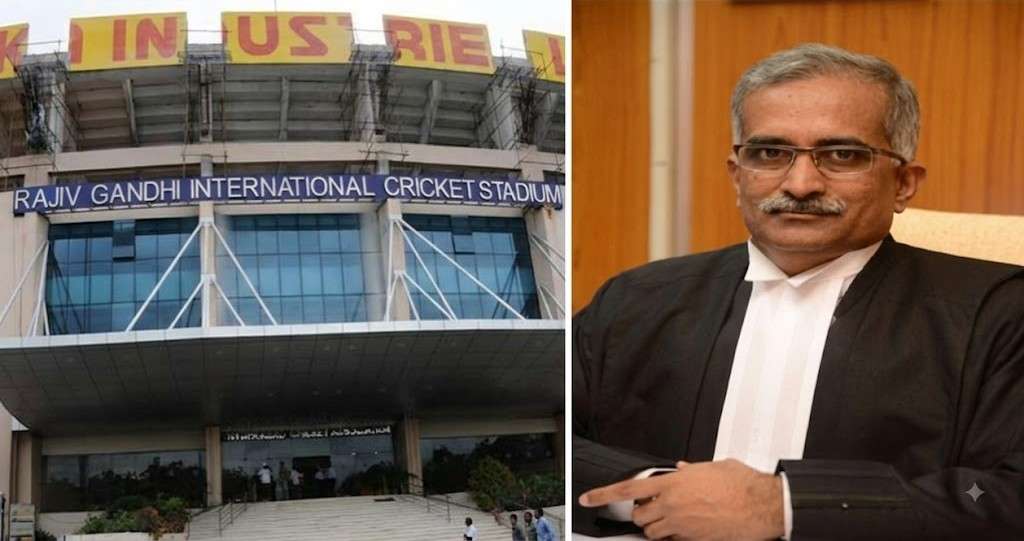
The Hyderabad Cricket Association (HCA) appears to have reached a stage where merely changing office-bearers, issuing fresh circulars or seeking judicial intervention may no longer be enough to restore confidence in its administration—and, more importantly, in its player-selection system.
For years, allegations of corruption, nepotism, favouritism and the emergence of a ‘pay-to-play’ culture have cast a shadow over Hyderabad cricket. More worrying is the perception that these problems have begun to affect the quality and performance of the state’s age-group teams.
Courts, including the Supreme Court, have intervened at various stages to bring order to the affairs of the Association. Yet judicial or administrative intervention can only go so far. If the underlying ecosystem remains unchanged, changing the people managing the system may not necessarily change the outcome.
The real problem, therefore, needs to be examined at the systemic level.
That was precisely what prompted me to draw an unusual parallel after listening to Prime Minister Narendra Modi’s Independence Day address and his emphasis on making quality preparation and opportunities more accessible to students aspiring for professional and competitive examinations.
At first glance, education and cricket may appear to have little in common. But there is an important similarity.
In both cases, a merit-based system can become vulnerable when a powerful private coaching ecosystem develops around it.
The coaching-centre economy
India has witnessed an extraordinary expansion of private coaching centres preparing students for NEET, JEE, UPSC and other competitive examinations. There is, of course, nothing wrong with coaching itself. Good coaching can supplement education, sharpen skills and help students compete effectively.
The problem begins when coaching becomes an industry in which access to opportunity increasingly depends on the family’s ability to pay.
And when commercial interests become deeply intertwined with a public examination ecosystem, the line between preparation and manipulation can become dangerously blurred.
The recurring controversies surrounding question-paper leaks and examination malpractices have repeatedly raised concerns about the vulnerability of examination systems to outside influence.
This is where the Prime Minister’s emphasis on accessible and affordable online coaching assumes significance. If students from different economic backgrounds can obtain quality preparation without having to depend entirely on expensive private institutions, the excessive influence of commercial coaching centres can gradually be reduced.
It would be wrong to suggest that every private coaching centre is corrupt or that coaching itself causes question-paper leaks. That is neither fair nor factually sustainable.
The larger lesson, however, is undeniable:
When a parallel commercial ecosystem becomes excessively powerful around a merit-based public system, the public system itself becomes vulnerable.
And that is where Hyderabad cricket should perhaps take a closer look at itself.
From question papers to team sheets
Replace the question paper with a team sheet.
Replace the coaching centre with a private cricket academy.
Replace the examination aspirant with a young cricketer dreaming of representing Hyderabad.

The central question remains remarkably similar:
Is access to opportunity genuinely determined by merit—or can money, influence, connections and proximity to the right people distort the process?
Hyderabad has witnessed a phenomenal growth of private cricket academies. Many are run by former international, Ranji Trophy or state-level cricketers. Several undoubtedly provide excellent coaching and have contributed positively to the development of young players.
The issue, therefore, is not the existence of private academies.
The issue is whether they have gradually become too influential in the pathway leading to state selection.
If a player pays substantial amounts to train at an academy and that academy happens to have close links with selectors, coaches, administrators or people associated with the selection process, even the perception of a conflict of interest can damage the credibility of the system.
And perception matters.
A talented youngster from a modest family should never feel that representing Hyderabad requires first entering an expensive private academy. Nor should parents be made to believe that paying enormous coaching fees is effectively the price of securing a place in a state team.
That is where HCA needs to draw the line.
The missing institutional alternative
There was, in fact, an alternative available to Hyderabad cricket.
The creation of the HCA’s Cricket Academy of Excellence was, in principle, an excellent idea. The objective was to create an institutional pathway through which promising young cricketers could be identified, trained and groomed under professional coaches before being considered for state representation.
It was precisely the kind of institution that could have reduced the dependence of aspiring players on private coaching establishments.
Imagine what such an Academy could have become if it had been systematically strengthened:
A properly funded residential academy.
Modern training facilities.
Professional coaching.
Fitness and sports-science support.
Video analysis.
Mental conditioning.
Nutrition.
Regular district-level talent identification.
Transparent trials.
Independent assessment.
And, above all, an environment in which a youngster’s financial background did not determine his chances of progressing.
Unfortunately, the Academy appears not to have developed into the principal talent-development institution it could have become. As its institutional importance diminished, private academies naturally filled much of the vacuum.
In my view, that was a serious institutional missed opportunity.
The question HCA must now answer
Why should the pathway to a Hyderabad state team effectively run through private academies when the Association itself has the ability to create a credible alternative?
HCA need not—and should not—compete with private academies commercially.
It should compete through excellence.
Its Academy of Excellence should offer aspiring players something that no commercial consideration can buy: a transparent, professional and merit-based pathway to state cricket.
The Association already possesses the institutional authority, infrastructure and access to resources required to build such a system.
The objective should be simple:
Private academies can coach players. They should not become the gatekeepers of Hyderabad cricket.
That distinction could determine whether Hyderabad cricket merely manages its decline—or begins rebuilding its future.
And that is perhaps the most important lesson HCA can take from the education sector.
If an expensive private ecosystem becomes too powerful around a public merit-based system, the answer is not necessarily to abolish the private sector.
The answer is to create a stronger, credible, affordable and transparent public alternative.
Education needs it.
Hyderabad cricket needs it too.
And the HCA Academy of Excellence could be the beginning.