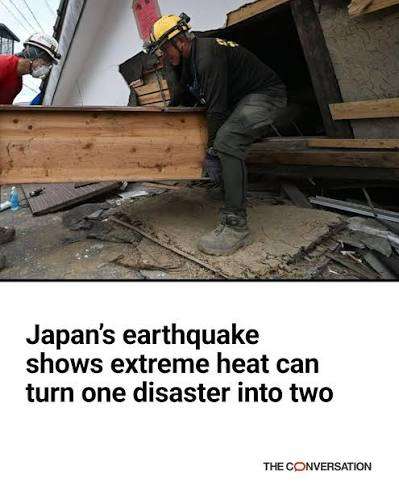
Durham: Emergency workers attempting to rescue survivors after a recent earthquake in Kyushu, Japan, also had to cope with extreme summer heat.
After the earthquake killed at least 38 people and left thousands homeless in late July, daytime temperatures climbed into the high 30°Cs and in some places hit 40°C for the first time, with high humidity.
Extreme heat affects almost every aspect of an emergency response. For the close to 7,000 people in 130 evacuation shelters and in temporary accommodation across the Kumamoto region, on the southernmost of Japan’s four main islands, hot and humid conditions increase the risk of dehydration, heat exhaustion and heatstroke.
Older adults, infants and people with chronic illnesses are particularly susceptible. It is suspected that one older woman has already died of heatstroke while sheltering in her car.
Heat also makes it harder for people to sleep, especially when air conditioning is unavailable or electricity supplies have been interrupted. Poor sleep can worsen stress, impair decision-making and slow recovery following traumatic events. Emergency responders are similarly affected.
Rescue work, debris removal and infrastructure repairs are physically demanding activities. High temperatures reduce physical performance, increase fatigue and require more frequent rest breaks, potentially slowing recovery operations.