



Pakistan may not be breaking up tomorrow—but the warning lights are flashing across the country. From Balochistan and Khyber Pakhtunkhwa to Pakistan-occupied Jammu and Kashmir, Islamabad is confronting an uncomfortable reality: the Pakistani state is having increasing difficulty converting military power into political stability.
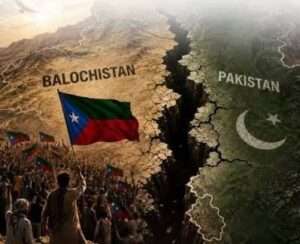
The latest symbolism comes from Balochistan. On August 11, separatist figures led by Mir Yar Baloch marked what they call the Independence Day of a “Republic of Balochistan”, invoking the pre-1947 sovereignty of the Khanate of Kalat and demanding international recognition. No UN member state has recognised this declaration, and Islamabad continues to exercise administrative and military control over Balochistan. Therefore, calling it an established independent republic would be factually wrong. But dismissing it as mere social-media theatre would be equally foolish.
The real danger for Pakistan is not a declaration on paper. It is the accumulation of separatist sentiment, insurgency and popular alienation.
Balochistan remains one of the country’s principal security theatres. The Pakistan Institute for Conflict and Security Studies recorded 118 militant attacks nationwide in June alone, with Balochistan the most affected province, closely followed by Khyber Pakhtunkhwa. The violence demonstrates that Islamabad is still struggling to impose a durable security order across its western periphery.
Khyber Pakhtunkhwa presents a different but equally serious challenge. The province faces militant violence, political confrontation, unemployment and public anger over governance. Its geographical and tribal complexities make a purely military solution particularly difficult. Islamabad is effectively fighting on two western fronts while simultaneously trying to manage political instability at home.
Then comes Pakistan-occupied Jammu and Kashmir. Months of sustained protests have exposed deep economic and political grievances. The Joint Awami Action Committee’s agitation has included demands relating to governance, electricity, taxation and political rights. Authorities have responded with restrictions and a heavy security presence. The scale and persistence of the protests should concern Islamabad because this is not a conventional separatist insurgency; it is popular discontent cutting across ordinary economic and political grievances.
That is precisely where Pakistan’s predicament becomes more dangerous. A state can defeat an armed group militarily; it cannot permanently defeat public alienation with guns.
Pakistan’s economic position adds another layer of vulnerability. The International Monetary Fund expects real GDP growth of only 3.6 per cent in FY2026 and projects government debt, including IMF obligations, at about 70 per cent of GDP. Gross reserves are improving, but the country remains heavily dependent on external financing and continued IMF-backed reforms. In May, the IMF approved another disbursement of about $1.1 billion under its programme.
This is hardly an economy with the fiscal freedom to fight endless internal wars.
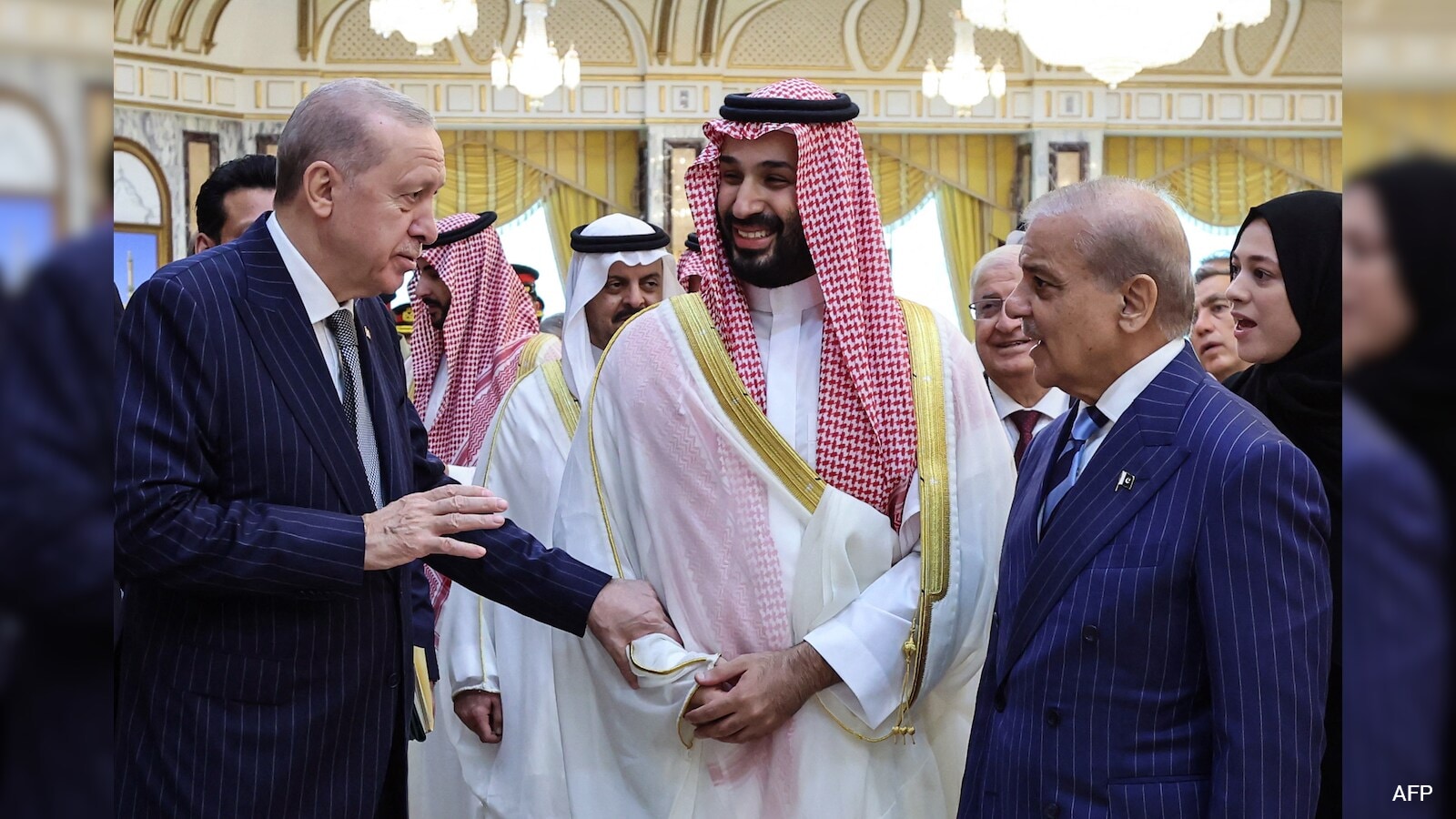
And now comes the intriguing Mecca Joint Defense Agreement signed on August 7 by Saudi Arabia, Türkiye and Pakistan. The pact contains a collective-defence principle under which an armed attack on one member is treated as an attack on all three. It creates mechanisms for military coordination, intelligence cooperation, training and defence-industrial collaboration.
Islamabad will portray the agreement as a strategic triumph. It certainly gives Pakistan greater diplomatic and military relevance. But there is another way to read it: Pakistan is increasingly looking outward for strategic depth while its internal periphery remains unsettled.
This is where Prime Minister Shehbaz Sharif and Army Chief Field Marshal Asim Munir face their biggest test. Pakistan’s military remains enormously powerful, and there is no credible evidence that the country is on the immediate verge of territorial disintegration. That distinction matters.
But strength should not be confused with stability.
Pakistan has already experienced one historic breakup—in 1971, when East Pakistan became Bangladesh. Today’s circumstances are entirely different, but history offers one uncomfortable lesson: territorial integrity cannot be secured indefinitely by coercion when political legitimacy, economic opportunity and public trust are eroding.
The danger for Islamabad is therefore not that Pakistan will suddenly disappear from the map. The greater danger is gradual Balkanisation of political authority—areas where the centre increasingly struggles to command unquestioned legitimacy, even if the army retains the ability to deploy force.
Sharif and Munir may still win individual battles. But unless Islamabad addresses the grievances driving Baloch alienation, KP militancy, PoJK unrest and economic frustration, it risks losing the larger war for national cohesion.
Pakistan is not cracking apart—yet. But the cracks are becoming impossible to ignore.


