



Taraknath Temple, also known as Baba Tarakeshwar Temple, is located in Tarakeshwar town of Hooghly district, West Bengal. It is one of the most revered Shiva temples in Bengal and is visited by thousands of devotees throughout the year.
The present Taraknath Temple was built in 1729 CE by Raja Bharamalla Rao. The temple is nearly 300 years old and has remained an important centre of Lord Shiva worship in eastern India.
The presiding deity of the temple is Lord Shiva, worshipped here as Baba Taraknath or Tarakeshwar Nath. The main deity is a Swayambhu Shiva Lingam, believed to have manifested naturally.
The name Taraknath represents Lord Shiva as the divine protector who helps devotees overcome difficulties and attain spiritual liberation. Devotees believe that sincere prayers offered here bring peace, prosperity and fulfilment of wishes.
The temple complex also has smaller shrines dedicated to Goddess Kali and Lord Lakshmi Narayan.
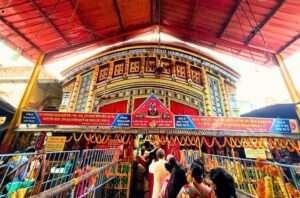
Taraknath Temple follows the traditional Bengal style of temple architecture. The main shrine is built in the Atchala style, which is characterised by multiple sloping roofs typical of Bengal temples.
The sanctum is surrounded by a spacious prayer area and a Natmandir where devotees gather for worship and rituals. Near the temple is the sacred Dudhpukur pond, which holds great religious importance among devotees.
The origin of Taraknath Temple is connected with the divine discovery of a Swayambhu Shiva Lingam in the forest region of Tarakeshwar. According to local tradition, a devotee named Vishnudas discovered the naturally manifested Shiva Lingam and recognised it as the divine presence of Lord Shiva. The discovery soon became known among the local people, who began worshipping the sacred Lingam with great devotion.
It is believed that Raja Bharamalla Rao came to know about the divine significance of this place and received the blessings of Lord Shiva through a divine dream or vision. Guided by this spiritual experience, the king constructed the present Taraknath Temple in 1729 CE around the sacred Lingam.
Since then, the temple has grown into one of the most important Shaiva pilgrimage centres of Bengal. Devotees believe that Baba Taraknath, a compassionate form of Lord Shiva, blesses his devotees, removes their difficulties and grants their wishes.
The origin of Taraknath Temple is connected with the divine discovery of a Swayambhu Shiva Lingam in the forest region of Tarakeshwar. According to local tradition, a devotee named Vishnudas discovered the naturally manifested Shiva Lingam and recognised it as the divine presence of Lord Shiva. The discovery soon became known among the local people, who began worshipping the sacred Lingam with great devotion.
It is believed that Raja Bharamalla Rao came to know about the divine significance of this place and received the blessings of Lord Shiva through a divine dream or vision. Guided by this spiritual experience, the king constructed the present Taraknath Temple in 1729 CE around the sacred Lingam.
Since then, the temple has grown into one of the most important Shaiva pilgrimage centres of Bengal. Devotees believe that Baba Taraknath, a compassionate form of Lord Shiva, blesses his devotees, removes their difficulties and grants their wishes. The sacred Dudhpukur pond near the temple is also closely associated with temple traditions and is considered spiritually significant by devotees.
Maha Shivaratri, Shravan month worship, Shrabani Mela and Gajan festival are the major festivals celebrated at the temple with great devotion.
Taraknath Temple continues to be one of the most significant Shiva temples of Bengal, combining centuries-old faith, traditional architecture and deep s


