


MS Shanker
There are few places in Bharat where status, wealth and political power ought to dissolve the moment one steps inside the sanctum. The sacred abode of Lord Venkateswara at Tirumala is one such place. Before the deity, there are no Chief Ministers, ministers, legislators, bureaucrats or industrialists. There are only devotees.
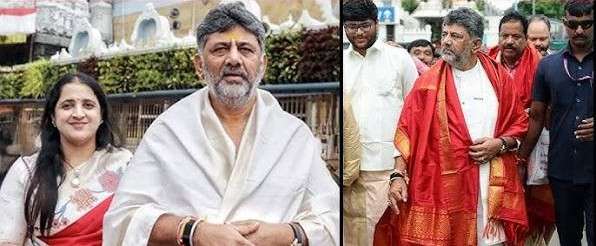
That is precisely why Karnataka Chief Minister D.K. Shivakumar’s proposal to extend privileged access to the temple’s “first aarti” to ministers, MLAs, senior officials and other dignitaries deserves to be rejected outright.
The justification offered—that elected representatives from Karnataka find it difficult to secure darshan—is hardly convincing. Millions of ordinary devotees also struggle to obtain darshan. They wait for hours, sometimes through the night, enduring long queues with remarkable patience because they believe their devotion matters more than convenience. Why should politicians and bureaucrats be elevated above them merely because they occupy public office?
The argument that Karnataka historically enjoyed certain ceremonial privileges cannot become an excuse to create a new class of politically entitled devotees. Tradition cannot be selectively interpreted to institutionalise privilege. If such demands are entertained today, what prevents every other state from seeking identical concessions tomorrow? Will every Chief Minister ask that his ministers, legislators and senior officials receive preferential treatment? Where does this end?
This proposal reflects an unfortunate tendency to view even the country’s holiest temples through the prism of political entitlement. Whether intended as administrative convenience or political accommodation, the inevitable consequence is the same: ordinary devotees are pushed further down the queue while those wielding power move closer to the sanctum.
Public office is a constitutional responsibility, not a divine entitlement.
The Karnataka government’s proposal sends precisely the wrong message. Instead of encouraging public representatives to lead by example by standing alongside ordinary pilgrims, it seeks to formalise a hierarchy inside a temple where no hierarchy should exist.
The Tirumala temple does not belong to any political party, any government or any state. It belongs to Lord Venkateswara and to the countless devotees who travel from every corner of India and across the world. The Tirumala Tirupati Devasthanams (TTD) is merely its custodian. That custodianship carries with it a solemn responsibility—to preserve the sanctity, traditions and fairness of one of Hinduism’s most revered pilgrimage centres.
TTD should therefore politely but firmly decline any formal proposal from the Karnataka government seeking expanded protocol privileges. Such a request, if accepted, would not merely inconvenience thousands of pilgrims every day; it would establish a damaging precedent that other governments would inevitably seek to emulate. The cumulative effect would be a steady expansion of VIP culture at the expense of ordinary worshippers.
Bharat has long debated the excesses of VIP culture. Successive governments have spoken about dismantling unnecessary privileges in public life. Temples should certainly not become the next frontier for expanding political protocol.
There is, of course, a legitimate need for security arrangements involving constitutional authorities and individuals facing genuine threats. Such exceptions are dictated by practical necessity and should remain precisely that—exceptions. They cannot be converted into a blanket privilege covering ministers, legislators, senior officials, and assorted dignitaries.
Lord Venkateswara does not distinguish between the powerful and the powerless. Neither should those entrusted with managing His temple.
The true greatness of Tirumala lies in its spiritual message that every devotee, irrespective of social standing, stands equal before the Almighty. Any proposal that undermines this foundational principle strikes at the very soul of the institution.
TTD must protect that principle without hesitation. It should respectfully return the proposal with a simple message: before Lord Venkateswara, every genuine devotee is equal, and no government can seek to legislate preferential access to divine grace.



Sound suggestion but with the kind of mindset our people and devotees have, we are always in a “chalta hai mode”. We don’t mean business when it comes to implementable action. Nevertheless what is in your article should be tried in letter and spirit.