



The time has come for the world to stop tiptoeing around Iran. A nation that repeatedly threatens to choke one of the world’s most vital maritime lifelines cannot continue to demand respect while showing utter disregard for international law. Tehran must either introspect and behave like a responsible member of the international community or be prepared to face the united ire of the civilized world.
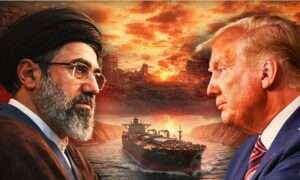
The Strait of Hormuz is not Iran’s backyard. It is a global artery through which a substantial share of the world’s oil and liquefied natural gas flows every day. Any attempt to close it or impose unilateral restrictions is nothing short of economic blackmail against humanity. The consequences would not be confined to the Gulf. They would be felt in every household struggling with fuel prices, inflation and the rising cost of living—from Asia to Europe, from Africa to the Americas.
No sovereign nation has the right to hold the world hostage and ruin their economies.
International maritime law leaves little room for ambiguity. The principle of transit passage under the UN Convention on the Law of the Sea exists precisely to prevent powerful coastal states from weaponising international waterways for political or military leverage. Iran’s repeated threats to interfere with commercial shipping are therefore not acts of strength. They are acts of desperation dressed up as defiance.
For decades, Tehran has projected itself as the champion of resistance. Yet behind that carefully cultivated image lies a troubling record that has drawn widespread international criticism. Iran has long been accused by numerous governments of backing armed proxy groups across the Middle East, fuelling conflicts that have claimed countless innocent lives and destabilised an already volatile region. Equally disturbing is the repeated rhetoric from sections of the Iranian establishment calling for the elimination of Israel. No responsible nation can preach peace while simultaneously tolerating or encouraging language that questions another sovereign state’s right to exist.
Those who conveniently ignore this reality while portraying Iran solely as a victim do little service to peace.
Equally baffling is the selective outrage witnessed across parts of the world whenever Israel responds militarily to attacks against its citizens. Every democratic nation reserves the right to defend itself against terrorism and armed aggression. Israel cannot be expected to surrender that right simply because international opinion is divided. Like every sovereign state, it has both the right and the obligation to protect its people. That does not exempt any military operation from scrutiny under international humanitarian law, but neither does it erase the security threats that Israel faces.
The conversation cannot begin and end with condemning Israel while overlooking those who openly celebrate violence, arm militant groups or glorify the destruction of another nation. Selective morality is not morality at all.
This is precisely why democratic nations must speak with one voice. Whether in Europe, Africa, Asia or the Indo-Pacific, governments that genuinely believe in peaceful coexistence, respect for sovereignty, freedom of navigation and the rule of law must reject every attempt to establish regional dominance through coercion or intimidation. Civilized societies cannot remain silent while strategic waterways are turned into geopolitical bargaining chips.
The United States is not beyond criticism. Washington has often behaved like the world’s self-appointed “Big Brother”, and many of its interventions have attracted legitimate debate and criticism. Yet there remains a fundamental distinction between exercising geopolitical influence—however controversially—and threatening to paralyse one of the world’s most critical trade routes. On the specific issue of keeping international sea lanes open, the broader international consensus has consistently favoured freedom of navigation over coercive disruption.
Iran must understand that the world has changed. The age of intimidating neighbours, threatening global commerce and expecting immunity from consequences is drawing to a close. Respect cannot be commanded through missiles, proxies or threats. It must be earned through responsible statecraft, adherence to international law and a genuine commitment to regional stability.
Tehran therefore stands at a crossroads. It can choose the path of cooperation, diplomacy and peaceful coexistence, or it can continue down the road of confrontation and isolation. If it persists in treating the Strait of Hormuz as a weapon and regional instability as an instrument of policy, it should not be surprised if the international community responds with unprecedented diplomatic, economic and strategic resolve.
The choice is Iran’s. The consequences, however, will belong to the entire world.


Both Iran and US are to be blamed for what they are inflicting on the world. US cannot and should not monopolise Gulf to show their supremacy. Why US has not shown the zeal to control Islamic Republic Of Pakistan?
Agreed. But no sane person would argue that the US is always at fault. Yes, Iran needs to be taught a lesson or two to make it behave responsibly. Is it not a fact that its leaders have repeatedly vowed to wipe Israel off the map? Is such rhetoric acceptable in any civilized society? It is no different from Pakistan’s long-standing policy of waging a “thousand cuts” against Bharat. Should the rest of the world simply allow Iran to violate international law by threatening to close the Strait of Hormuz at its whim? How can anyone justify its navy firing at commercial vessels? And who does Iran think it is to demand fees from ships passing through international waters? That said, I also agree that the US should take a far tougher stance against Pakistan, which remains another rogue nation in the subcontinent. You may have noticed that I have consistently highlighted this in almost all my edits whenever the subject has arisen.