



Bhumapura Hanuman Temple is located in Bhumapura village near Modaj in Mahemdavad Taluk of Kheda district, Gujarat. The temple is about 8 km from Mahemdavad, around 21 km from Kheda town, and nearly 40 km from Ahmedabad. Surrounded by peaceful farmlands, it is one of the most revered Hanuman temples in central Gujarat and attracts thousands of devotees throughout the year.
The worship of Lord Hanuman at this sacred site is believed to be several decades old. The present temple gained prominence during the lifetime of Jaswantsinh Maharaj in the second half of the twentieth century and has since become one of Gujarat’s most respected Hanuman pilgrimage centres.
The presiding deity is Lord Hanuman, worshipped as Hajra-Hajur Hanuman, meaning the Lord who immediately responds to the sincere prayers of his devotees. The idol is believed to be Swayambhu (self-manifested) and Jagrut (spiritually awakened). Lord Hanuman is depicted holding a Gada (mace) in one hand and the Sanjeevani Mountain in the other, symbolising his strength, courage, devotion, and divine power to protect devotees and remove obstacles. Devotees visit the temple seeking relief from difficulties, protection from negative influences, and fulfilment of their prayers.
The temple is built in the traditional Gujarati style on a raised stone platform with a Mukhamandap, Sabhamandap, Antarala, and Garbhagriha. The sanctum houses the Swayambhu idol of Lord Hanuman, while the temple complex also includes the sacred Peepal tree, the Samadhi of Jaswantsinh Maharaj, Shri Rameshwar Mahadev Temple, and shrines dedicated to Shanidev and Baba Ramdev Pir.
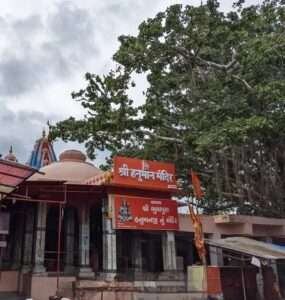
The temple owes its present fame to the great Hanuman devotee Jaswantsinh Maharaj, who dedicated his life to the worship of Lord Hanuman. He spent many years meditating beneath an ancient Peepal tree while continuously chanting the Lord’s name with complete devotion. His unwavering faith transformed this quiet village into an important centre of Hanuman worship. Even today, devotees pay their respects at his Samadhi within the temple complex.📖 Sthalapurana
According to the temple’s sacred tradition, Jaswantsinh Maharaj performed intense penance beneath the ancient Peepal tree for many years. Pleased with his devotion, Lord Hanuman appeared before him in a divine dream and revealed that his sacred form existed beneath the very tree where Maharaj was meditating. The Lord instructed him to uncover the idol and establish a place of worship.
The following morning, Maharaj searched beneath the Peepal tree and discovered a Swayambhu idol of Lord Hanuman exactly as revealed in the dream. Recognising this as a divine miracle, he established a temple at the sacred spot and dedicated his life to serving the Lord.
As news of the miraculous discovery spread, devotees from different regions began visiting the temple. Many experienced fulfilment of their prayers and believed they had received Lord Hanuman’s immediate grace. Because of these experiences, the deity became widely known as Hajra-Hajur Hanuman, signifying the Lord who quickly responds to the sincere prayers of his devotees.
A unique tradition of the temple involves sacred protective threads blessed by Jaswantsinh Maharaj. Devotees tie these threads at the entrances of their homes, believing they provide divine protection from negative energies and bring peace and prosperity to the family
The temple celebrates Hanuman Jayanti, Kali Chaudas, Purnima, Amavasya, and special Tuesday and Saturday Hanuman worship. Kali Chaudas is the grandest festival, drawing lakhs of devotees who offer prayers, oil, and special havans to seek Lord Hanuman’s blessings and protection.


