


Gumandev Hanuman Mandir is one of the most revered Hanuman temples in Gujarat. It is located near Jhagadia in Bharuch District. The temple is an important pilgrimage centre for devotees from Gujarat, especially from Bharuch, Surat and Vadodara, and is also a significant halt for pilgrims undertaking the sacred Narmada Parikrama.
The temple is estimated to be over 400 years old. The present shrine traces its origin to 1615 CE, when the self-manifested idol was ceremonially consecrated on Chaitra Purnima (Hanuman Jayanti) by Saint Gulabdasji Maharaj.
The presiding deity is Sri Gumandev Hanuman, worshipped as a Swayambhu (self-manifested) and Jagrut (ever-awakened) form of Lord Hanuman. The sacred idol is adorned with sindoor, a silver crown, silver ornaments and a ceremonial silver umbrella. Devotees believe that Lord Gumandev Hanuman removes pride, fear, obstacles, and negative influences while blessing sincere devotees with courage, protection and fulfilment of righteous wishes.
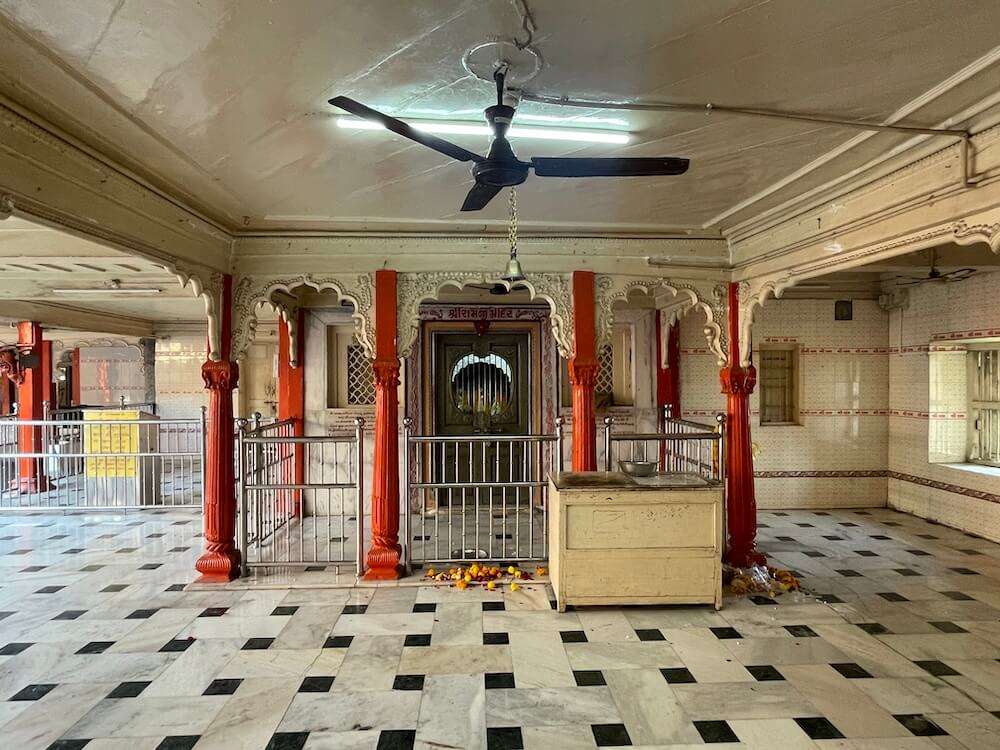
The temple features a spacious and well-maintained complex with a grand entrance gateway leading to the main shrine. The sanctum is crowned with a traditional shikhara and is surrounded by a large courtyard. The complex also includes a Sri Rama Temple, a Kalabhairava Shrine, a tall Dhwajastambha, dharmashalas, and memorial shrines of former Mahants, creating a serene and spiritually vibrant atmosphere.
The history of the temple is closely associated with Saint Gulabdasji Maharaj of the Ramanandi tradition from Hanumangarhi, Ayodhya.
Around the early seventeenth century, while travelling through the forests near Mota Sanja village, the saint encountered a self-manifested idol of Lord Hanuman. Recognising its divine nature through spiritual insight, he brought the idol to its present location and established a shrine. The deity was ceremonially consecrated on Hanuman Jayanti (Chaitra Purnima) in **1615 CE, and over the centuries the shrine grew into one of Gujarat’s most important Hanuman pilgrimage centres.
According to the traditional Sthalapurana preserved by the temple, about four centuries ago, Saint Gulabdasji Maharaj, a revered saint of the Ramanandi tradition from Hanumangarhi in Ayodhya, was travelling through the forests near Mota Sanja village in present-day Bharuch district. While resting, he heard loud cries from nearby villagers. On reaching the spot, he witnessed an extraordinary sight—a wolf was repeatedly striking a naturally manifested idol of Lord Hanuman, while the frightened villagers were trying to chase the animal away. Through his divine insight, the saint declared that the wolf was merely exhausting the effects of its past karma and instructed the villagers not to harm it.
After the wolf departed peacefully, Gulabdasji Maharaj recognised the idol as a Swayambhu (self-manifested) form of Lord Hanuman. Accepting it as the Lord’s divine will, he reverentially carried the sacred idol to its present location and established a small shrine. On the auspicious occasion of Chaitra Purnima (Hanuman Jayanti) in 1615 CE, he ceremonially consecrated the deity. Over the centuries, the shrine became renowned as Gumandev Hanuman Mandir, where devotees believe Lord Hanuman removes pride, fear, obstacles, and negative influences while blessing sincere devotees with courage, protection, and fulfilment of righteous wishes. This sacred tradition continues to be preserved by the temple and is regarded as the authentic and accepted Sthalapurana of the shrine.
The temple celebrates Hanuman Jayanti on Chaitra Purnima with special abhishekas, alankara, Hanuman Chalisa recitations, bhajans, annadanam, and grand processions. Every Tuesday and Saturday attracts thousands of devotees seeking the blessings of Gumandev Hanuman. During the holy month of Shravana, especially on every Saturday, a large annual fair (Mela) is organised, drawing pilgrims from across Gujarat and neighbouring states. Many devotees also undertake barefoot pilgrimages to the temple and visit it while performing the sacred Narmada Parikrama, considering Gumandev Hanuman an important place of worship on the holy pilgrimage route.


