


BG Srinivas
Green Revolution (wheat and rice, 1960s–70s): Driven by an acute famine threat, backed by concentrated political will, massive public investment in HYV seeds, irrigation, MSP support, and a clear geographic focus on Punjab and Haryana. The state stayed in the market through the FCI as a guaranteed buyer. Farmers had no uncertainty about price realisation.
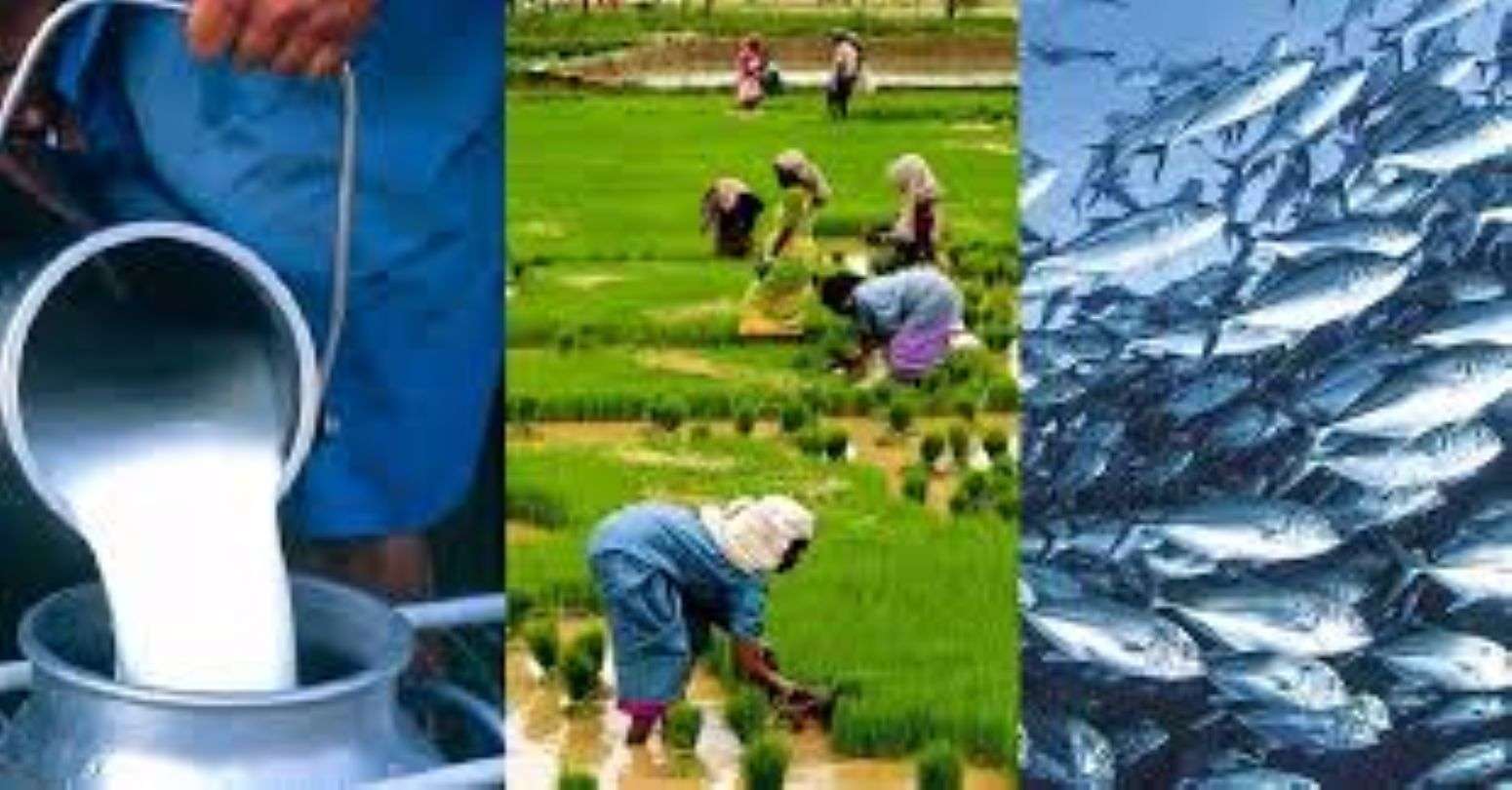
White Revolution (dairy, Operation Flood, 1970s–90s): Dr. Verghese Kurien built a cooperative infrastructure that directly connected rural producers to urban consumers, bypassing exploitative intermediaries. Amul was a demand-driven, farmer-owned model, not a government subsidy programme. It also addressed a commodity (milk) that had no viable import substitute, creating natural protection.
Blue Revolution (fisheries): Marine and inland fish had geographic advantages, low capital requirements, and again no serious import competition for most domestic consumption. Infrastructure investment in ports and cold chains did the rest.
In all three cases, there was a combination of: concentrated political urgency, sustained MSP/procurement support, technology diffusion through public extension, and natural or policy-created insulation from cheap imports.
Why Edible Oils Failed
- There Was Actually a Yellow Revolution, Then It Was Abandoned
India experienced a phase of near self-sufficiency during the “Yellow Revolution,” spearheaded by the Technology Mission on Oilseeds launched in the 1980s. This initiative led India to near self-sufficient status by the early 1990s. However, trade liberalisation beginning in 1994 marked a decisive turning point: as import duties on edible oils were gradually reduced, cheaper foreign oils flooded the market and domestic support systems were scaled back. This is the original sin. Unlike wheat, rice, or milk, oilseeds were voluntarily exposed to global competition at a moment when Southeast Asian palm oil was becoming extraordinarily cheap. Press Information BureauPolicy Circle
- The WTO Liberalisation Trap
Due to WTO agreements, import duties and price support measures were substantially reduced or withdrawn, and per capita consumption grew at a pace surpassing domestic production, resulting in a sharp increase in edible oil imports. India agreed to bind its tariffs on edible oils at levels that made domestic production economically unviable relative to Indonesian and Malaysian palm oil, which was being produced at massive industrial scale with far lower per-unit costs. Ambedkarchamber
- An Inverted Tariff Structure That Penalised Domestic Processing
The import tariff structure fails to protect oilseed producers and processors: the structure makes importing refined oil more attractive than crude or unprocessed oil, supporting the refining industry in exporting countries at the cost of the domestic processing sector. So India was not just importing oil; it was importing finished refined product, hollowing out its own crushing and processing industry at home. pressreader
- Cereal Bias in Agricultural Policy
India’s traditional focus on cereal-based crops such as wheat and paddy led to the neglect of oilseed cultivation. With close to 67% of farmers involved in subsistence farming, there are very few incentives to switch to non-cereal crops. The entire institutional architecture of Indian agriculture, from seeds to extension to procurement, was built around rice and wheat. Oilseeds received attention only episodically, never systematically enough to change the structural calculus for a marginal farmer. S.P. Jain Institute of Management & Research
- Agronomy and Yield Gap
Defective agronomic practices and high incidence of both abiotic and biotic stress are among the primary reasons for the low overall productivity of oilseeds in India. Indian oilseed yields are well below global benchmarks. Groundnut, mustard, soybean, and sunflower in India average yields that are 40 to 60% lower than the US, Brazil, or Argentina because of poor seed varieties, rain-fed cultivation, and fragmented holdings. Unlike wheat where HYV seeds produced dramatic yield jumps, oilseed agronomy never received comparable R&D intensity from ICAR and allied institutions. Agriculture Institute
- Demand Exploded Faster Than Any Policy Could Respond
Rising incomes, urbanisation, westernisation of diets, and shifting health perceptions in the 2000s caused a three-fold increase in per capita consumption of edible oils. Per capita edible oil consumption has risen above 19 kg per year, well beyond domestic production capacity. The Green Revolution benefited from relatively stable demand for staple cereals. Edible oil faced an entirely different demand curve as India grew richer, and the supply side simply could not catch up. S.P. Jain Institute of Management & ResearchAnantam IAS
- Palm Oil Has No Domestic Equivalent
Unlike wheat, rice, or even milk, the dominant global edible oil is palm oil, a tropical tree crop requiring specific geography (equatorial belt). India cannot grow palm oil at the scale Indonesia or Malaysia can. Palm oil alone accounts for more than half of all edible oil imports and about 60% of all imported vegetable oils. There is no Indian crop that can substitute for palm oil at comparable cost and scale. This is a fundamental structural disadvantage that no policy can fully overcome. Substack
The Consequence Today
India is the fourth largest producer of oilseeds globally, yet cannot keep up with growing consumption. In 2021-22, domestic production of edible oils stood at 116.5 lakh tonnes while consumption exceeded 250 lakh tonnes. Edible oil is now the third-largest import item after crude oil and gold, and high dependence on a few supplier countries exposes India to geopolitical supply shocks, as was demonstrated during the 2022 Ukraine war sunflower oil crisis. Economic and Political WeeklyAnantam IAS
The Core Structural Contrast
FactorGreen/White/Blue RevolutionEdible OilsPolitical urgencyFamine, acute crisisNo immediate crisis, gradual slideImport competitionNone possibleDirectly exposed via WTOTechnology leap availableYes, HYV seedsLimited, yields remain poorDemand growthStable caloric needsExplosive income-linked growthNatural crop advantageYesPartially yes, but not for palmPolicy consistencySustained decadesDismantled post-1994
The edible oil story is ultimately a case study in how India succeeded through protection and then failed through premature exposure. The Yellow Revolution showed India could achieve self-sufficiency in oilseeds when it chose to. The decision not to sustain it was a policy choice, not an agronomic inevitability. The Rs 10,103 crore NMEO-Oilseeds mission (2024-31) is the current attempt to reverse this, but bridging a 56% import gap accumulated over three decades will not be resolved in one mission cycle.



Even after seven decades of Independence and self governance, claiming ourselves as the single largest populous country in the world with a democratic pattern of elections, with vast administrative blanket comprising of MP’s in both the houses, representing the cross section of people, we really don’t have proper National Agricultural Policy in place. No State government has got any absolute clarity on their demographic conditions and the cultivation their farmers can take up with assured returns.