



Special Correspondent
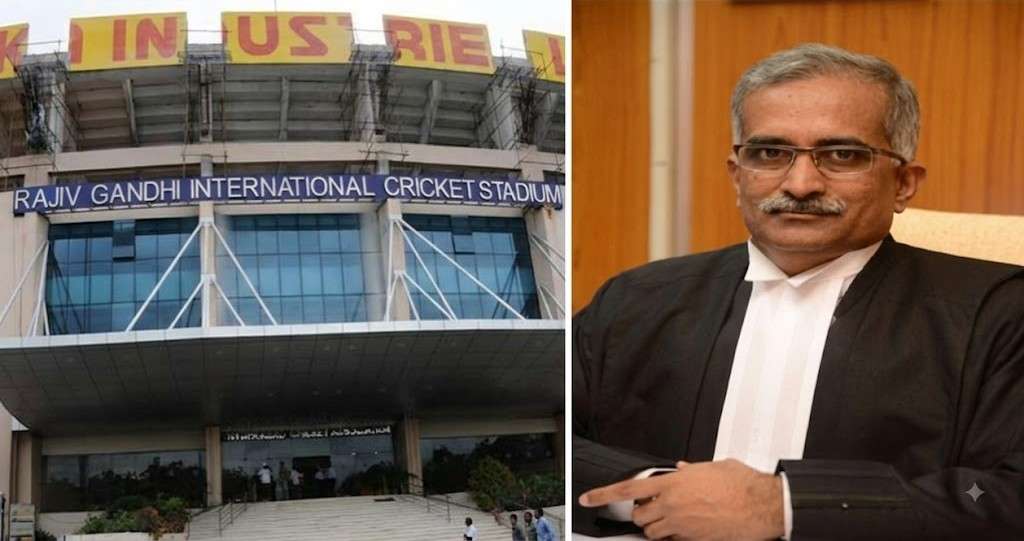
Just when many stakeholders had begun to believe that the Hyderabad Cricket Association (HCA) was finally turning a corner under its new dispensation and the oversight of a court-appointed former judge, fresh developments suggest that the shadows of the past may still be lurking around the corridors of power.
The latest controversy revolves around the proposed TG20 League and the reported appointment of certain coaches and support staff whose names, according to critics, have surfaced in previous controversies. While no wrongdoing has been established and the HCA has not made any official statement on the matter, the developments have once again placed the association’s decision-making processes under scrutiny.
More importantly, they have revived a question that has haunted Hyderabad cricket for years:
Who really runs Hyderabad cricket?
According to multiple sources within the cricket fraternity, a small but influential group continues to enjoy considerable clout despite not holding any visible position in the current administration. Within cricketing circles, some insiders have jokingly christened them the “three musketeers” — not for acts of heroism, but for their uncanny ability to remain influential irrespective of who occupies official positions.
As one former player remarked on condition of anonymity, “The faces may change, the office-bearers may change, but many believe the scriptwriters remain the same.”
The Visit That Triggered Questions
This article is not based on conjecture.
In recent days, this publication received a complaint from a woman cricketer alleging that a serving official was seen visiting a cricket academy in the city. Sources claim that the academy is run by an individual who has quietly emerged as an informal adviser to certain influential figures associated with the current setup.
When questioned, the official denied the visit and offered an explanation that appeared difficult to reconcile with available information. The individual whom he claimed to have visited is not known to frequent the academy in question.
Subsequently, this publication brought the matter to the attention of a senior member of the present administration. The response, conveyed through an intermediary and limited largely to an acknowledgement, did little to address the concerns raised.
It is moments such as these that separate genuine reform from mere optics.
A Pattern That Refuses to Disappear
The issue is not about a single visit or a single individual.
Rather, it touches upon a larger concern repeatedly raised by players, coaches, parents and stakeholders over the years — whether important decisions continue to be influenced through informal channels rather than through transparent and institutional processes.
The concern is not who meets whom. The concern is whether appointments, recommendations and selections are being driven by objective criteria or by networks operating beyond public scrutiny.
That question assumes even greater significance at a time when the HCA is attempting to rebuild credibility after years of factional warfare, litigation, administrative paralysis and repeated judicial interventions.
For aspiring cricketers and their families, the stakes are far higher than administrative politics. Parents spend lakhs of rupees on coaching and training. Young players devote years of hard work chasing the dream of representing Hyderabad, securing an IPL contract, or one day wearing the India cap.
They deserve a system where merit alone determines opportunity.
The issue also raises a larger question. If the HCA has established its own Cricket Academy to identify, nurture and sharpen the skills of promising youngsters, why should the pathway to representative cricket increasingly appear to run through a network of private academies? The situation bears some resemblance to the mushrooming of private coaching institutions in the education sector, where students preparing for competitive examinations often become dependent on parallel systems outside the formal framework.
There is nothing inherently wrong with private cricket academies. In fact, many have contributed significantly to the development of young talent and have played an important role in expanding the game’s reach across Hyderabad. However, concerns arise when parents are led to believe that admission into a particular academy can somehow guarantee selection into district, zonal or state teams. Such perceptions, whether real or imagined, undermine confidence in the integrity of the selection process.
Cricketing excellence cannot be purchased through coaching fees, personal connections or proximity to influential individuals. Talent, performance, discipline and consistency must remain the only currencies that matter.
The present Apex Council, functioning under the watchful oversight of the High Court-appointed former judge, would therefore do well to reinforce that message. It must ensure that the HCA’s own Cricket Academy is headed by a person of unquestioned credibility and professional competence. Equally important, all talent identification and selection-related activities should be conducted transparently under institutional supervision at designated HCA facilities, leaving no room for speculation, misunderstanding or allegations of favouritism.
Hyderabad cricket has never lacked talent. From school grounds to local leagues, the city continues to produce youngsters with the skill and ambition to compete at the highest level. What it has lacked, at crucial moments, is the confidence of stakeholders that merit alone will prevail.
The challenge before the present HCA administration is therefore larger than conducting tournaments or appointing coaches. It is about restoring faith. Every aspiring cricketer must know that runs, wickets and performances matter more than recommendations, affiliations or perceived access to power.
For an association struggling to reclaim its credibility, there can be no greater reform—and no greater legacy—than ensuring that talent alone opens the door to opportunity.
Because once young cricketers begin to believe that doors are opened by influence rather than performance, the damage extends far beyond a few selections. It strikes at the very foundation of the sport. Hyderabad cricket’s future will not be secured by committees, resolutions or public relations exercises. It will be secured only when every boy and girl walking onto a cricket field is convinced that excellence, and excellence alone, will determine how far they can go.
A Rare Opportunity for the Present Administration
The current administration has been handed a rare chance to reset the narrative.
With new office-bearers in charge and judicial oversight providing an additional layer of accountability, the HCA can send a powerful message by ensuring that every appointment — whether of coaches, selectors, support staff or tournament officials — is governed by clearly defined criteria, transparent procedures and documented evaluation.
The solution is neither complicated nor revolutionary.
Publish the criteria.
Publish the process.
Publish the reasons.
Transparency has a remarkable way of silencing speculation.
If such systems are followed and made visible, doubts will naturally diminish. If they are not, questions will continue to multiply.
Every complaint that goes unanswered creates space for suspicion. Every perception of opacity invites comparisons with the very past the association claims it is trying to leave behind.
The Real Test
The true test of reform is not whether old faces disappear from view.
The real test is whether old habits disappear from the system.
As one former Hyderabad cricketer put it bluntly: “The problem was never merely who occupied the chair. The bigger question was who was whispering into the ears of those occupying it.”
This publication has consistently highlighted issues concerning cricket administration not to target individuals but to encourage transparency, accountability and institutional reform. The objective is neither sensationalism nor character assassination. It is to ensure that Hyderabad cricket finally breaks free from the controversies and credibility crises that have burdened it for far too long.
For now, one question continues to echo through the corridors of cricket administration:
Is all well in the HCA?
Or are stakeholders still staring into the same old well, hoping to find a different reflection?



HCA needs to break free from its past dispensation. Not only that it needs to revamp and rebuild but change its tracks to honest, dedicated and Dan administration that is without corrupt people. Quo Vadis, HCA whither goest thou!!!!
same old dins run HCA. there people in selection, tender committee, IPL managers, all other areas. now they are in franchise also managing selection and teams. God hell HCA boys and girls.