Our Special Correspondent
Is HCA Heading Towards a Constitutional Crisis?
Come October 20, the Hyderabad Cricket Association (HCA) could plunge into a constitutional crisis. One may ask, what? Yes, the term of the present Apex Council ends. Then what? Could HCA be left without a duly mandated elected council? Once that happens, who will run its day-to-day administration? Does the High Court-appointed Single Member Committee (SMC) enjoy absolute powers to run the association as it wishes? How will the affiliated club secretaries react?
All this and more in Part 8A: The Term Ends. So Does the Authority.
Two songs sum up the Hyderabad Cricket Association today. For the court-appointed Single Member Committee (SMC), there is the 1995 Rangeela number picturised on Aamir Khan, “Kya Kare Kya Na Kare.” For the members, there is the 1957 prayer from Do Aankhen Barah Haath, “Ae Maalik Tere Bande Hum.” One side hesitates. The other can only pray.
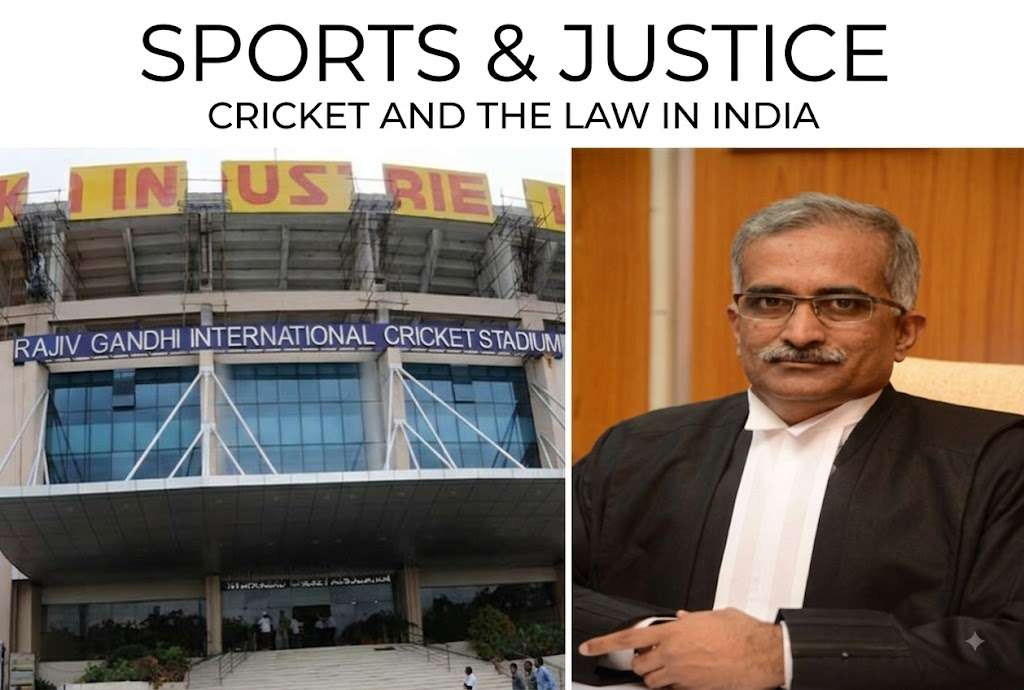
The Apex Council elected on October 20, 2023, under the supervision of Supreme Court-appointed Justice L. Nageswara Rao, was given a three-year term. Those three years end this month. There has been no AGM this year, no election notice, no Electoral Officer and not a word to the members about what happens next.
THE BOTTOM LINE: THE TERM ENDS. SO DOES THE AUTHORITY.
Office-bearers and councillors hold office for three years (Rules 6(2) and 14(4)). Elections are held every three years at the AGM (Rule 8(2)). Even a mid-term vacancy is filled only “for the remaining period” (Rule 14(9)).
HCA’s bye-laws contain no provision for the Apex Council, or any office-bearer, to continue beyond the prescribed term. No member vote or court order has extended that term.
After this month, every decision, payment, contract or appointment approved by the outgoing council could be open to challenge for want of authority under the bye-laws. In plain language, its legal validity would be seriously questionable.
No Continuity, Only Overstay
Many societies have a “hold-over” clause that keeps the outgoing committee in office until a new one is elected. HCA’s bye-laws, as understood here, contain no such provision, and for good reason: tenure limits were central to the Lodha reforms imposed by the Supreme Court on Indian cricket.
After this month, anyone who signs a cheque, chairs a meeting or speaks for HCA could be acting without a valid mandate. That is not continuity. It is overstay. Nor can the SMC automatically lend the outgoing council authority it no longer possesses. It may appoint people to committees within its powers, but whether an elected term can be extended or an interim administrative arrangement authorised must be determined by the applicable bye-laws and, where necessary, a court order.
The calendar was clear. The AGM was due by September 30 (Rule 8(1)) but was not held. Consequently, this year’s accounts, budget, auditors and BCCI representative remain pending before the General Body. An election requires an Electoral Officer to be appointed four weeks in advance and 21 days’ notice to members (Rules 33(1) and 8(5)). Even if notice were issued today, completing a lawful election before the term expires would be a formidable challenge. The gap is no longer a remote risk. It is an impending reality.
TG20, the Accounts and a Pile of Approvals
The vacuum does not stop at the top. Under the bye-laws, the franchise T20 league is administered by a seven-member Governing Council answerable to the General Body (Rules 19(3) and 28). Two seats belong to the Secretary and Treasurer, whose terms end this month. Two more, including that of the Chairperson, are filled through elections for one year at each AGM. With no AGM this year, the Chairperson’s tenure may already have expired or be about to expire, taking the casting vote out of the equation if the applicable provisions so require.
What remains, at best, is three of the seven members: the players’ representative, the CAG nominee and the CEO. Who will run TG20, its franchise agreements, bank account and next season if the body entrusted with its administration cannot lawfully function?
This year’s accounts have not been placed before the members, nor, reportedly, submitted to the Apex Council or the SMC. The President, one of the three signatories to the accounts under Rule 7(1)(b), has been absent for over a year. Who will sign HCA’s accounts, and who will adopt them?
Payments, contracts, appointments and tournament rules awaiting approval could face uncertainty over who has the authority to approve them. Rules framed between meetings lapse unless ratified at the next General Body meeting (Rule 15(4)); with no meeting, their status remains unresolved. This is not merely an administrative vacuum. It is a mess that grows with every day of inaction.
A Council That Cannot Sit, a Rulebook That Cannot Restart
The Apex Council has nine members and a quorum of five (Rules 14(2) and 15(8)). Once the six elected members’ terms expire, only three nominees would remain, at most. That is not a functioning council. It is a remnant.
Yet the bye-laws appear to leave the process of calling elections in the hands of the very people whose tenure is expiring. Only the Apex Council can appoint the Electoral Officer, while only the Secretary can convene the AGM. Expiry of tenure is not a ground for a by-election (Rule 14(9)).
Members could requisition a meeting under Rule 9, but the Safilguda judgment reportedly states that any grievance “shall lie only before this Court.” The rulebook cannot restart itself. If the prescribed mechanisms cannot operate, a court order may be the only practical way forward.
Has This Council Earned a Single Extra Day?
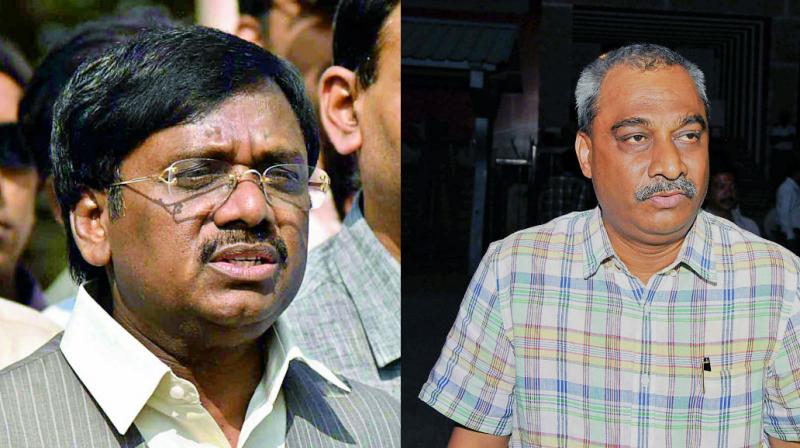
Set the legal questions aside for a moment and ask the moral one. Three of the five office-bearers elected in 2023—the President, Secretary and Treasurer—were suspended by the council itself in July 2025 following the CID case concerning that election.
The High Court has reportedly found a prima facie case of contempt against the Joint Secretary and the Treasurer, while other contempt matters remain pending. Conflict-of-interest complaints are also pending. Meanwhile, the inquiry into persons “similarly placed” to the 57 disqualified clubs, which Justice Nageswara Rao had left to this very council, was never initiated, according to the available account.
The leagues were taken out of the council’s hands in 2024 amid “serious allegations of illegalities.” By 2025, the High Court had reportedly described HCA’s functioning as being “in shambles,” recorded the council’s “non-cooperative approach and attitude,” and observed that it “does not want the presence of Justice Naveen Rao … for obvious reasons.”
This council has little moral ground to seek an extension, and Hyderabad cricket has little reason to accept an extension as the default solution.
And What About the Members?
It is easy to blame office-bearers, committees and courts. But every Apex Council in this story was elected by the same General Body. The council elected in 2019 ended with the Supreme Court sending in a supervisory committee. The council elected in 2023 ended with its President, Secretary and Treasurer suspended and a court-appointed supervisor running the association. When every body the members elect lands in a mess, the members must ask what they keep voting for.

The members were not powerless. One-third of the Full Members can requisition a Special General Meeting and, if the Secretary does not act within thirty days, convene it themselves (Rule 9). Even if such a meeting today needs the Court’s blessing, nothing stopped clubs from writing to the SMC or the Court to demand the AGM. The September 30 deadline came and went. How many clubs demanded an AGM? How many asked to see the accounts, the budget or the auditors’ appointment? The silence was not only at the top.
Worse, some members lent their support to the mischief. When the earlier Apex Council met in July 2025 without the quorum the bye-laws require, and pushed through decisions that were later challenged in the High Court for want of quorum, some members did not merely look away. They stood with it.
And for most of the year, many members seem to remember that there is an Apex Council only when IPL passes and other privileges are being handed out. They want the perks of membership without its duties.
A General Body that wakes up only for privileges cannot complain when it is governed by people who think the same way. Clean administration needs clean electors. The members, too, must decide which song they want to sing.
An Order Nobody Obeyed?
On June 8, 2026, the High Court set aside the Ombudsman’s attempt to install the runner-up as President and directed the Secretary to convene a Special General Meeting within 45 days to elect a new President. That meeting was reportedly never held.
Yet, in March, a meeting was held with no other agenda than the election of a Secretary and Treasurer.
When a meeting suited, it was held. When a court ordered one, it was not. If that account is correct, with what justification can the association now seek fresh judicial indulgence over elections to all posts without first explaining why the earlier direction was not implemented?
Waiting for Nothing
The writ appeals against the Safilguda judgment were listed before the Division Bench presided over by the Hon’ble Chief Justice on November 2, 2026. The question of whether they can be heard at all remains significant. They concern the SMC, not the election schedule. The judgment itself is reportedly silent on elections and leaves the dispute concerning the 57 clubs to “appropriate proceedings.”
If the appeals are dismissed, the SMC continues and the election question remains open. If they are allowed, there may be no functioning elected council to which the administration can simply be handed back. If they are adjourned, the uncertainty continues.
Waiting for the appeals, without addressing the approaching expiry of the council’s term, is waiting for nothing.
How long can elections be put off? The bye-laws prescribe a three-year cycle, not an indefinite extension. In practice, however, delays can persist where judicial intervention or administrative arrangements intervene. The 2019–22 council’s term expired, a Supreme Court-appointed committee took over in August 2022, and elections followed only in October 2023. That Supreme Court matter remains pending.
The BCCI, which expects elected bodies and properly adopted accounts, may not be willing to accommodate prolonged uncertainty indefinitely.
A Question of Will
Justice P. Naveen Rao, a former Acting Chief Justice, needs no lessons in law. The Court made him “fully empowered” and gave him liberty to seek whatever directions he considered necessary.
This is not merely a question of law. It is also a question of will.
The members want one answer: On the morning after the term ends, who runs HCA, who runs TG20, who signs the accounts, and to whom are they answerable?
Until someone answers, the SMC will keep humming “Kya Kare Kya Na Kare,” while the members continue singing “Ae Maalik Tere Bande Hum.”