



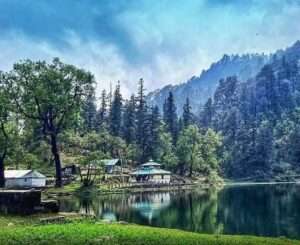
Dodital Ganesh Temple is situated beside the beautiful Dodital Lake in the Assi Ganga valley of Uttarkashi district, Uttarakhand. Located at an altitude of around 3,000 metres above sea level and surrounded by dense forests of deodar, oak, pine and rhododendron, Dodital is one of the most serene sacred places in the Himalayas. The lake is also the source of the Assi Ganga River, which later joins the Bhagirathi. Dodital is traditionally regarded as the birthplace of Lord Ganesha, making this remote Himalayan shrine especially sacred on Ganesh Chaturthi.
The sacred tradition identifying Dodital as the birthplace of Lord Ganesha is ancient and has been preserved for generations by the people of the surrounding villages. The temple and the nearby shrine of Maa Annapurna continue to remain important centres of local faith.
The presiding deity is Lord Ganesha, worshipped locally as Dodi Raja or Dhundiraj. Goddess Parvati is worshipped here in the form of Maa Annapurna, and the two are traditionally believed to be present together at Dodital. A small shrine dedicated to Lord Shiva is also found nearby. The local belief that Ganesha was created here by his mother gives the deity a very special place in the religious traditions of the region.
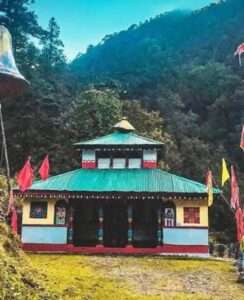
The temple is a simple Himalayan shrine rather than a large and elaborate temple structure. Its greatest beauty comes from its natural surroundings, with the shrine standing close to the serene waters of Dodital and surrounded by thick Himalayan forests and high mountain ranges. The simplicity of the shrine blends naturally with the remote landscape, making the setting itself feel like part of the temple. A shrine of Maa Annapurna is also situated near the lake and is traditionally associated with Goddess Parvati.
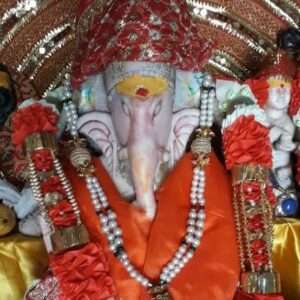
Dodital is a freshwater lake reached by a trek through the villages and forests of the Assi Ganga valley. The lake is also known for Himalayan golden trout, locally associated with the name Dodi. Over generations, however, the place acquired a much deeper sacred identity as Dhundital or Ganesh ka Tal, meaning the lake of Ganesha.
The traditional belief that Dodital is the birthplace of Lord Ganesha has made this remote Himalayan lake an important pilgrimage destination. Devotees undertake the difficult trek through the mountains to visit the sacred lake and offer prayers at the temple.
According to local tradition, Dodital was once the bathing place of Goddess Parvati. The peaceful lake surrounded by Himalayan forests provided her with a secluded place where she could bathe without disturbance.
Before entering the lake, Parvati wished to have someone guard the entrance. She created a child from the turmeric ubtan or sacred paste from her body and gave him life. She named him Ganesha and instructed him not to allow anyone to enter while she was bathing.
Ganesha stood faithfully at the entrance. Soon, Lord Shiva arrived and attempted to enter. Ganesha did not know that the powerful Lord standing before him was his father. Remembering only his mother’s command, he refused to allow Shiva inside.
A fierce confrontation followed. Ganesha stood firmly against Shiva and his ganas and would not move from his position. Finally, Lord Shiva became furious and severed the child’s head.
When Parvati returned and saw her son lying lifeless, she was overcome with grief and anger. She demanded that Ganesha be restored immediately and threatened to unleash her divine power upon the universe.
To pacify Parvati, Lord Shiva agreed to bring the child back to life. His attendants were sent to find the head of the first living being they encountered, according to his command. They returned with the head of an elephant.
Shiva placed the elephant’s head upon Ganesha’s body and brought him back to life. Parvati’s anger was finally calmed, and Shiva blessed Ganesha with a supreme place among the gods.
He then declared that Ganesha would be worshipped first before every auspicious ceremony, puja, and undertaking. This is why the tradition of beginning an auspicious occasion by invoking Lord Ganesha is closely connected with the story of his divine birth.
For the people of the Kelshu valley, Dodital is therefore not simply a beautiful Himalayan lake. It is Ganesh Janmabhoomi, the sacred place where Goddess Parvati is believed to have created her beloved son. The local name Dodi Raja, by which Ganesha is lovingly worshipped, continues to preserve this unique tradition.
Ganesh Chaturthi is the most important festival associated with Dodital Ganesh Temple. The festival has a special significance here because the lake is traditionally regarded as the birthplace of Lord Ganesha. Devotees from surrounding villages undertake the difficult journey to Dodital to offer prayers to Dodi Raja, and traditional celebrations include devotional rituals and the beating of large drums.
The opening of the Maa Annapurna temple after the winter closure is another important local religious occasion. Devotees and village deity processions gather at Dodital during the summer pilgrimage season, when the Himalayan route becomes accessible.


