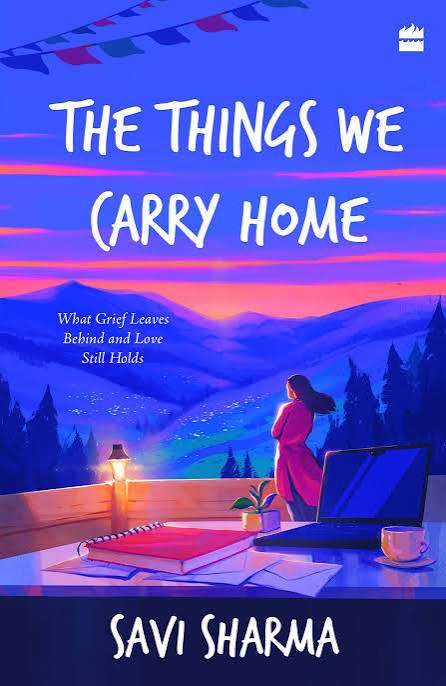
New Delhi: Bestselling author Savi Sharma is set to return with her sixth novel, “The Things We Carry Home”, a story about grief, family, forgiveness and the enduring ways in which love survives loss.
Published by HarperCollins India and slated for release on September 15, the novel explores the difficult yet hopeful process of understanding the people we love as imperfect and complicated, while “recognising that healing does not always mean forgetting”.
“It has been three years since my last book and in many ways, this one feels like a quiet return for me too. Some stories come quickly. Some take their own time because they ask you to grow before you can write them. ‘The Things We Carry Home’ is one such story.
“… I wanted to write about the emotions we don’t always know how to express, the relationships we carry within us and the courage it takes to return to what we once ran from. I really hope readers find comfort in this book,” Sharma, touted as one of India’s highest-selling contemporary women authors, said in a statement.
The story follows Avdhi, who believes that distance will free her from grief and the pain of her strained relationship with her mother. But when a loss brings her back to her hometown of Shimla, she is forced to confront the past she had tried so hard to leave behind.
Amid familiar spaces, old memories, and unfinished conversations, Avdhi begins to see her mother — and herself — with a deeper sense of understanding and empathy.
According to the publisher, “The Things We Carry Home” is lyrical and profoundly humane — “a story about mothers and daughters, the possibility of forgiveness and finding one’s way back to love”.
“Savi Sharma has written an achingly beautiful and tender novel that understands grief not as a single event, but as a feeling and language humans learn to live with… We are thrilled to bring this unforgettable book to our readers,” said Rashmi Menon, publisher at HarperCollins India.
Sharma’s previoulsy authored books include “Everyone has a story”, “This is not your story” and “Stories we never tell”.