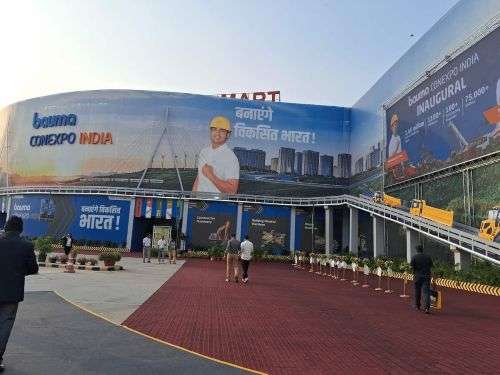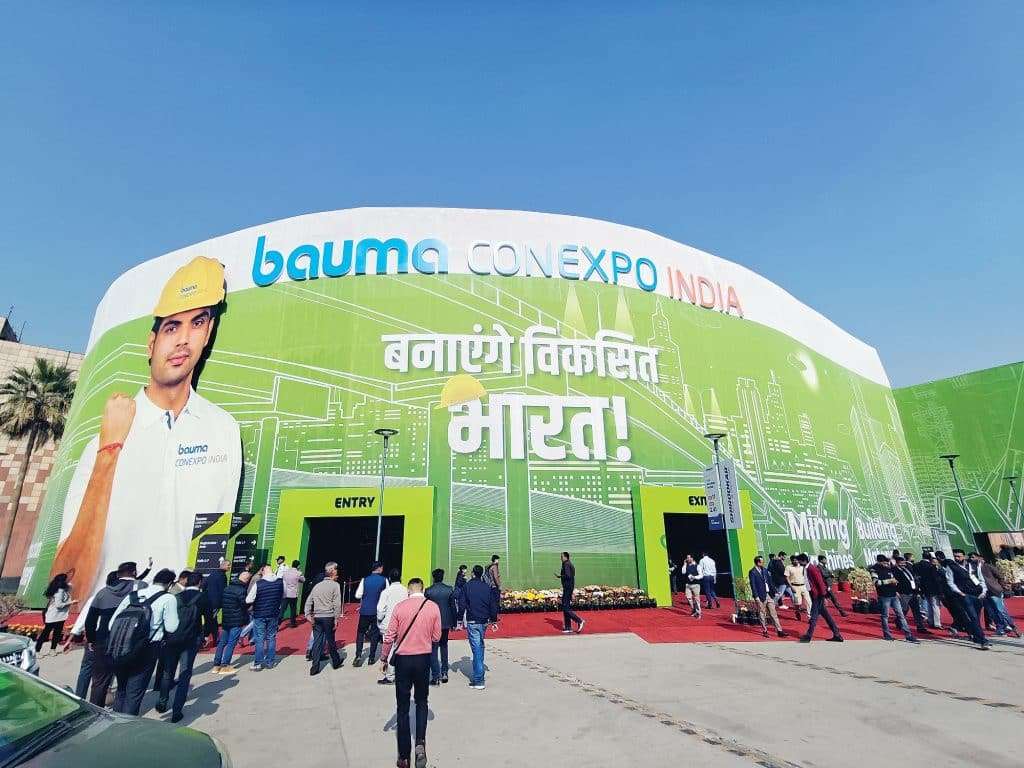
Scheduled for September 15–18 at the India Expo Centre in Greater Noida, outside the national capital, bauma CONEXPO INDIA 2026 comes at an important juncture for India’s construction equipment industry. The biennial exhibition brings together construction machinery, building-material machinery, mining equipment and construction vehicles, making it one of the industry’s significant platforms for technology, products, business engagement and a reading of where the market is heading.
For India, however, the significance of the show goes beyond what is displayed on the exhibition floor. The country is simultaneously expanding infrastructure, strengthening its manufacturing base and becoming an increasingly important export platform for construction equipment. The conversations around productivity, electrification, telematics, automation, localisation and the economics of equipment ownership are therefore becoming as important as the machines themselves.
That makes the market intelligence of Off-Highway Research particularly relevant. The specialist research and management consultancy tracks construction equipment markets across major regions, providing market-size data, equipment sales and production analysis, OEM information and medium-term forecasts. Its India service also examines the country’s market structure and growth prospects in considerable depth.

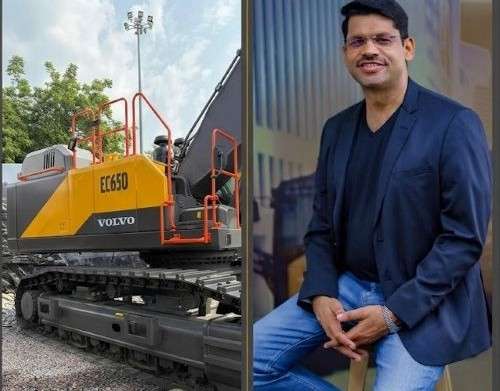
Ahead of bauma CONEXPO INDIA 2026, Samir Bansal, General Manager, Off-Highway Research, offered his assessment of where India’s construction equipment market is heading, which equipment categories are gaining momentum, how technology adoption is evolving and whether India’s role is moving beyond being a major domestic market towards that of a global manufacturing and export base.
How does Off-Highway Research see India’s construction equipment market performing in 2026? Is the expected 4 per cent growth broad-based, or concentrated in a few key categories and infrastructure programmes?
Off-Highway Research remains bullish on the long-term prospects of the Indian construction equipment market and expects it to grow by 4 per cent in calendar year 2026.
Is India’s traditional equipment mix beginning to change? Which categories are gaining momentum, and where is growth weaker?
The fundamental structure of the market remains unchanged and is dominated by backhoe loaders, crawler excavators, mobile cranes, compaction equipment and wheeled loaders. However, some smaller-volume equipment types are witnessing high traction, such as mini excavators and telehandlers. Additionally, electric equipment, particularly wheeled loaders and wide-bodied dump trucks, is gaining popularity.
Which demand drivers will matter most for equipment sales through 2027–28, and are regional shifts becoming important?
Infrastructure continues to be central to India’s growth strategy, and large-scale investments across roads, railways, ports, power, aviation and digital infrastructure have strengthened connectivity, expanded capacity and improved logistics efficiency, generating strong multiplier effects for growth and productivity.
There is a large infrastructure gap in every sector, and projects have been formulated to address these requirements. In addition to centrally sponsored projects, all states have independent infrastructure development plans and are competing with one another to attract investments.
However, challenges such as resource constraints, inflation, land acquisition, procedural, legal and environmental issues, and geopolitical uncertainties remain, adversely affecting the pace of project execution.

How quickly will Indian buyers move from experimenting with new technologies to adopting them at scale, and where is the biggest gap between OEM offerings and customer readiness?
Construction equipment incorporating the latest technologies is available in the country, and end-users are aware of the costs and benefits. Adoption of telematics has been quite extensive, and electric wheeled loaders and wide-bodied dump trucks are becoming increasingly popular in mining, crushers, ports and RMC plants.
However, application demands, the quantum of machine usage and cost-benefit analysis will drive adoption decisions.
How is the competitive balance changing among Indian, Japanese, Korean, European and Chinese manufacturers? Are price, financing and after-sales support becoming as important as technology?
India is a price-sensitive market, primarily due to intense competition between contractors, leading to low profit margins.
However, the Indian construction equipment market has matured to a large extent. In addition to price and product technology, customers also evaluate financing options and the after-sales support provided by OEMs when making purchase decisions.
Can India move beyond being a major CE market to become a global manufacturing and engineering hub? How does it compare with other growth markets, and what will it take to realise that potential?
India has already emerged as a global manufacturing hub for construction equipment and exported 30 per cent of its domestic production in 2025.
The acceptance of the “Made in India” brand is growing, and export destinations include developed markets in America and Europe. Every manufacturer wants to exploit the export opportunity and has accordingly expanded capacities and aligned its products with export requirements.