
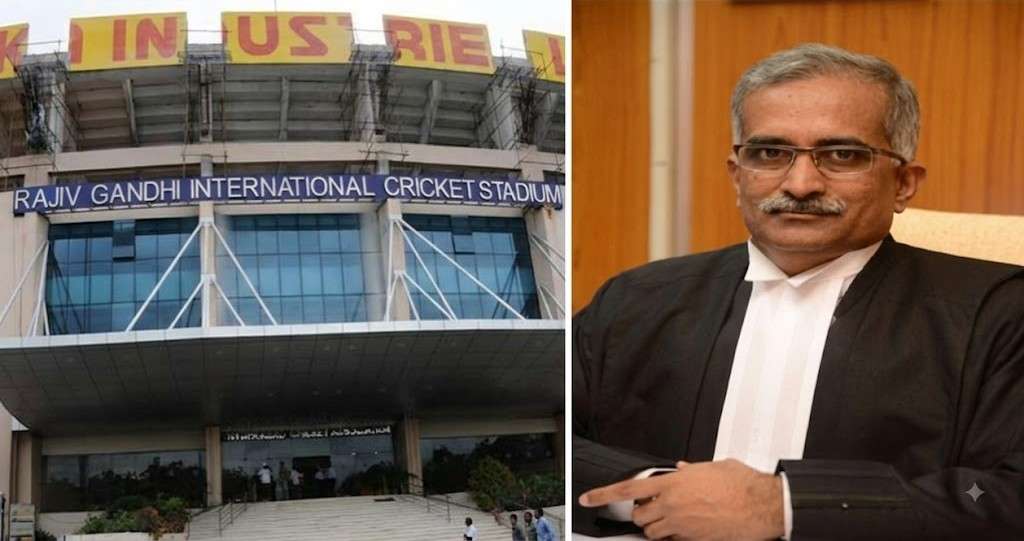
Special Correspondent
How much longer is Hyderabad cricket expected to live like this — under judicial supervision, surrounded by allegations and counter-allegations, factional battles and complaints, and forever waiting for a resolution that somehow never arrives?
Every few months, the script seems to repeat itself: a fresh complaint, a new allegation, another investigation, another committee, another deadline — and then silence. Nothing really ends. Nothing is conclusively settled. The result is that judicial intervention, which was supposed to be a corrective measure, increasingly risks becoming the permanent condition of the Hyderabad Cricket Association.
And that raises a very simple question: if the authority supervising the HCA has wide-ranging powers to audit, investigate, scrutinise membership, examine financial affairs and take corrective action, why has the crisis still not been brought to a definitive close?
In my view, that is now the central question confronting Hyderabad cricket.
If an association produces essentially the same governance controversies after election after election for more than a decade — corruption allegations, factionalism, disputed memberships and repeated judicial intervention — one has to ask whether the electoral process is genuinely correcting the problem or merely reproducing it.

The problem begins before the first ballot is cast
An election can be only as clean as the electoral roll on which it is conducted. And this is where serious questions continue to remain unanswered.
The disqualification exercise involving 57 clubs was an important intervention. But was that the end of the problem, or merely the beginning of a more comprehensive examination?
There are continuing questions about whether the multiple-club issue extends beyond those 57 clubs; whether some clubs have overlapping office-bearers, ownership interests or common addresses; whether institutions that once operated as municipal or public facilities have subsequently moved into private hands; and whether clubs with little visible cricketing activity suddenly become relevant when elections approach.
Then there is the recurring question of individuals appearing as representatives of different clubs in different election cycles.
If the same person represented Club A in one election and Club B in another, what was the basis for that change? Was there a genuine and properly documented change in club administration? Was the membership transfer legitimate? Was the individual eligible under the bylaws? These are not questions that should be answered through whispers or factional accusations. They should be answered through documents.
The growing voter count raises another issue.
If the bylaws do not clearly provide for the manner in which members can be added, removed or altered between elections, how have electoral rolls continued to evolve? Justice L. Nageswara Rao had himself identified the need for greater clarity and reform in the membership structure. That concern cannot simply be buried beneath successive elections.
And what about clubs whose membership or status remains disputed?
Why should a disputed club be allowed to exercise a vote before its entitlement has been conclusively established?
These are precisely the questions that a properly conducted audit should settle.
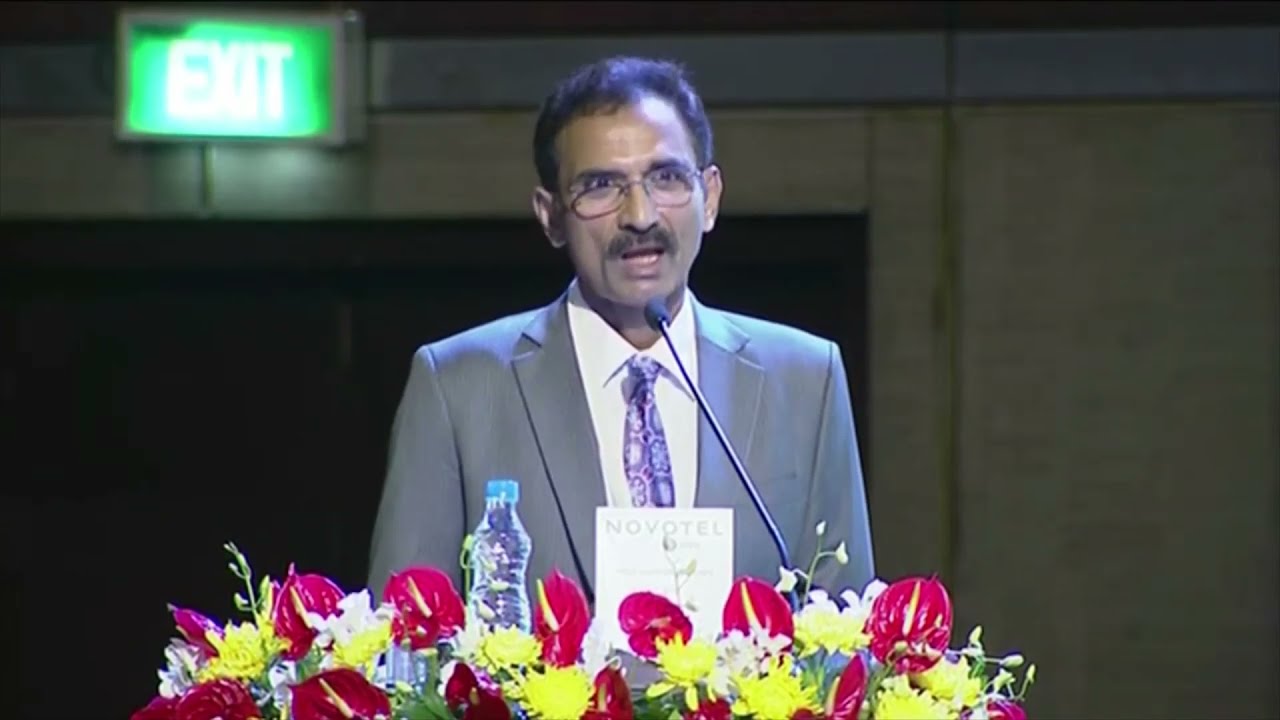
The Justice Nageswara Rao report cannot remain a diagnosis
The Justice L. Nageswara Rao report and the subsequent corrective process were intended to address structural problems in the HCA. The findings relating to membership and the disqualification of clubs were not merely material for another round of debate.
The obvious next step should have been implementation, verification and continuing oversight.
So why has there not been a comprehensive, cycle-to-cycle audit of the electoral rolls?
Why not compare successive rolls and identify individuals who have represented different clubs?
Why not conduct member-to-member verification?
Why not establish, through documentary evidence, when and how clubs changed their office-bearers or representatives?
Why are persons facing serious criminal proceedings or active investigations, where legally permissible scrutiny is warranted, not subjected to a transparent eligibility review before being allowed to exercise influence over the association?
And why have the necessary bylaw reforms not been comprehensively implemented?
These are not demands for another court order. They are demands for accountability within the existing supervisory framework.

Follow the money
The financial side deserves exactly the same scrutiny.
Take the Cricket Development Fund.
A transparent, independent audit of CDF disbursements, club records, ownership and office-bearer details, and successive electoral rolls could answer an important question: are financial benefits and electoral influence disproportionately concentrated around the same network of people or clubs?
I am not suggesting that such a concentration has been established. It has not.
I am saying something much simpler: if the question can be answered by an audit, why not conduct the audit?
The same principle applies to club leasing arrangements.
The economics of cricket have changed dramatically. League participation and franchise-related opportunities can give club slots significant commercial value. That inevitably raises questions about whether the control of some clubs is still driven primarily by cricketing interests or increasingly by the value attached to the underlying asset.
Again, this is an issue for verification, not accusation.
If club representatives change shortly before elections, the documentary trail should establish why. If a long-serving office-bearer relinquishes control, the circumstances and financial arrangements surrounding the transition should be transparent. If leasing arrangements have commercial value, the beneficiaries and terms should be properly recorded.
There is nothing unreasonable about asking for transparency where money and voting power intersect.
Even paid office deserves scrutiny
There is another governance question that should not be dismissed merely because it is uncomfortable.
Cricket administration has traditionally been viewed as a form of service. But whenever an office carries remuneration, an honorarium or any other financial benefit, there is an obvious governance question: does the financial benefit attached to the position create an incentive to acquire or retain that position?
That does not mean that every paid office-holder is acting improperly. It means the system should be designed so that personal financial incentives cannot influence institutional decisions.
Full disclosure of remuneration, allowances, benefits and the justification for each paid position would therefore strengthen, rather than weaken, the credibility of the association.

Audit before election
This brings the argument back to the fundamental issue.
If there are unresolved questions about electoral rolls, disputed clubs, changing representatives, CDF disbursements, leasing arrangements and paid positions, then conducting yet another election without first addressing those questions risks producing nothing more than a new set of office-bearers operating within the same disputed framework.
That is not reform. It is rotation.
In my personal view, Hyderabad cricket does not need another election conducted merely to demonstrate that an election has been conducted. It needs a clean institutional reset.
First, audit the electoral rolls across election cycles.
Second, verify every member and club’s eligibility.
Third, examine disputed memberships and club representation.
Fourth, subject the Cricket Development Fund and relevant financial transactions to transparent scrutiny.
Fifth, examine club leasing arrangements and changes in control wherever there is a legitimate governance concern.
Sixth, disclose all paid positions, remuneration and associated benefits.
And finally, implement the necessary bylaw reforms before asking the clubs to go back to the ballot box.
The authority already exists. The question is whether the will exists
This is not a call for the judiciary to take over cricket administration permanently.
Quite the opposite.
Judicial intervention was never supposed to become a substitute for governance. Its purpose was to create the conditions for credible self-governance to return.
The supervisory authority already has substantial powers. It can scrutinise the rolls, examine financial records, investigate irregularities, deal with disputed memberships and recommend or implement corrective measures within its mandate.
So the question is no longer whether Hyderabad cricket has been given enough opportunities to reform.
The question is whether the powers already available are being used decisively enough to make reform possible.
Because until that happens, every election risks becoming another chapter in the same unfinished story.
Hyderabad cricket does not need another temporary arrangement.
It needs closure.
It needs a clean electoral roll, transparent finances, accountable administration and an election whose result nobody has reason to question.
Audit first. Reform next. Election thereafter.
Anything less risks turning the next election into exactly what the previous ones have become — the same old fiasco, repackaged with a new date.
And ultimately, the Committee’s response to these questions — whether through decisive action or continued silence — will itself become part of the record. (Watch out for another super special tomorrow in these columns “Is Judiciary Set to Take Over State Cricket Associations?)