


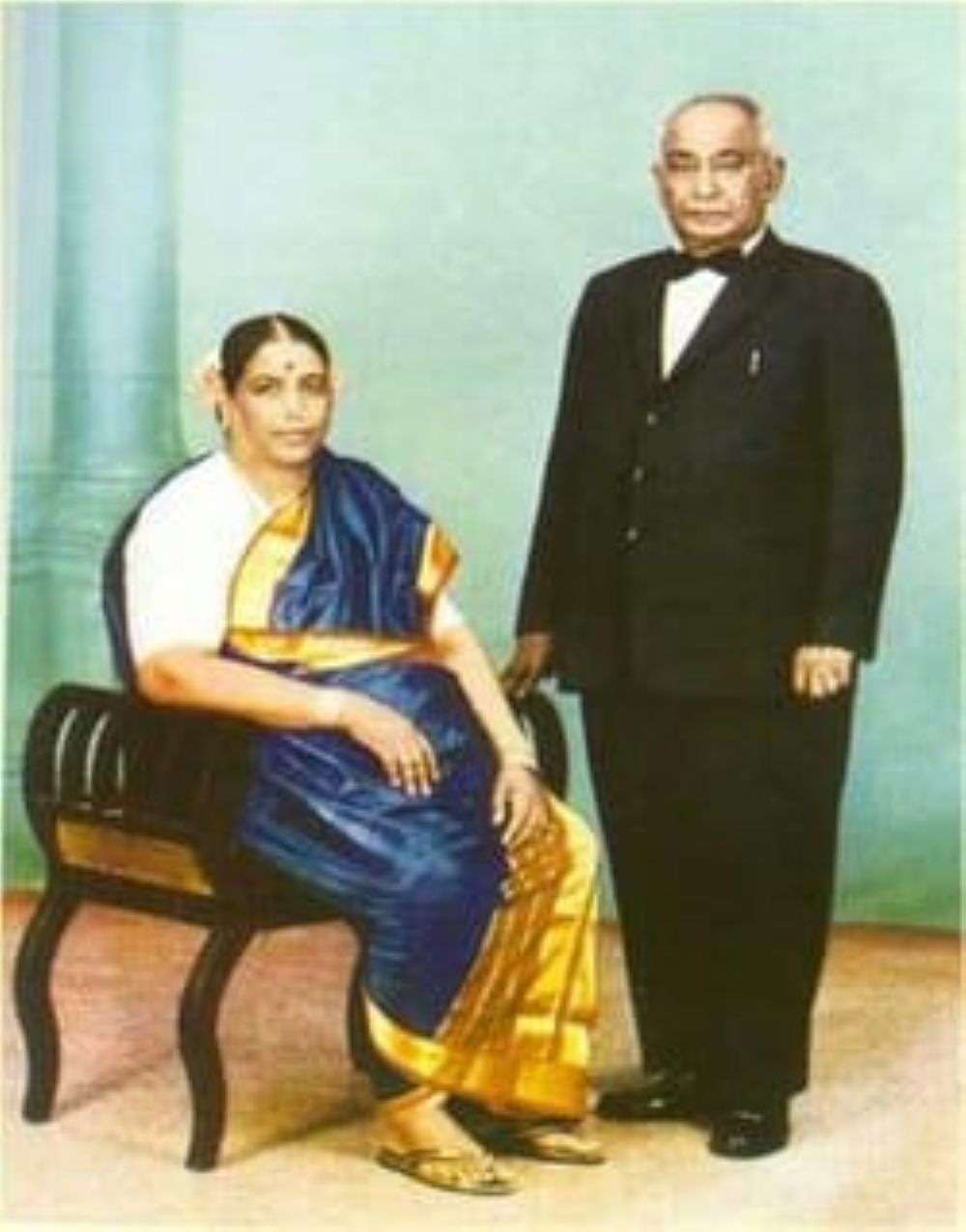
Ayya Nadar — The man who built India’s match industry
M.S. Sparsha
History often remembers emperors, politicians, and military heroes. Yet, some of India’s greatest nation-builders were ordinary entrepreneurs who quietly transformed entire communities through courage, innovation and an unshakable belief in India’s potential. One such forgotten visionary was P. Ayya Nadar, the man who laid the foundation for what would eventually become India’s match and fireworks capital—Sivakasi.
His story is not merely about manufacturing matchsticks. It is about self-reliance long before the term became fashionable, about defeating colonial economic dominance with indigenous enterprise, and about proving that determination can overcome even the harshest geography.
A century ago, Sivakasi in southern Tamil Nadu was a drought-prone town where agriculture offered little hope. Repeated monsoon failures had pushed families into poverty, leaving thousands with few opportunities to earn a livelihood. At a time when British India depended heavily on imported safety matches, particularly those produced by European companies that dominated global trade, few believed that a small town in rural India could ever challenge foreign manufacturers.
Among those who refused to accept that pessimism was P. Ayya Nadar.
Without formal technical education or industrial experience, Ayya Nadar understood one simple truth: if India consumed millions of matchboxes every year, there was no reason Indians could not manufacture them. What the country lacked was not talent, but confidence.
Driven by this conviction, Ayya Nadar and his associate undertook a journey to Calcutta, where some of India’s earliest match factories had begun operating. Their objective was not merely to purchase machinery but to understand the manufacturing process itself. They carefully observed production techniques, learnt the chemistry involved in making safety matches and returned home with knowledge that would prove more valuable than imported equipment.
Back in Sivakasi, Ayya Nadar chose an unconventional path.
Instead of establishing a massive mechanised factory that required enormous capital, he built a decentralised, labour-intensive cottage industry. The model was simple yet revolutionary. Local families could participate in different stages of production using basic tools and locally available resources. The emphasis was on employment rather than expensive automation.
For a town struggling with unemployment, the idea offered something far more precious than wages—it restored hope.
Villagers who had watched their farms fail now found new purpose in manufacturing. Men and women alike became part of an industry that steadily expanded through hard work, skill and community participation. Every matchbox produced represented not only income but also growing confidence that Indians could compete in industries long considered the exclusive domain of foreign companies.
The timing could not have been more significant.
The Indian freedom movement was gathering momentum, and the Swadeshi spirit encouraged people to support indigenous products over imported goods. Indian-made matchboxes increasingly became symbols of economic nationalism. Their colourful labels often reflected Indian culture, local traditions and patriotic themes, strengthening the emotional connection between consumers and home-grown products.
Unlike imported goods whose profits flowed overseas, the earnings generated in Sivakasi circulated within the local economy. The money created new businesses, generated employment and encouraged investment in allied industries.
What began as a modest match-making enterprise gradually transformed an entire town.
As the industry flourished, Sivakasi diversified into printing and fireworks manufacturing. Skills developed in one sector naturally supported the growth of others. Over the decades, the town evolved into one of India’s most important industrial clusters, renowned for its safety matches, fireworks and printing presses.
Today, Sivakasi remains synonymous with these industries, providing livelihoods to hundreds of thousands of people directly and indirectly. Much of this remarkable journey can be traced back to the pioneering vision of entrepreneurs like P. Ayya Nadar, who saw opportunity where others saw only hardship.
His greatest contribution was perhaps philosophical rather than commercial.
At a time when colonial thinking suggested that sophisticated manufacturing belonged only to Europe, Ayya Nadar demonstrated that knowledge could be learnt, adapted and successfully applied in Indian conditions. He proved that industrialisation need not begin with gigantic factories or vast foreign investments. It could emerge from ordinary people equipped with determination, practical skills and collective effort.
His model anticipated many ideas that today define inclusive economic development—local entrepreneurship, decentralised manufacturing, skill creation and community participation.
In many ways, Ayya Nadar’s story mirrors India’s own journey. The country has repeatedly shown that innovation is not the monopoly of wealthy nations. From pharmaceuticals and information technology to space research and digital payments, India’s greatest successes have often emerged from individuals who refused to believe that limited resources meant limited possibilities.
Yet, despite his extraordinary contribution, P. Ayya Nadar rarely finds a place in mainstream history books. The industrial transformation he helped initiate is often taken for granted, while the courage and vision behind it remain largely forgotten.
As India continues its quest to become a global manufacturing hub under the vision of Atmanirbhar Bharat, the life of P. Ayya Nadar deserves renewed recognition. His journey reminds us that nation-building is not accomplished only in Parliament or on battlefields. It is also built in workshops, factories, small enterprises and by citizens who dare to create opportunities where none appear to exist.
Sometimes, history changes not with a roaring explosion, but with the strike of a single match.
A tiny spark in Sivakasi eventually illuminated an entire nation.



Sparsha, it is stories like this remind us that India’s progress was shaped not only by freedom fighters and political leaders, but also by quiet visionaries who created jobs, built industries and transformed ordinary lives. Ayya Nadar’s journey is a good example of how determination and faith in local talent can change the destiny of an entire region.
His legacy deserves far greater recognition. Stories like these that should find a place in our history books, inspiring future generations to see entrepreneurship as an equally important form of nation-building.