Upadhyayula Lakshman Rao
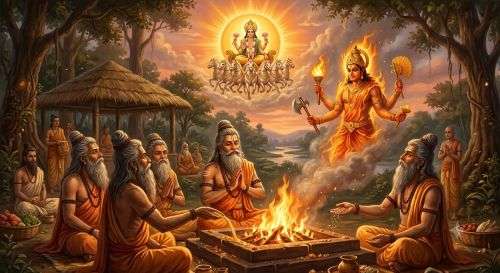
In the sacred cadence of Jagatī and Triṣṭubh meters, the venerable sage Deerghatama raises his profound invocation to the twin divine physicians, the Aswins, whose presence bridges the realms of the mortal and the celestial. The hymn opens upon a vivid cosmic tableau: Agni, the terrestrial fire, blazes forth as the foundation of life and sacrifice; the Sun ascends, heralding illumination and conscious activity; and Uṣā, the radiant dawn, unfolds her gentle splendor, awakening creation with joy and renewed vitality. Within this harmonious unfolding of natural phenomena, the Aswins are summoned to ride forth in their resplendent chariot, for it is through their motion that the world is stirred into purposeful action, aligning all beings with their ordained duties.
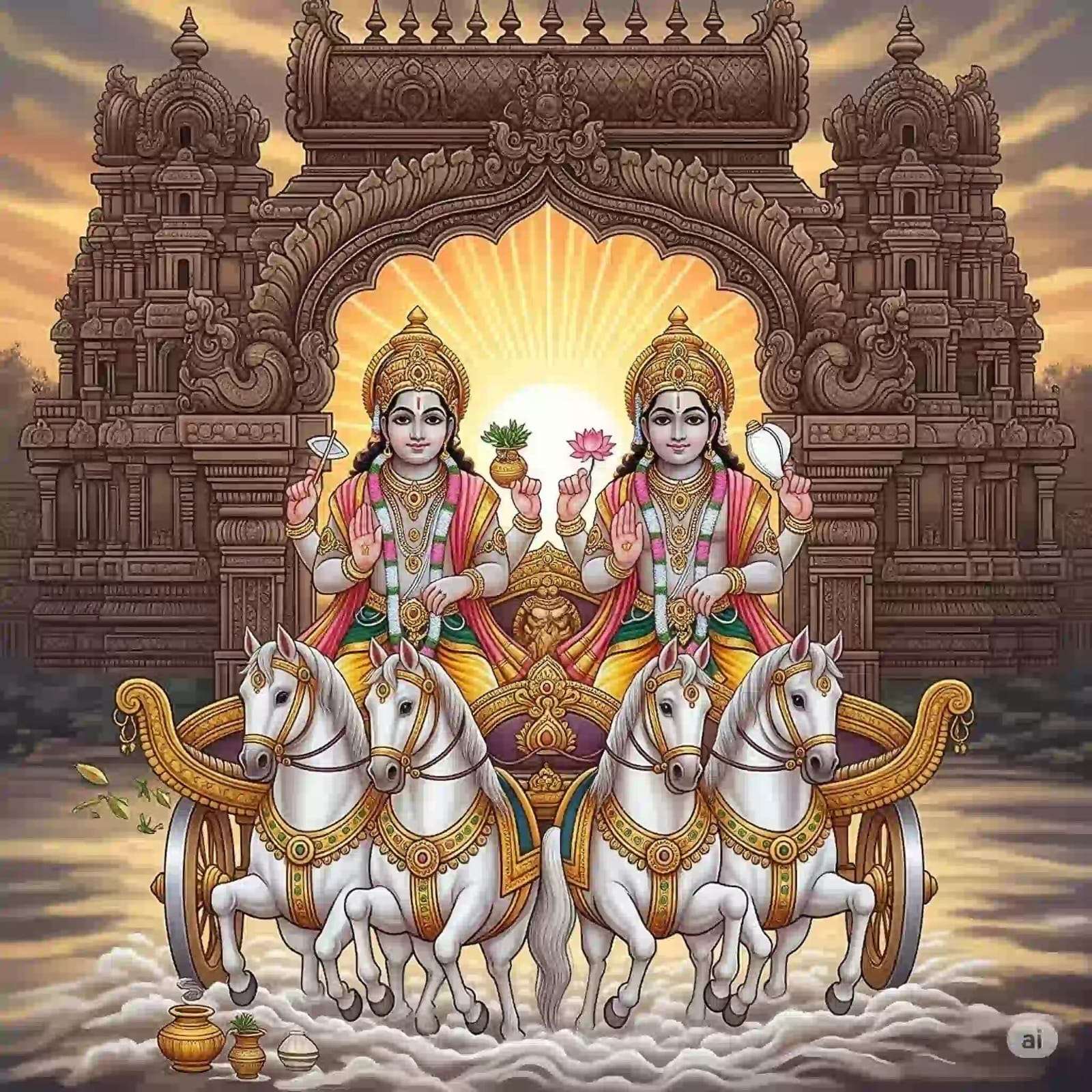
The chariot of the Aswins emerges not merely as a vehicle, but as a symbol of cosmic function and divine intervention. It is described as three-wheeled, signifying perhaps the triadic structure of existence—earth, atmosphere, and heaven—or the integration of time’s divisions: past, present, and future. Drawn by swift and noble horses, rich with sweetness like honey, the chariot embodies nourishment, गति (motion), and beneficence. Its movement is intimately linked with the rains, suggesting an early recognition of cyclical natural processes, where divine agency mirrors the hydrological cycle that sustains life. The plea that their chariot fill the paths with clarified butter and honey poetically reflects abundance, fertility, and the transformation of raw nature into cultivated prosperity.
The hymn further reveals an intricate understanding of the Aswins’ role as sustainers of life and order. They are invoked to bring nourishment, to extend longevity, and to speak words that soothe and uplift. In this, one discerns an early psychological insight: that well-being arises not only from physical sustenance but also from harmony in speech and thought. Their power to destroy sin and eliminate enemies reflects both an external and internal dimension—overcoming adversaries in the world, and subduing inner afflictions that disturb the equilibrium of the mind.
As divine physicians, the Aswins command the wealth of herbs, symbolizing the ancient roots of medicinal science. Their association with healing underscores a proto-scientific awareness of nature’s pharmacological potential, where plants and elements are not random, but imbued with properties that can restore balance within the human body. They are described as creators of fire, water, and greenery, suggesting an intuitive grasp of elemental interdependence—fire as energy, water as life-sustaining fluid, and vegetation as the bridge between earth and nourishment. This reflects a worldview where divinity is not separate from natural law, but its very expression.
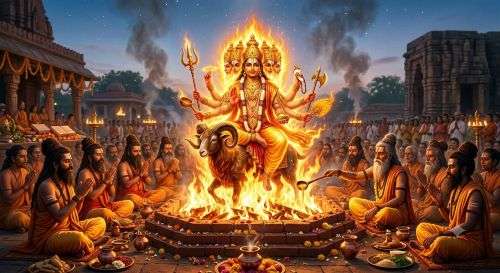
The hymn also reflects the socio-ritual dimension of Vedic life. The patron offers oblations with sincerity, recognizing the reciprocal relationship between human effort and divine grace. The Aswins, in turn, are seen as gatherers of these offerings, embodiments of intelligence and responsiveness, ever willing to fulfill the aspirations of both priest and patron. The yearning for cows rich in milk symbolizes not merely wealth, but sustainable livelihood and continuity of life. Such imagery reveals an economy rooted in ecology, where prosperity is measured by harmony with nature’s cycles.
Amidst these grand invocations, the hymn takes a deeply personal and poignant turn as Deerghatama recounts his own suffering. Bound by ropes, cast into the waters, and wounded by those who should have served him, he becomes a symbol of human vulnerability and existential संकट. His appeal to the Aswins is not only for physical rescue but for liberation from the constraints that bind the spirit. The rivers, likened to nurturing mothers, are invoked as sustaining forces, reflecting an understanding of water as both life-giver and purifier. His plea that day and night should not consume his longevity echoes a timeless human concern with mortality and the fleeting nature of existence.
The narrative of his survival and eventual flourishing reveals a profound philosophical insight. Though cast into darkness—indeed, his very name signifies one who has dwelt long in obscurity—he emerges resilient, attaining wisdom and a state akin to divinity. This transformation reflects the Vedic ideal that suffering, when endured with awareness, becomes a crucible for spiritual ascent. His lineage, his trials, and his endurance collectively affirm the dignity of the sage, whose inner light cannot be extinguished by external ظلم.
Thus, the hymn stands as a remarkable confluence of spirituality and early scientific temperament. It perceives the universe as an ordered system governed by discernible principles, yet animated by divine consciousness. It acknowledges the interplay of natural forces, the importance of healing, and the ethical dimensions of human life. Above all, it gives voice to the enduring human aspiration for protection, prosperity, and transcendence, weaving together cosmic grandeur and personal struggle into a timeless tapestry of Vedic wisdom.