M Radha Madhavi
History is often written not merely by the victors, but also by those who control the narrative. Over time, certain societies are endlessly condemned for their past sins, while equally disturbing practices elsewhere are quietly forgotten, ignored or buried under layers of selective scholarship. Few examples illustrate this double standard better than the disproportionate global attention given to India’s Sati system compared to the almost forgotten Chinese practices of widow suicide and ghost marriages.
For decades, India has been repeatedly portrayed as a civilisation defined by Sati, the practice in which a widow immolated herself on her husband’s funeral pyre. There is no denying that Sati was a cruel custom wherever it occurred. It deserved to be abolished and was rightly outlawed by the British administration in 1829, aided significantly by Indian social reformers such as Raja Ram Mohan Roy.
However, what is rarely discussed is that many other societies had equally horrific traditions targeting widows and women, yet they have largely escaped global scrutiny.
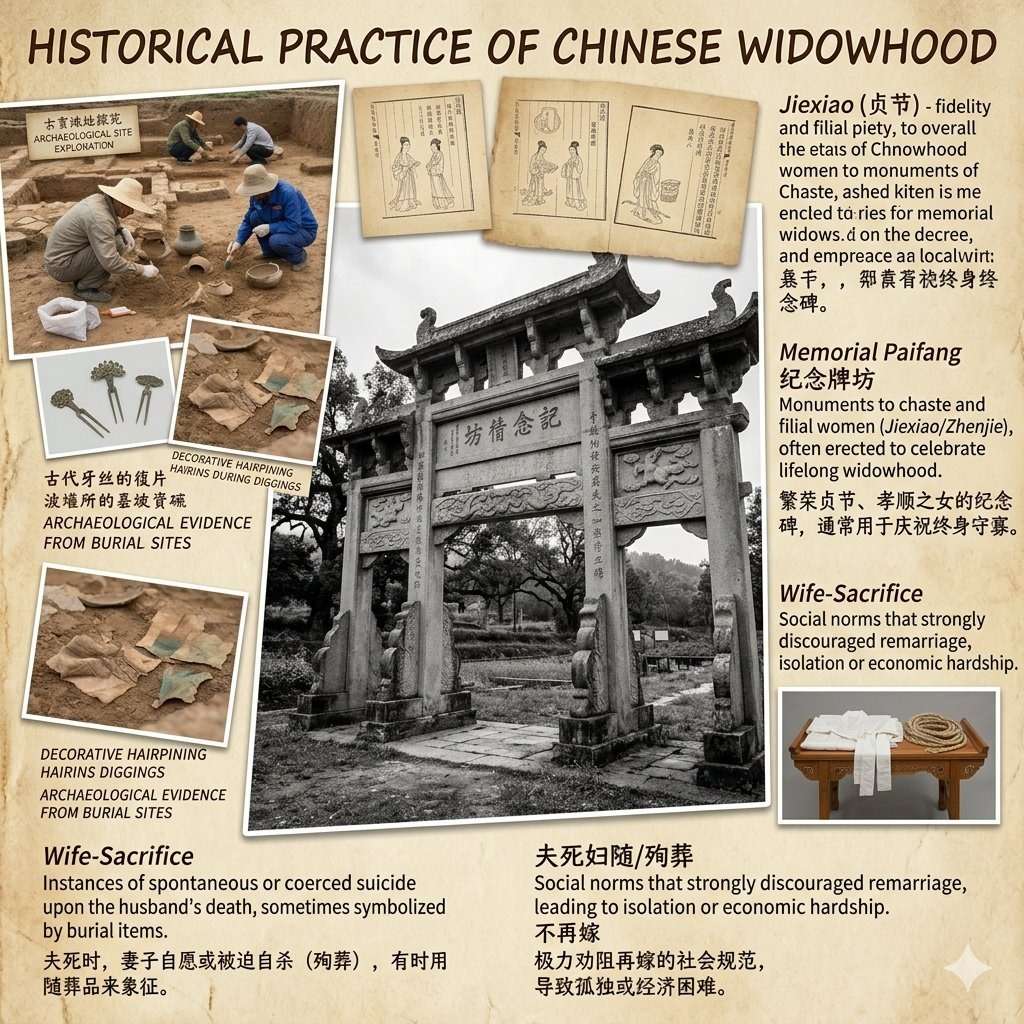
Imperial China, for example, institutionalised a practice known as widow chastity, which in extreme cases encouraged or pressured widows to commit suicide rather than remarry after the death of their husbands. During the Ming and Qing dynasties, women who remained “virtuous” by refusing remarriage, and in some instances by taking their own lives, were publicly honoured. Thousands of ceremonial memorial arches, known as Paifang, were erected to celebrate such women.
Historical records indicate that social pressure was immense. Many widows chose starvation, poisoning or other means to end their lives, believing that preserving family honour outweighed their own survival. The system was deeply embedded in Confucian ideals that elevated female chastity above individual rights.
Yet, unlike Sati, this practice seldom finds mention in international debates, school textbooks or popular documentaries. One would struggle to find sustained global campaigns highlighting these tragedies.
Similarly, while Indians are frequently ridiculed for certain superstitious rituals such as symbolic marriages involving trees or animals performed under specific astrological beliefs, China’s own “ghost marriage” tradition remains largely absent from mainstream discourse.
Ghost marriages involved arranging a marriage between a deceased, unmarried person and either another deceased individual or, in some cases, a living person. The belief was that an unmarried soul could become restless and bring misfortune upon the family. Although officially prohibited after the establishment of modern China in the 1950s, isolated instances have continued to surface even in recent decades.
The issue is not about engaging in a competition over which civilisation was more regressive. Every society has carried historical baggage. Europe witnessed witch hunts. Japan had brutal feudal practices. China had widow suicides and ghost marriages. India had Sati and caste discrimination.
The real concern is the selective amplification of one civilisation’s flaws while suppressing those of others.
Unfortunately, modern discourse, amplified by sections of academia, media and ideological groups, often presents India as uniquely oppressive while ignoring similar or worse practices elsewhere. This creates a distorted understanding of history and unfairly stigmatises contemporary generations for practices that were abolished long ago.
Historical honesty demands consistency. If Sati deserves condemnation, so do widow suicides in China. If Indian superstitions are open to criticism, ghost marriages deserve equal scrutiny. Selective outrage is not scholarship; it is propaganda.
No nation should whitewash its past, but neither should any civilisation be singled out as the sole repository of historical evils.
A mature society learns from history without weaponising it against others. The goal should be to acknowledge humanity’s collective failures and celebrate humanity’s collective progress.
History must become a mirror that reflects truth in its entirety, not a weapon used selectively to shame some while shielding others.