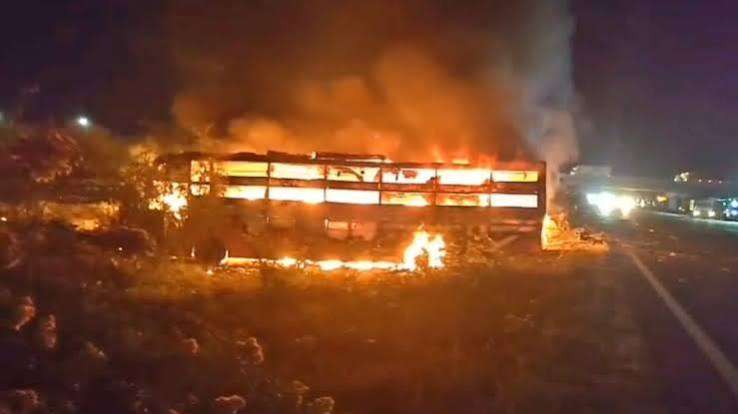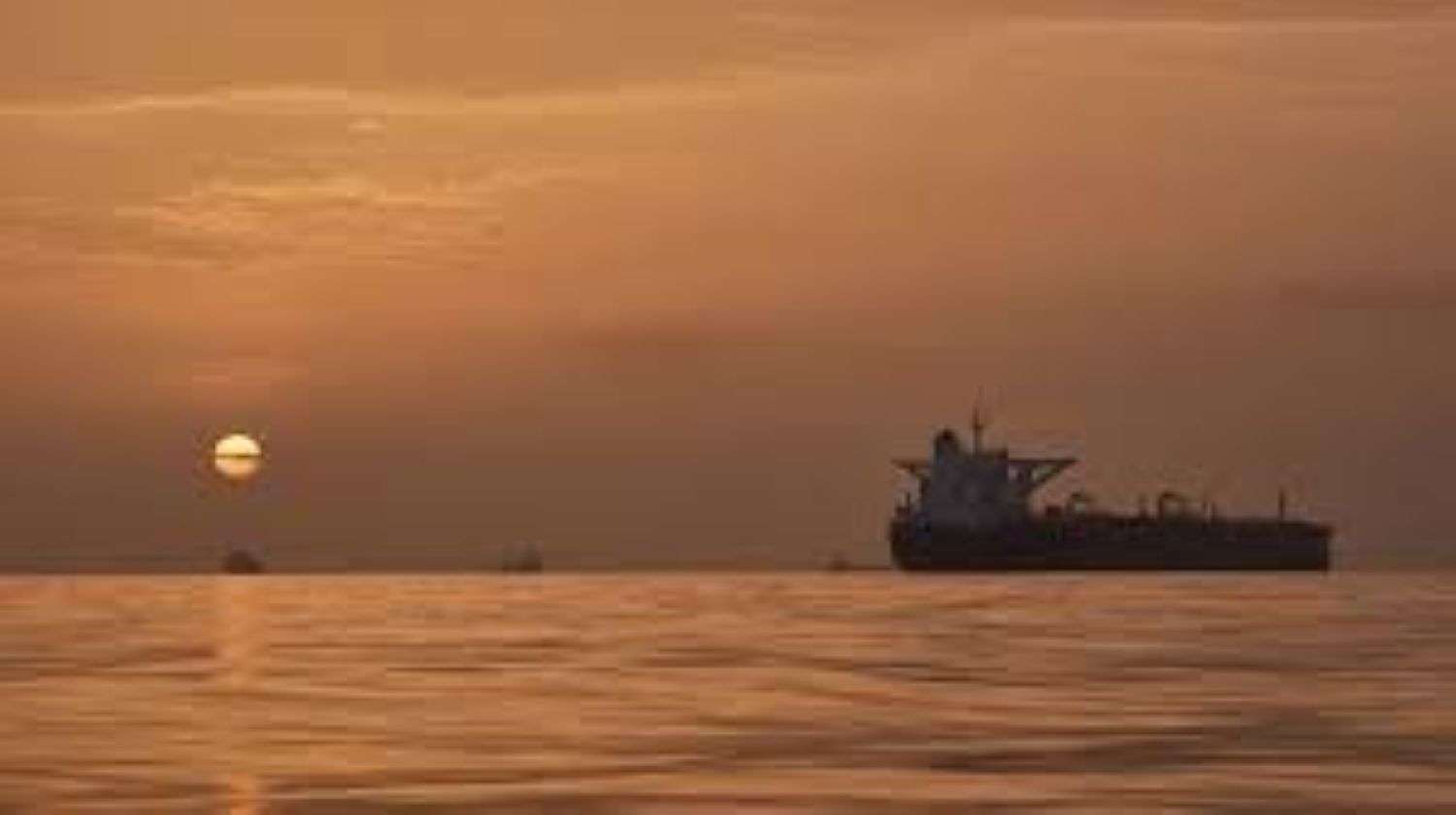
New Delhi: The expanding West Asia war has placed thousands of Indian seafarers in severe danger, with numerous commercial vessels attacked or stranded near the Strait of Hormuz and Gulf of Oman. Tragic strikes on merchant shipping have left severl Indian sailors dead or missing, prompting urgent rescue operations and diplomatic pushback from New Delhi.
Three Indian seafarers have died after the US military targeted a tanker near Oman’s coast. Shipping Minister Sarbananda Sonowal confirmed that all three men have died and that the body of the final crew member has been recovered.
“Sadly, three Indian seafarers initially reported missing are now confirmed dead after bodies have been located and identified,” Sonowal said. The Indian government has reportedly summoned the US Deputy Chief of Mission over the strike and lodged a “strong protest”.
The US said it carried out a “precision strike” on a vessel in the Gulf of Oman that failed to follow its instructions and was carrying oil from Iran. India’s Ministry of External Affairs had earlier confirmed that 21 Indian mariners aboard the Palau-flagged commercial vessel, MT Settebello, had been rescued. The ministry also condemned the attack, called it “deeply worrisome”, and urged de-escalation, according to agency reports.
India on Thursday also reported a separate incident involving a vessel off Shinas port in Oman. This is the third such incident this week, after the US military said it attacked the MT Marivex and Settebello. The Indian Embassy in Oman did not specify if the vessel involved in Thursday’s incident had Indian seafarers on board.
“We are closely monitoring the situation and coordinating with the local authorities for further details,” the Indian Embassy in Oman said on social media. The vessel involved in the latest incident is MT Jalveer, the Forward Seamen’s Union of India said on X.
The development comes weeks after three other Indian seafarers were killed in separate maritime attacks in the Persian Gulf in March amid the West Asia crisis. This takes the overall toll of Indian seafers who have been killed in the West Asia crisis to six. The developments have shone a spotlight on Indian seafarers and the role that they play in the global economy.
But what do we know about Indian seafarers? What do we know about the repatriation efforts by the Indian government?
What we know about India’s seafarers
India is among the largest global suppliers of seafarers. According to government data, over three lakh Indians work in the maritime sector today. This is up from 1.25 lakh a decade ago. Indians now account for roughly 10–12 per cent of the global seafaring workforce, working across vessels operated by both Indian and foreign companies.
These are not just entry-level roles either. Indian seafarers work in specialised positions such as captains, navigation officers, marine engineers, and technical experts, according to maritime industry data. These men, who help move everything from crude oil and liquefied natural gas to food grains and consumer goods across the world, are crucial to the smooth functioning of the global economy. This is because around 90 to 95 per cent of global trade by volume is transported by sea. Maritime trade forms the backbone of global supply chains.
Unfortunately, this also means that Indian seafarers are exposed during geopolitcal crisis like the one in West Asia. The Strait of Hormuz, one of the world’s most critical chokepoints, which handles nearly one-fifth of global oil trade, has seen disruptions amid escalating tensions.
Caught in conflict zones
Government data from March reflects the scale of the exposure. “There have been four reported incidents involving Indian seafarers in the region, resulting in three casualties and one injured seafarer, all of whom were serving on board foreign-flagged vessels,” the Directorate General of Shipping (DGS) said in its March advisory.
At least 78 Indian seafarers were on foreign vessels that came under attack during the crisis. Of these, 70 escaped unharmed, four were injured, three were killed, and one was reported missing, according to government data. The Directorate General of Shipping had warned that escalating military action in the region posed risks, including “missile and drone activity, electronic interference, and other maritime security concerns”.
Stakeholders were also advised to maintain heightened vigilance and undertake voyage-specific risk assessments, with vessels required to ensure continuous communication readiness and report any suspicious activity immediately, according to the advisory.
How the Indian government is making efforts
The Indian government has been assisting and repatriating thousands of affected seafarers.
The Ministry of Ports, Shipping, and Waterways has said that India has repatriated a total of 3,474 seafarers thus far. That figure was at 2,929 on April 30 and 253 in March.
“In the past 24 hours, 30 Indian seafarers have been successfully repatriated… With this, the total number of repatriated seafarers has reached 253,” Rajesh Kumar Sinha, Special Secretary in the Ministry of Ports, Shipping and Waterways, said at the time.
The Directorate General of Shipping said it is maintaining “close coordination with all stakeholders to ensure their continued safety, well-being and timely support”.