


MS Shanker
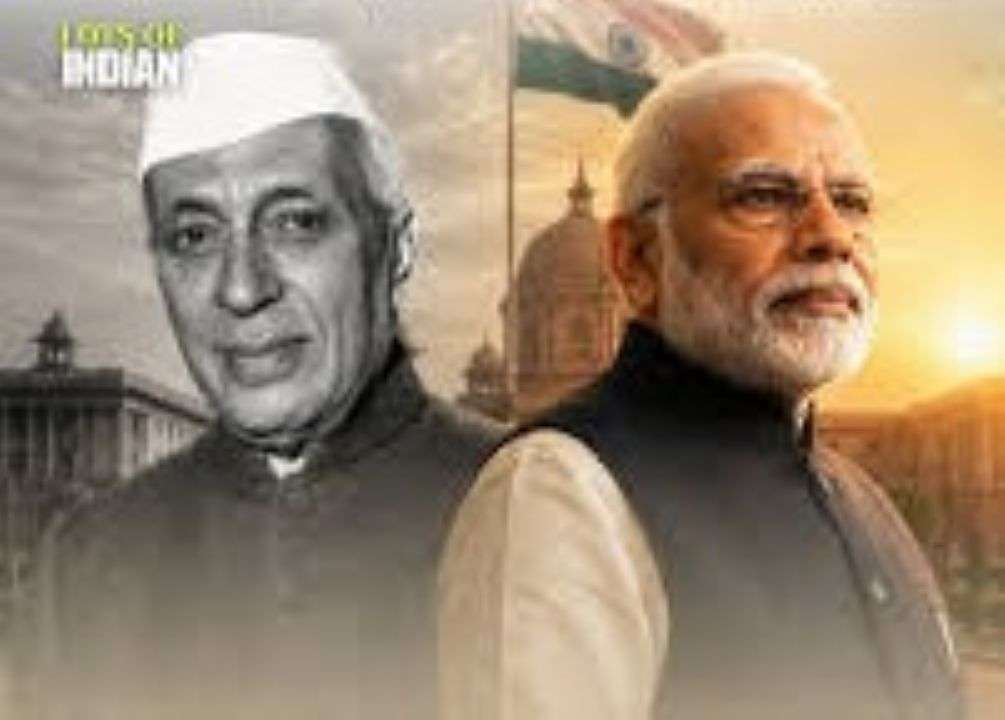
Prime Minister Narendra Modi today enters the record books as Bharat’s longest-serving continuously elected Prime Minister, completing 4,399 uninterrupted days in office and surpassing the tenure record of Bharat’s first Prime Minister, Jawaharlal Nehru, after the advent of electoral democracy.
The milestone is more than a personal achievement. It marks the culmination of a political transformation that has reshaped Bharat’s electoral landscape, governance architecture, security doctrine, and global standing.
When Modi first took office on May 26, 2014, he inherited a nation grappling with policy paralysis, corruption scandals, slowing economic momentum, and declining public trust in institutions. Twelve years later, regardless of one’s political preferences, it is difficult to deny that Bharat politics has undergone a profound realignment.
Perhaps the most significant political achievement of the Modi era has been the emergence of the Bharatiya Janata Party as Bharat’s dominant national political force. What was once perceived as a party largely confined to northern and western Bharat expanded its footprint across regions, communities, and social groups. The BJP’s growth in states once considered politically inaccessible has fundamentally altered the country’s electoral arithmetic and weakened the decades-old dominance of Congress-centric politics.
Beyond politics, Modi’s tenure will likely be remembered for creating one of the world’s most extensive digital governance ecosystems. The Jan Dhan-Aadhaar-Mobile (JAM) architecture revolutionized welfare delivery by directly transferring benefits to beneficiaries, reducing leakages and middlemen. The rise of UPI transformed India into a global leader in digital payments, demonstrating how technology could be leveraged at scale for financial inclusion.
Infrastructure development became another defining feature of the period. Highways, expressways, airports, railway modernization, ports, logistics corridors, and urban infrastructure projects expanded at a pace rarely witnessed in independent India. The emphasis on connectivity was not merely about construction; it reflected a broader vision of integrating markets, reducing transaction costs, and enhancing economic competitiveness.
On national security, Modi’s tenure marked a decisive departure from earlier strategic restraint. The surgical strikes following the Uri terror attack, the Balakot air strikes after Pulwama, and more recently Operation Sindoor signaled a willingness to impose costs on Pakistan-sponsored terrorism. Simultaneously, the government pursued military modernization, expanded indigenous defence manufacturing, and strengthened Bharat’s strategic deterrence capabilities.
One of the most consequential political decisions of the era was the effective abrogation of Article 370, ending the special constitutional status of Jammu and Kashmir. Supporters viewed it as the completion of national integration, while critics questioned the process. Yet there is little doubt that the decision represented one of the most far-reaching constitutional changes in post-independence India.
The Modi years also witnessed a sustained campaign against Left-Wing Extremism, once described as India’s greatest internal security threat. Areas long affected by Maoist violence witnessed a significant decline in insurgent activity, aided by a combination of security operations, infrastructure expansion, and governance outreach.
Equally important was the government’s handling of extraordinary global disruptions. Bharat navigated the COVID-19 pandemic, executed one of the world’s largest vaccination drives, and maintained economic resilience amid geopolitical turbulence, supply-chain disruptions, and multiple international conflicts.
On the global stage, India emerged with greater confidence and influence. From leadership of the G20 to advocacy for the Global South, New Delhi increasingly positioned itself as a major voice in shaping international conversations rather than merely responding to them.
History will ultimately judge every Prime Minister with the benefit of distance. Critics will continue to debate aspects of Modi’s governance, while supporters will celebrate his achievements. Yet one fact is indisputable: the last twelve years have fundamentally altered Bharat’s political, economic, and strategic trajectory.
As Narendra Modi becomes Bharat’s longest-serving continuously elected Prime Minister, the milestone stands not merely as a record of longevity but as a reflection of a transformative era that has left an indelible imprint on the Republic.


Qualitative appraisal of National development in terms of index of National resources is so well synopsised .. Personality cult along with a positive will definitely determine effective policy making is now well proved.. may this policy makers legacy grow ! M
in short… Modi as The Prime Minister of a developing nation “ made all the difference “