Kumbha Shyam Temple is located inside the historic Chittorgarh Fort in Chittorgarh district of Rajasthan. The temple stands near the famous Meera Bai Temple and Kumbha Palace within the fort complex. Surrounded by the grandeur of one of India’s largest hill forts, the temple has been an important center of Vaishnava worship for centuries. Its location within the fort reflects the close connection between religion, royalty, and daily life in medieval Mewar.
The present structure of the temple belongs mainly to the 15th century CE and is associated with Maharana Kumbha, the celebrated ruler of Mewar. However, historians believe that the site originally housed an older Vishnu shrine before Kumbha’s reign. The temple was renovated and expanded during the mid-15th century, preserving an ancient tradition of Vishnu worship within Chittorgarh Fort.
The presiding deity of the temple is Lord Vishnu, worshipped as Kumbha Shyam or Kumbha Swami. The deity is revered as the protector of devotees and the upholder of dharma. For centuries, the rulers of Mewar and countless pilgrims have worshipped here seeking divine grace, protection, and spiritual upliftment. The temple remains an important center of Vaishnava devotion in Rajasthan.
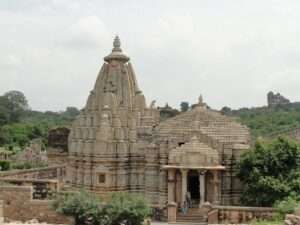
Kumbha Shyam Temple is built in the traditional Nagara style of North Indian temple architecture. The temple stands on an elevated platform and features a beautifully carved mandapa, elegant pillars, decorative doorways, and a graceful shikhara above the sanctum. The stone carvings display excellent Mewar craftsmanship and include floral motifs, celestial figures, and Vaishnava imagery. Though modest in size compared to some larger temples, it is admired for its artistic beauty and historical significance.
The temple gained prominence during the reign of Maharana Kumbha, one of the greatest rulers of Mewar. Known for his patronage of religion, art, literature, and architecture, Maharana Kumbha restored and beautified several temples within Chittorgarh Fort. The Vishnu temple renovated by him eventually came to be known as Kumbha Shyam Temple.
The temple later became closely associated with Saint Meera Bai. After her marriage into the royal family of Mewar, Meera lived in Chittorgarh and devoted herself completely to Lord Krishna. She spent much of her time singing bhajans, meditating, and offering prayers in this temple complex. Through her devotion, the temple became an important center of the Bhakti movement and continues to attract devotees from across India.
The sacred legend of Kumbha Shyam Temple is deeply connected with the life of Saint Meera Bai, one of India’s greatest Krishna devotees.
According to tradition, Meera’s devotion began during her childhood. One day, after seeing a wedding procession, she asked her mother who her future husband would be. Her mother pointed to an image of Lord Krishna and casually replied that Krishna was her husband. Meera accepted those words wholeheartedly and from that moment considered Lord Krishna her eternal consort.
Years later, Meera was married to Prince Bhoj Raj of Mewar and came to live in Chittorgarh Fort. Although she fulfilled her duties as a princess, her heart remained devoted entirely to Krishna. She regularly visited the temple, sang devotional songs, and spent hours in prayer before the Lord.
Her intense devotion was not understood by everyone in the royal court. According to popular legends, attempts were made to discourage her worship. One famous story tells of a cup of poison sent to her. Meera first offered it to Krishna and then drank it fearlessly. By the Lord’s grace, the poison became harmless and she remained unharmed.
Another legend narrates that a basket containing a venomous snake was sent to her. After offering prayers to Krishna, she opened the basket and found a beautiful flower garland instead of the snake. These miracles strengthened the belief that the Lord personally protected his devotee.
Local tradition says that Meera often sought refuge and strength in the divine presence of Kumbha Shyam. Her devotion sanctified the temple and transformed it into a symbol of unwavering faith, surrender, and divine grace. Even today, devotees visit the temple to remember Meera Bai’s extraordinary love for the Lord and to seek similar devotion in their own lives.
An old belief states that a sacred lamp has been burning in the temple since its construction. Devotees claim that this lamp, dedicated to Lord Vishnu, has never been extinguished, symbolizing eternal devotion and divine energy.
Janmashtami is the most important festival celebrated at the temple with special pujas and bhajans. Meera Jayanti is observed in honor of Saint Meera Bai through devotional singing and spiritual gatherings. Vaikuntha Ekadashi is celebrated with special Vishnu worship, while Ram Navami, Narasimha Jayanti, and other important Vaishnava festivals are observed with traditional rituals and prayers throughout the year.