M Radha Madhavi
Deep inside a remote tribal belt, far beyond the reach of highways, electricity and mobile signals, there once stood a tiny mud hut beside a dried riverbed. It was here that an old man chose to spend the last and perhaps the most meaningful years of his life.
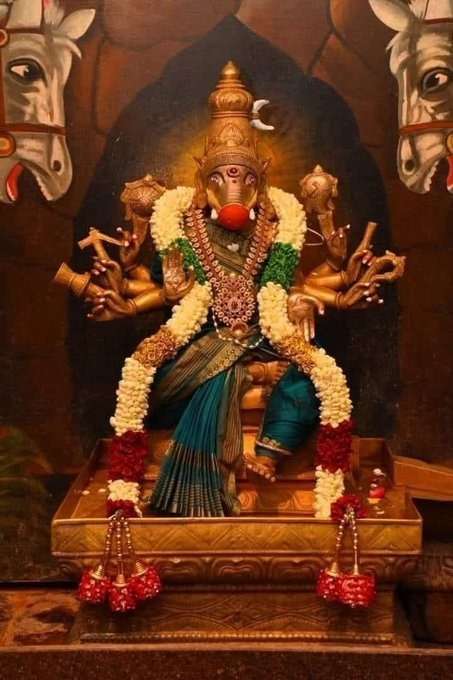
Nobody remembered his real name. To the tribal children, he was simply “Varahi Tata”—the grandfather devoted to Mother Varahi.
Yet, long before he became a forest hermit, he had lived a life many would envy. He was a wealthy government officer who owned a large house, enjoyed social respect and lived amidst all the comforts that modern life could offer. Then came an inexplicable inner calling. One day, he resigned from his position, gave away almost everything he owned and quietly disappeared into the forest.
Those who knew him thought he had lost his mind. In truth, he had merely chosen to lose the world in order to find himself.
For the next twelve years, his life became an extraordinary act of devotion and discipline. Every midnight, barefoot and alone, he walked through dense forests to an ancient termite mound nestled beneath the roots of a giant banyan tree. There was no ornate temple waiting for him there. No priests, bells or lamps. Only a rough stone smeared with turmeric and vermilion.
To everyone else, it was just a stone. To him, it was Mother Varahi.
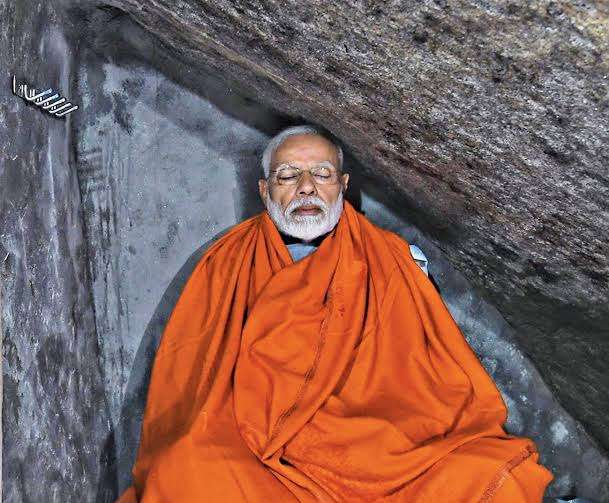
Rain or cyclones, snake bites or malaria, high fever or hunger—nothing kept him away from his nightly worship. There were days when he survived on little food and weeks when he barely spoke to another human being. Tribal villagers would often find him sitting in meditation from sunset to sunrise.
Time seemed to play strange games with him. His body grew frail, his beard reached his chest, yet his eyes appeared to grow younger with every passing year.
Then came an incident that transformed him from a mysterious ascetic into a living legend among the tribal communities.
One monsoon night, a young tribal hunter arrived at his hut in distress.
“Tata, wild boars have destroyed our crops. Our children have nothing to eat,” he cried.
The old man listened patiently and replied softly, “They are hungry too.”
The answer only deepened the young man’s anguish. But instead of offering explanations, Varahi Tata quietly rose and disappeared into the dark forest—an area feared even by seasoned hunters because of its wild boars, leopards and bears.
Hours passed.
Just before dawn, the villagers witnessed something they would never forget.
The old man returned, followed by nearly twenty wild boars. They were not charging or behaving aggressively. They walked calmly behind him, almost as if they had come in silent companionship. Reaching the edge of the fields, the animals turned back and disappeared into the jungle.
According to the villagers, not a single crop was destroyed thereafter.
When people asked him what had transpired that night, he offered only a simple explanation: “When you stop treating nature as your enemy, nature remembers.”
Years later, a young devotee gathered the courage to ask him a question many had silently carried in their hearts.
“Tata, have you seen Mother Varahi?”
The old man laughed gently.
“If I say yes, your ego will want the same vision. If I say no, you will think these years were wasted.”
Then, pointing towards the forest, he said, “When you are no longer afraid of death, no longer attached to praise, no longer disturbed by hunger and no longer angry at insult—when the forest feels like your own home—you won’t ask where Varahi is. She will ask where you have been.”
As he approached ninety years of age, his health slowly began to decline. The tribal villagers gathered around the man who had become their teacher, healer and spiritual guide.
“What should we do after you leave us?” they asked.
His final message was simple yet profound.
“Feed the hungry. Protect women. Never insult your Guru. Never misuse mantra. And remember, Mother Varahi is not impressed by loud chanting. She comes running to the one who has conquered his own mind.”
With those words, he closed his eyes for the last time.
The villagers say that, at that very moment, the forest fell into an unusual silence. Somewhere deep in the jungle, a solitary wild boar called out once—as if nature itself had come to bid farewell to one of its own.
The clearing beneath the banyan tree remains sacred even today. The tribal people never built a grand temple there. Instead, they continue a far more meaningful tradition—offering a pinch of turmeric, a few wild flowers and a handful of cooked rice every night.
For they believe that some divine presences are simply too sacred to be imprisoned within walls.
And perhaps that is the greatest lesson Varahi Tata left behind—that true spirituality is not found in grandeur or ritual, but in humility, compassion and harmony with all of creation.