

“Doctor, my wife says I snore loudly every night. She’s threatening to sleep in another room.” The middle-aged gentleman sitting across from me laughed as he said it in my consultation chamber the other day.
“But I sleep well. Surely snoring can’t be a disease?” His wife, seated beside him, immediately disagreed. “Doctor, he stops breathing while sleeping. Then, they suddenly gasp for air. Sometimes I get scared.”
The room fell silent.
What she described is a problem affecting millions of people worldwide, yet many continue to dismiss it as a harmless inconvenience. For generations, snoring has been the subject of jokes, family complaints, and sleepless nights. It is often considered a normal part of aging, especially among men.
Many people assume that if they are sleeping through the night, there is nothing to worry about. In many social gatherings, loud snoring often becomes the subject of humour. Friends may jokingly remark that someone sounded as though a lion had spent the night in the room.
The reality, however, may be very different. MORE THAN JUST NOISE Snoring occurs when airflow through the upper airway becomes partially obstructed during sleep. As air passes through a narrowed passage, the soft tissues of the throat vibrate, producing the familiar sound. Occasional snoring is extremely common.
Nasal congestion, allergies, alcohol consumption, sleep deprivation, and certain sleeping positions can all contribute to it. The concern arises when repeated interruptions in breathing accompany loud, habitual snoring. This condition is known as Obstructive Sleep Apnea (OSA).
According to the International Classification of Sleep Disorders published by the American Academy of Sleep Medicine (2023), OSA is characterized by recurrent episodes of partial or complete upper airway obstruction during sleep, resulting in disrupted breathing and fragmented sleep.
Many individuals with sleep apnea remain completely unaware that they have the condition. It is often the spouse or family member who first notices the warning signs. Loud snoring, witnessed pauses in breathing, choking sensations during sleep, restless sleep, frequent 1 awakenings, and excessive daytime sleepiness are among the most common symptoms. Unfortunately, these symptoms are frequently ignored for years.
What happens during sleep?
Sleep is often viewed as a period of rest, but it is actually a highly active biological process. When a person with sleep apnea falls asleep, the muscles supporting the airway relax excessively. The airway narrows or collapses, temporarily blocking airflow despite continued breathing efforts. As oxygen levels begin to fall, the brain briefly arouses the individual from sleep to reopen the airway.
This cycle may occur dozens or even hundreds of times during a single night. Most of these arousals are so brief that the person has no memory of them the next morning. The result is poor-quality sleep despite spending adequate hours in bed. A comprehensive analysis by Benjafield and colleagues published in The Lancet Respiratory Medicine in 2019 estimated that nearly one billion adults worldwide may be affected by obstructive sleep apnea, highlighting the enormous and often under-recognized burden of the disease.
Over the past three decades, growing obesity rates, sedentary lifestyles, and aging populations have further increased the burden of sleep apnea worldwide.
Serious health problems
Many people assume that sleep apnea affects only sleep. In reality, its consequences extend far beyond the bedroom. Every episode of airway obstruction places stress on the cardiovascular system. Oxygen levels fluctuate repeatedly throughout the night, triggering inflammatory responses, sympathetic nervous system activation, and changes in blood pressure regulation.
Over time, these physiological disturbances can contribute to serious health problems. A large study by Kendzerska and colleagues published in PLOS Medicine in 2014 found that severe sleep apnea was associated with an increased risk of hospitalization and mortality, underscoring the systemic impact of untreated disease.
Numerous studies have since linked sleep apnea with hypertension, coronary artery disease, stroke, heart failure, cardiac rhythm disturbances, insulin resistance, and type 2 diabetes. The effects are not limited to the heart. Many patients experience persistent fatigue, morning headaches, poor concentration, irritability, memory difficulties, and reduced work performance.
Some describe feeling exhausted despite sleeping for seven or eight hours. Others struggle to stay awake during meetings, while watching television, or even while driving. 2 A scientific statement published by the American Heart Association in Circulation in 2021 emphasized the growing evidence linking obstructive sleep apnea with hypertension, atrial fibrillation, coronary artery disease, stroke, and heart failure.
A position paper from the European Respiratory Society published in the European Respiratory Journal in 2021 highlighted excessive daytime sleepiness due to sleep apnea as an important contributor to preventable motor vehicle accidents. Individuals with untreated sleep apnea are more likely to experience excessive daytime sleepiness, increasing the risk of road traffic accidents.
What appears to be a night-time problem can therefore have potentially life-threatening consequences during the day.
A condition that can be treated
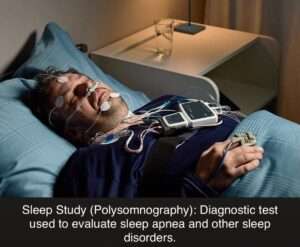
The encouraging news is that sleep apnea is treatable. The first step is recognizing the symptoms. Individuals who snore loudly, experience witnessed breathing pauses, wake unrefreshed despite adequate sleep, or struggle with unexplained daytime sleepiness should consider medical evaluation. A sleep study remains the standard method for diagnosis. Treatment depends on the severity of the condition and the underlying causes. Weight reduction remains one of the most effective non-pharmacological interventions.
According to a Clinical Practice Guideline published by the American Thoracic Society in the American Journal of Respiratory and Critical Care Medicine in 2018, weight loss can significantly reduce the severity of obstructive sleep apnea and improve overall health outcomes in overweight and obese individuals.
Avoiding alcohol close to bedtime, maintaining regular sleep schedules, and sleeping in non-supine positions may also help. For patients with moderate to severe disease, Continuous Positive Airway Pressure (CPAP) therapy remains the most effective treatment. By delivering pressurized air through a mask during sleep,
CPAP prevents airway collapse and restores normal breathing. For many patients, the improvement can be dramatic. Spouses often report quieter nights, while patients describe waking with renewed energy for the first time in years.
Listen to the warning
Snoring may be the source of family jokes and bedtime complaints, but persistent loud snoring accompanied by breathing pauses should never be dismissed as harmless. In many cases, it is the body’s way of signalling that something is wrong during sleep.
Medical evaluation should be considered if you or a loved one experiences: • • • Loud, habitual snoring Witnessed pauses in breathing during sleep Gasping, choking, or sudden awakenings at night 3 Excessive daytime sleepiness or fatigue.
Morning headaches, poor concentration, memory problems, or irritability Falling asleep unintentionally during routine activities Early diagnosis and treatment can improve sleep quality, reduce cardiovascular risk, enhance daytime functioning, and potentially prevent serious complications.
If these warning signs sound familiar, do not dismiss them as normal. Consult a chest physician or sleep specialist and discuss whether a sleep evaluation may be appropriate. Sometimes the person who first recognizes the problem is not the patient. It is the person lying awake beside them who makes the first diagnosis.
Therefore, do not ignore the early warning signs that snoring may be trying to convey