Upadhyayula Lakshman Rao
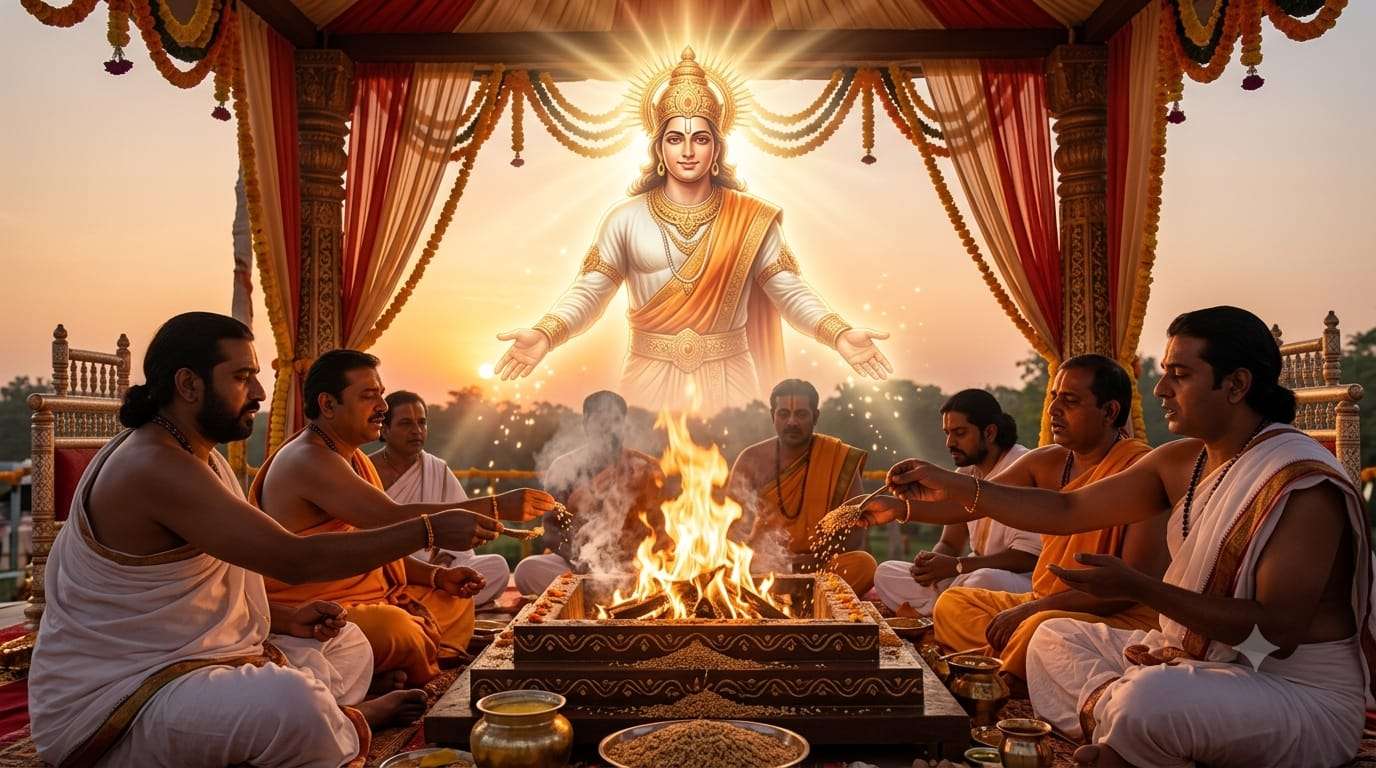
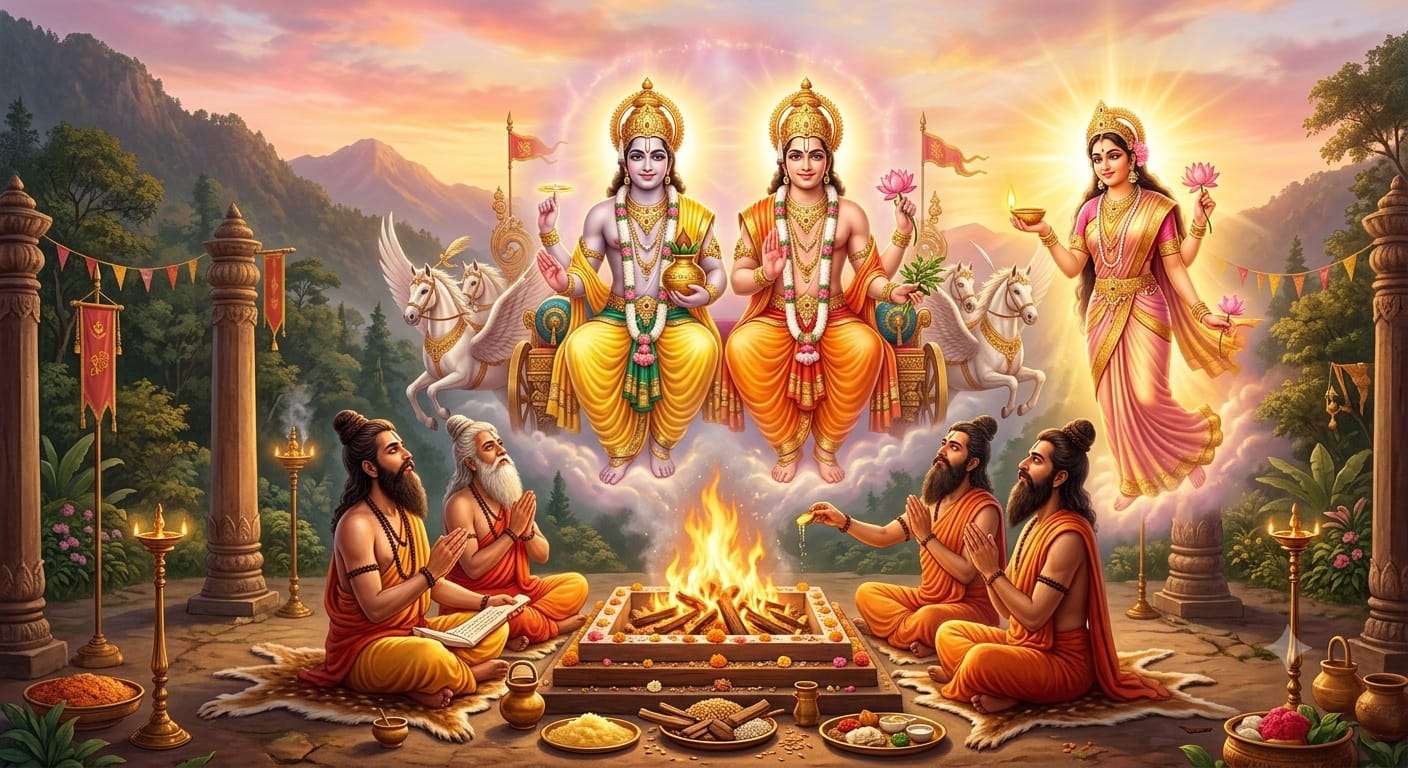
In the sacred hymns of the Rigveda, the sage Kakṣīvanta invokes the radiant dawn, Uṣas, in the measured cadence of the Triṣṭubh metre, revealing a vision at once poetic, spiritual, and profoundly observant of nature. Uṣas appears like a blazing fire that devours the dense veil of darkness, her brilliance akin to the first emergence of the sun upon the horizon. As the eastern sky kindles with her light, humanity awakens into action, and the rhythm of daily rites begins. The worshippers, engaged in their morning sacrifices, look toward the rising light as a symbol of order, invoking the Surya to bestow prosperity in the form of cattle, nourishment, and unobstructed movement through life’s paths.
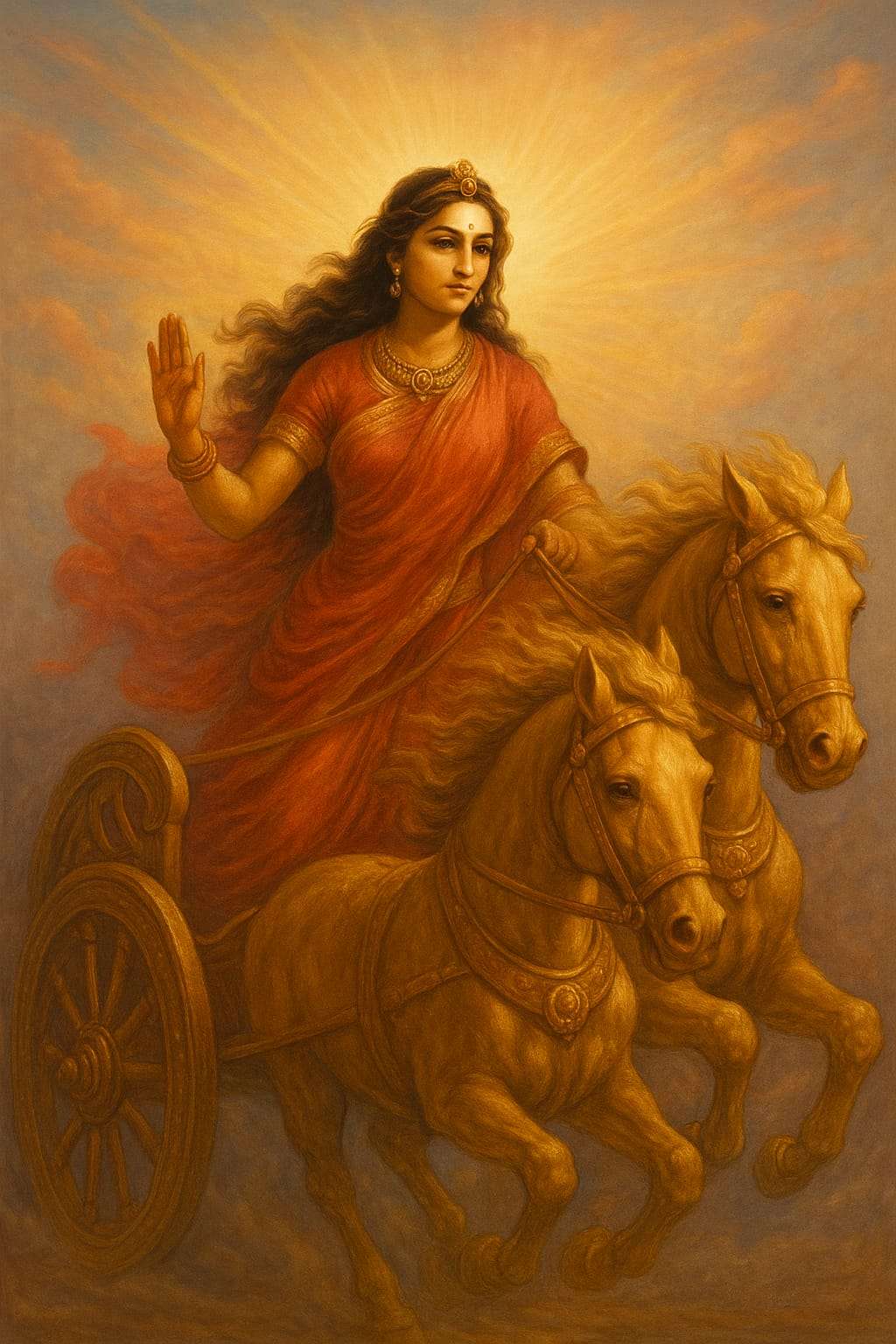
Uṣas is not merely a visual phenomenon but a cosmic principle that sustains ṛta—the universal order. She governs the subtle interplay of union and separation among beings, marking transitions that define human existence. The past dawns, the present dawn, and those yet to arise stand in unbroken continuity, each mirroring the other in essence, thus reflecting a cyclic understanding of time. As the daughter of the heavens, she stretches forth her luminous garment across the eastern sky, awakening not only the physical world but also the inner faculties of awareness. Her arrival inspires men and women to undertake their ordained duties, reinforcing the discipline of ritual and the harmony of existence.
Following faithfully the path of Surya, Uṣas reveals all directions, illuminating the quarters with clarity and precision. Her emergence along the pathways of solar rays suggests an early intuition of natural continuity, where dawn is not an isolated event but a gradual unfolding of light governed by cosmic laws. The sage Nodhas, through his hymns, expresses both reverence and human longing, portraying Uṣas as a compassionate mother who gently awakens her children. Just as a devoted householder performs daily duties with regularity and purpose, so does Uṣas return unfailingly, stirring the world into motion.
In the vast expanse of space, she appears in the earliest hours, bringing with her the knowledge of direction and orientation, an essential element for both ritual practice and daily survival. Heaven and earth stand as her parents, and she abides between them, illuminating all realms without distinction. Her light falls equally upon the great and the small, revealing an impartial and universal presence. Pure in form and intention, she embodies both physical radiance and spiritual awakening, offering insight that transcends mere visibility.
Her movement toward the sun is likened to a solitary woman advancing without companions, and also to scholars approaching the court of a king, seeking wisdom and fulfillment. Adorned like a bride, graceful and resplendent, she enchants the world with her beauty. The night, her younger sister, yields her place with quiet submission, withdrawing as Uṣas ascends. This imagery captures not only poetic elegance but also a keen observation of natural succession, where darkness gives way to light in a seamless and inevitable transition.
The ancient dawns are described as harmonious sisters, each following the other in orderly succession, maintaining the continuity of cosmic rhythm. The present dawn reflects the past and anticipates the future, preserving ritualistic consistency and ensuring the sustenance of life. Uṣas, the possessor of wealth, is invoked to awaken the noble and the generous, while the miserly and inert are left in slumber, symbolizing the ethical dimension of Vedic thought where prosperity aligns with virtue and participation in sacred duties.
Yet, within her benevolence lies a subtle truth—Uṣas silently diminishes the span of life, for each dawn marks the passage of time. This insight reflects a profound awareness of temporal reality, where the beauty of renewal coexists with the inevitability of aging. Her chariot, yoked with red-hued cows, traverses the heavens, dispelling darkness and revealing all forms. With her arrival, Agni is kindled in every household, birds take flight from their nests, and human beings set forth in search of sustenance, thus illustrating the interconnected awakening of all life forms.
The patrons of sacrifice assemble at the sacred altars, offering oblations with devotion, and Uṣas, in turn, blesses them with abundance and growth. She is venerable, worthy of hymns in varied metres and tones, each expression reflecting the richness of human devotion. Through her, the Vedic seers perceived not only the aesthetic splendour of dawn but also the underlying order of the universe, blending spiritual reverence with an intuitive grasp of natural phenomena.
Thus, Uṣas stands as a symbol of illumination in every sense—physical, moral, and intellectual. She awakens the world, sustains its rhythm, and guides it toward prosperity and awareness. In her gentle yet powerful presence, the ancient seers discerned a harmony between the cosmos and human life, where every dawn is both a renewal of existence and a reminder of the eternal law that governs all.