



Aazhimala Shiva Temple, also known as Aazhimala Pulinkudi Sree Mahadeva Temple, is located at Pulinkudi near Vizhinjam in the Thiruvananthapuram district of Kerala. The temple stands beautifully on rocky cliffs beside the Arabian Sea and is one of the most scenic Shiva temples in South India. The peaceful sea breeze, roaring waves, and spiritual atmosphere make this temple unique among Shiva temples. The word “Aazhimala” means “hill near the deep sea,” referring to the temple’s location beside the Arabian Sea.
The temple is believed to be more than 1000 years old and has been an important Shaivite worship centre for centuries. Though the temple has undergone renovations over time, local traditions connect the temple with the Mahabharata period and ancient coastal settlements of southern Kerala. The temple became widely famous across India after the installation of the gigantic Gangadhareshwara Shiva sculpture facing the sea.
The main deity of the temple is Lord Shiva worshipped in the form of a Shiva Lingam. Here, Lord Shiva is worshipped as Mahadeva and Gangadhareshwara, the Lord who bears River Ganga in his matted hair. Devotees believe that the deity blesses devotees with peace, protection, spiritual strength and safety from dangers connected with sea travel and water.
One of the greatest attractions of the temple is the massive 58-foot Gangadhareshwara Shiva statue situated beside the sea. The sculpture depicts Lord Shiva in a majestic seated posture with flowing hair, holding River Ganga in his jata, along with the trident and damaru. The statue was created by sculptor P. S. Devadathan and is considered one of the tallest Shiva sculptures in Kerala. The sight of the gigantic Shiva statue with Arabian Sea waves behind it creates a divine and mesmerizing atmosphere.
The temple architecture reflects a beautiful blend of Kerala and Dravidian styles. The sanctum sanctorum preserves the traditional Kerala temple structure, while the outer walls and entrance contain colourful sculptures of Hindu deities, including Ganesha, Vishnu, Murugan, Hanuman and Ayyappa. The temple complex also includes a kodimaram, chuttambalam, and shrines for other deities. The combination of rocky seashore, temple architecture, and giant Shiva sculpture gives the temple a unique spiritual beauty.
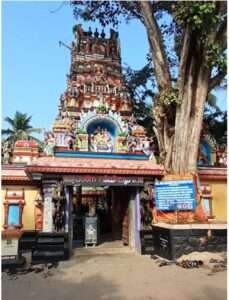
According to temple history, the region around the temple was once covered with forests and rocky terrain. The area became an important worship centre for fishermen and coastal communities who prayed to Lord Shiva before entering the sea. Local traditions also mention a Vedic scholar named Neelaniyeru from Vizhinjam, who performed Shiva worship in this region and later attained samadhi here. Centuries later, social reformer Sree Narayana Guru is believed to have visited the site and recognized the divine spiritual presence of Lord Shiva at Aazhimala.
The most important and authentic sthalapurana of Aazhimala Shiva Temple is connected with the Pandavas during their exile period from the Mahabharata. According to local belief, the Pandavas travelled through this coastal region during their vanavasam and stayed for some time among the rocky caves near present-day Aazhimala. Even today, some natural caves near the temple are traditionally associated with their stay.
During their stay, Draupadi became extremely thirsty because the entire area was surrounded by salty seawater and there was no source of drinking water nearby. Seeing her exhausted condition, Bhimasena prayed sincerely to Lord Shiva for help. Using his immense strength, Bhima struck the rocky ground with his knee or mace. Immediately, fresh water emerged from the rocks in the form of a spring. Draupadi drank the water and regained her strength.
This sacred freshwater spring later came to be known locally as “Kaneerkuzhy” or “Kannuneerkuzhy.” Local devotees believe that the spring continues to flow throughout the year and consider the water sacred. Earlier, temple priests are believed to have used this water for temple rituals and abhishekams. This miracle associated with Bhima and Lord Shiva remains the most important traditional legend connected with the temple.
Another local belief says that Lord Shiva manifested at Aazhimala to protect fishermen and seafarers from storms and dangers of the sea. For generations, coastal communities have worshipped Lord Shiva here before beginning fishing journeys. Devotees believe that Shiva continuously watches over the Arabian Sea and blesses people with safety and prosperity.
Maha Shivaratri is the main festival celebrated with special abhishekams and night prayers.
The annual temple festival is celebrated during the Malayalam month of Makaram with special pujas and processions.
Pradosham and Mondays are also considered highly sacred for Shiva worship.

