
Every nation has moments when it pauses to remember the deeper bonds that hold its people together. Not politics, not caste, not language, not region, and not religion. But a shared civilisational identity expressed through symbols, songs, flags, and collective memory.
India may finally be approaching such a moment with the decision to grant Vande Mataram the same legal protection as the national anthem. The move deserves wholehearted support.
India has behaved apologetically about its own national symbols for far too long. The very words that inspired generations during the freedom struggle have often been dragged into needless controversy, treated as negotiable depending on political convenience or sectarian sensitivities. That was never how nations are built.
The anthem of a freedom struggle
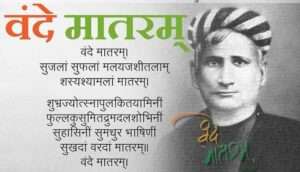
Vande Mataram is not merely a song. It is part of the emotional architecture of India’s freedom movement. Revolutionaries walked to the gallows chanting it. Protesters faced British lathis shouting it. It united Bengalis, Gujaratis, Telugus, Kannadigas, Tamils, Punjabis, Maharashtrians, Hindus, Muslims, Sikhs, Christians, Parsis, Buddhists – people who may have disagreed on many things but stood together under the larger idea of India.
That is precisely why the song still matters. Across the world, strong nations fiercely protect the sanctity of their national symbols.
In the US, disrespect towards the national flag or anthem instantly provokes public outrage. Americans may disagree violently on politics, but the Stars and Stripes remain emotionally sacred to millions.
In France, La Marseillaise is not treated as optional background music. It represents the French Republic itself – its struggles, pride and identity.
In Japan, schoolchildren stand in disciplined silence for Kimigayo and the national flag. In Israel, the anthem Hatikvah is deeply tied to national survival and collective memory. In Singapore, patriotism is consciously cultivated through schools, ceremonies and national service.
Nations survive on shared symbols
No mature nation allows endless debate over whether citizens should respect national symbols. Respect is assumed because national cohesion requires emotional anchors.
India alone often turns patriotism into an intellectual dispute. One section says national songs offend their theology. Another treats patriotism as majoritarianism. A third believes even symbolic national assertion threatens diversity. This confusion has gone on for decades.
Religion and faith are deeply personal matters. Every citizen has the absolute right to worship differently – or not worship at all. That freedom is non-negotiable in a democracy.
But personal faith cannot become a permanent excuse for refusing to honour national symbols that belong equally to all citizens.
Religion cannot override civic duty
Respecting Vande Mataram does not diminish anyone’s religion. Standing for the national anthem does not alter anyone’s faith. Saluting the flag does not compromise spiritual beliefs. These are civic expressions, not theological declarations.
A nation survives when citizens discover common emotional ground despite personal differences. National songs and symbols perform precisely that function. They remind people that beyond political arguments and religious identities lies a shared homeland.
India’s tragedy has been that many political parties spent decades encouraging sectional loyalties while treating national sentiment with suspicion. Vote-bank calculations repeatedly trumped cultural confidence.
The result was absurdity. People who enjoy every constitutional freedom offered by India still hesitating to say Vande Mataram, a song born from India’s anti-colonial struggle. No country can indefinitely sustain such contradictions.
The proposed legal protection for Vande Mataram is therefore more than a symbolic administrative step. It signals an attempt to restore dignity to national sentiment itself.
Beyond politics lies the nation
Critics will predict intolerance. Some television panels will inevitably convert the issue into another screaming match. Social media activists will discover fresh constitutional anxieties overnight.
But ordinary Indians understand something far simpler. A country must have symbols that rise above politics.
The flag, the anthem, the national song, the Constitution, and the armed forces are not partisan possessions. They are emotional institutions that help transform a population into a nation.
India’s diversity is real and valuable. But diversity without unity becomes fragmentation. Shared national symbols provide the glue.
That is why Vande Mataram should not merely be tolerated. It should be embraced – proudly, emotionally, and without embarrassment. Not because the government says so. Because generations before us sacrificed everything while singing it.